


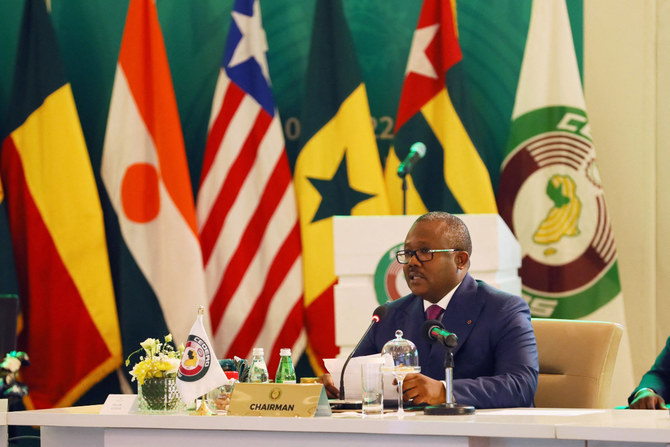

ACCRA, Ghana: West African leaders attending a regional summit Sunday lifted sanctions against three neighbors led by military governments that are now promising a return to democratic rule.
The summit of the Economic Community of West African States resolved to lift all economic and financial sanctions imposed on Mali, Guinea and Burkina Faso, although those countries remain suspended from the regional bloc, said Jean-Claude Kassi Brou, an Ivorian politician who has been serving as president of the ECOWAS Commission.
The three nations’ suspension from ECOWAS will remain in effect until elections are held, he told reporters, adding that regional leaders urge development partners to resume assistance to them.
In lifting the sanctions, leaders attending the summit in Ghana’s capital, Accra, accepted a transition road map by Malian authorities who proposed scheduling a presidential election by March 2024.
ECOWAS sanctioned Mali severely in January by shutting down most commerce with the country, along with its land and air borders with other countries in the bloc. The measures have crippled Mali’s economy, raising humanitarian concerns amid widespread suffering.
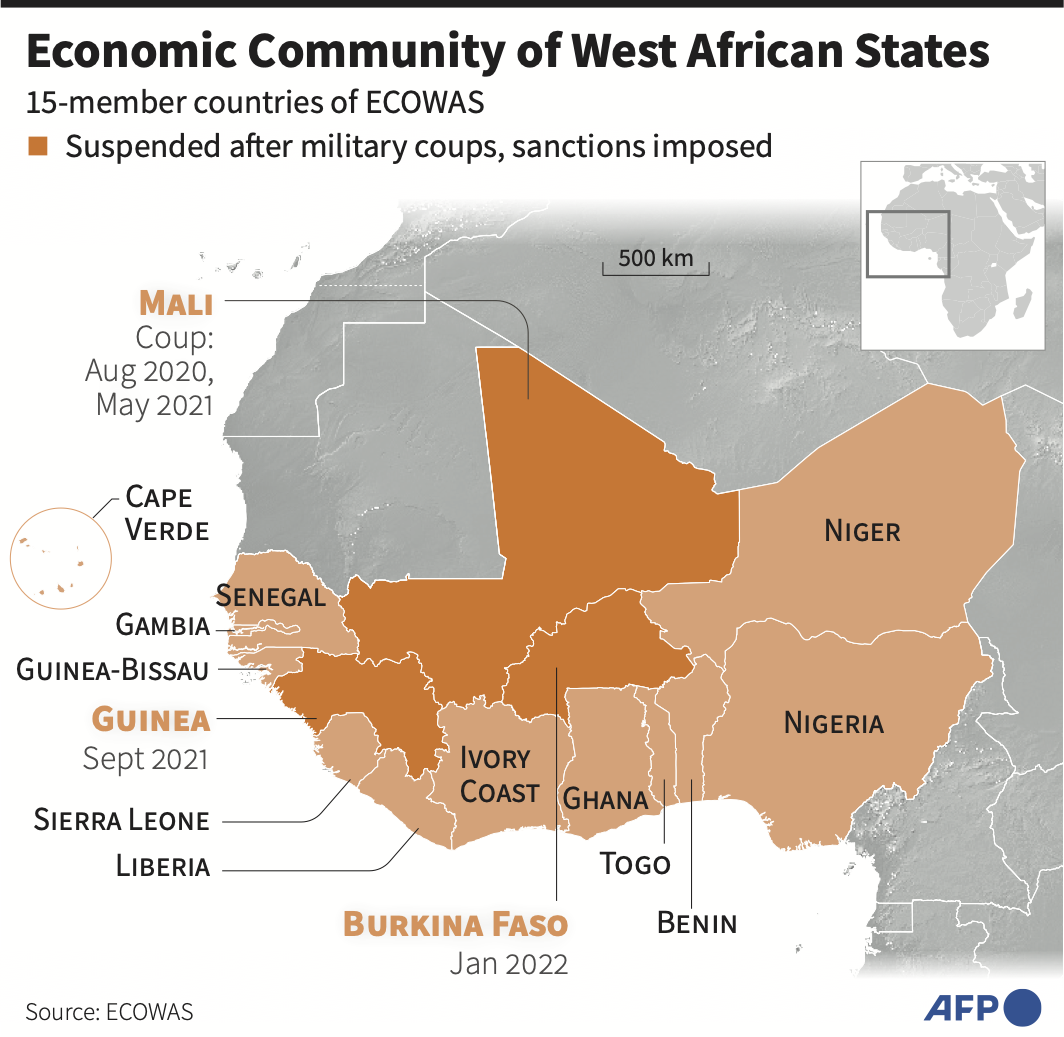
The military leaders in Guinea and Burkina Faso have also proposed varying transition periods eventually leading to polls. It remains unclear when elections will be held there.
The wave of military coups began in August 2020, when Col. Assimi Goita and other soldiers overthrew Mali’s democratically elected president. Nine months later, he carried out a second coup, dismissing the country’s civilian transitional leader and assuming the presidency himself.
Mutinous soldiers deposed Guinea’s president in September 2021, and Burkina Faso leader Roch Marc Christian Kabore was ousted in a January coup. Burkina Faso authorities said Saturday that Kabore, who has been under house arrest, is now a free man.
The political upheaval came as many observers started to think that military power grabs were a thing of the past in West Africa, an increasingly restive region that also faces growing danger from Islamic extremist fighters.
Some leaders who spoke at Accra’s one-day summit urged action as armed groups expand their footprint in the region.
“These terrorist attacks are now not only focusing on the Sahel, but also expanding to the coastal states in our region,” Ghanaian President Nana Akufo-Addo. “It is imperative for us to continue to implement our regional action plan against terrorism and to coordinate our various security initiatives.”
In the first half of 2022, the region recorded a total of 3,500 deaths from 1,600 extremist attacks targeting countries including Togo, Burkina Faso, Niger and Nigeria, according to Brou.
In Burkina Faso, where attacks blamed on Islamic extremist fighters are soaring, gunmen killed at least 55 people in the country’s northern Seno province last month.


