

Pakistan seeks recommendations from major local refineries on oil imports from Russia

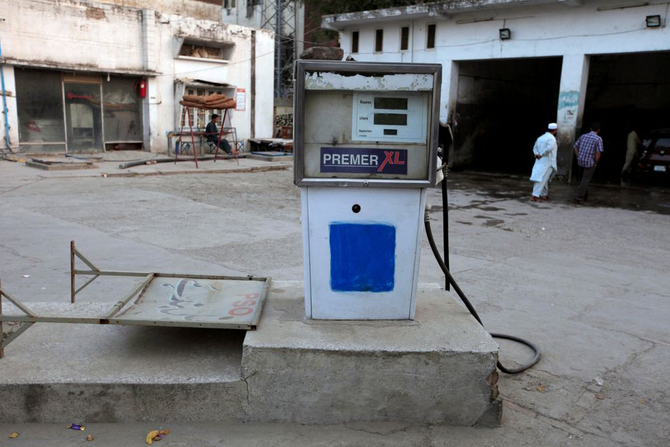
A fuel pump is pictured at a Pakistan State Oil petrol station in Rawalpindi, Pakistan October 6, 2017. (REUTERS/FILE)
Short Url
Updated 29 June 2022
Follow

Pakistan seeks recommendations from major local refineries on oil imports from Russia

  • Former Prime Minister Imran Khan has said Russia was willing to offer oil at cheaper rates to Pakistan
  • Current government says willing to buy oil from Russia if Islamabad didn’t face international sanctions 

ISLAMABAD: Pakistan’s energy ministry has sought recommendations from industrial experts and major local refineries on importing crude oil from Russia, as the country faces a growing energy crisis.

Former Prime Minister Imran Khan, who arrived in Russia in February the day it launched a full-scale invasion of Ukraine, has said Moscow was willing to offer oil at cheaper rates to Pakistan. Pakistan’s Finance Minister Miftah Ismail, who is in the new cabinet of PM Shehbaz Sharif, has rubbished Khan’s claims and said Islamabad would be willing to buy oil at cheaper rates from Russia only if Moscow made the offer and Islamabad didn’t have to face sanctions on the deal. 

In a letter to the Pak-Arab Refinery, National Refinery, Pakistan Refinery and Byco Petroleum, the energy ministry asked for recommendations on the import of crude oil from Russia.

“I am directed to refer to the subject cited about [Import of Crude Oil from Russian] and to request to furnish a detailed analysis with regard to option of crude oil along with the recommendations,” Thair Hussain, Deputy Director at the Energy Ministry said.

The ministry sought recommendations on the technical sustainability of crude grades in view of each refinery’s configurations and yield.

“Quantity and grade of the subject crude to be required by the refinery,” the letter said, asking the oil companies to submit the recommendation on “transportation/freight analysis for imports from Russia in comparison with normal imports from the Middle East based on cost and benefit analysis.”

It also asked for recommendations on “payment methodology” in case of crude oil import and “existing commitment to upliftment from the Arab Gulf region with respect to term contracts.”

Pakistan’s monthly fuel oil imports are set to hit a four-year high in June, Refinitiv data shows, as the country struggles to buy liquefied natural gas (LNG) for power generation amid a heatwave that is driving demand.


Pakistan says Indian minister initiated handshake in Dhaka, first contact since May conflict

Updated 58 min 5 sec ago
Follow

Pakistan says Indian minister initiated handshake in Dhaka, first contact since May conflict

  • Pakistan’s Ayaz Sadiq and India’s Subrahmanyam Jaishankar met on the sidelines of Khaleda Zia’s funeral
  • The National Assembly of Pakistan says Islamabad has consistently emphasized dialogue with New Delhi

ISLAMABAD: Pakistan said on Wednesday Indian External Affairs Minister Subrahmanyam Jaishankar initiated a brief handshake with Speaker of the National Assembly Sardar Ayaz Sadiq in Dhaka, marking the first high-level contact between the two nuclear-armed rivals since their military conflict in May.

The encounter took place on the sidelines of the funeral of former Bangladeshi prime minister Khaleda Zia, attended by senior officials and diplomats from multiple countries.

Ties between India and Pakistan have remained frozen since a four-day military confrontation in May, during which both sides exchanged missile, drone and air strikes before a ceasefire brokered by Washington.

“During Speaker NA Sardar Ayaz Sadiq’s visit to the Parliament of Bangladesh ... the Indian External Minister Dr. S. Jaishankar approached the Speaker National Assembly and [shook] hands,” Pakistan’s National Assembly said in a post on social media platform X.

It added that Jaishankar introduced himself to Sadiq during the brief interaction. India has not commented publicly on the exchange.

“It is noteworthy that Pakistan has consistently emphasized dialogue, restraint, and cooperative measures, including proposals for peace talks,” the post continued.

Tensions between the two neighbors escalated in April after a militant attack in Indian-administered Kashmir killed more than 20 tourists. New Delhi blamed Pakistan for supporting the attack, an allegation Islamabad denied, calling instead for an independent and transparent investigation.

Officials from both countries have largely avoided public interactions since the conflict, with senior figures refraining from handshakes or exchanges at international gatherings.

Sadiq was in Dhaka to attend Zia’s funeral and to convey condolences from Pakistan’s leadership and people. He also met Zia’s son Tarique Rahman, the acting chairman of the Bangladesh Nationalist Party, according to Pakistan’s high commission in Bangladesh.

Speaking to Pakistan’s Geo TV, Sadiq confirmed that Jaishankar approached him in full media glare and exchanged pleasantries.

Responding to a question about being photographed with the Indian minister, he said: “Cameras arrived with them. Our people took the photographs later.”