SEOUL: A top South Korean official said Monday that North Korea is increasingly targeting the South with its nuclear arms program, and urged China and Russia to persuade the North not to conduct a widely expected nuclear test.
Unification Minster Kwon Youngse’s comments came after North Korean leader Kim Jong Un re-emphasized his nuclear ambitions in a key military meeting last week and approved unspecified new operational duties for front-line army units.
Experts say North Korea could be planning to deploy battlefield nuclear weapons along its tense border with South Korea. During a prolonged stalemate in nuclear diplomacy, North Korea has spent much of the past three years expanding its arsenal of short-range solid-fuel missiles that are potentially capable of evading missile defenses and striking targets throughout South Korea, including US bases there.
US and South Korean officials say that North Korea has all but finished preparations for its first nuclear test since September 2017, when it claimed to have detonated a thermonuclear warhead designed for intercontinental ballistic missiles. North Korea may use its next nuclear test to claim that it has acquired the ability to build small nuclear warheads that can be placed on short-range missiles or other new weapons systems it has demonstrated in recent months, analysts say.
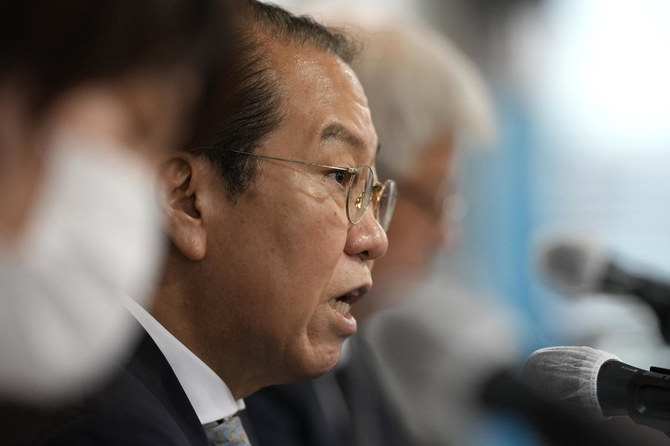
Kwon, who oversees South Korea’s relations with North Korea, said at a news conference that the North is exploiting a favorable environment to push ahead with weapons development and overturn the regional status quo as the US-led West remains distracted over Russia’s invasion of Ukraine. He said North Korea’s nuclear ambitions pose a “very serious and fundamental threat” to South Korea and that Seoul is preparing stern countermeasures in response to a possible North Korean nuclear test. He didn’t elaborate.
“North Korea’s transition in weapons development from long-range ballistic missiles to short-range ballistic missiles, from strategic nuclear weapons to tactical nuclear weapons, is obviously targeted toward South Korea,” Kwon said.
“It seems clear that North Korea is simultaneously pursuing an ability to attack the United States and to attack South Korea,” he said.
Kwon said North Korea could go ahead with a nuclear test at “any time.”
While the US government has vowed to pursue additional sanctions against North Korea if it conducts another nuclear test, the possibility of meaningful new punitive measures remains unclear because Russia’s war in Ukraine has deepened divisions among permanent members of the UN Security Council. China and Russia have vetoed US-sponsored proposals that would have increased sanctions on North Korea over some of its recent ballistic missile tests.
Kwon, who served as South Korea’s ambassador to China from 2013 to 2015, expressed hope that Beijing and Moscow will react differently to a North Korean nuclear test since both have maintained public support for a denuclearized Korean Peninsula.
“If North Korea goes ahead with a nuclear test at a time when the global security situation is as instable as it is now, the country will face enormous criticism from international society, and the response will be more than just words,” Kwon said.
North Korea has conducted more ballistic tests in the first half of 2022 than it has in any previous entire year, firing around 30 missiles, including its first tests of ICBMs in nearly five years. Kim has punctuated the tests with repeated comments that North Korea would use nuclear weapons proactively if threatened or provoked, which experts say is an escalation in its nuclear doctrine.
The US government has reaffirmed its commitment to defending allies South Korea and Japan with its full range of military capabilities, including nuclear, but there are concerns in Seoul that North Korea’s ICBMs could make Washington hesitant in the event of another war on the Korean Peninsula.
Experts say North Korea’s unusually heavy testing activity this year underscores Kim’s intent to advance his arsenal as well as pressure the United States into accepting North Korea as a nuclear power, thereby strengthening its position in negotiating economic and security concessions.
Talks have stalled since early 2019 because of disagreements over a relaxation of crippling US-led sanctions against North Korea in exchange for North Korean disarmament steps.


![]()

Seoul urges China, Russia to prevent North Korean nuclear test
Short Url
https://arab.news/mn9pf
Seoul urges China, Russia to prevent North Korean nuclear test
- Experts say North Korea could be planning to deploy battlefield nuclear weapons along its tense border with South Korea


Latest updates


© 2026 SAUDI RESEARCH & PUBLISHING COMPANY, All Rights Reserved And subject to Terms of Use Agreement.