- ‘Kitnay Duur Kitnay Paas’ celebrates shared history and culture between the two South Asian states
- The project brought together 42 filmmakers from both countries who are expected to meet in Dubai next week
KARACHI: It has been over a year since filmmakers from India and Pakistan came together to work on a project that sought to highlight similarities between the two countries that usually remain at odds with each other.
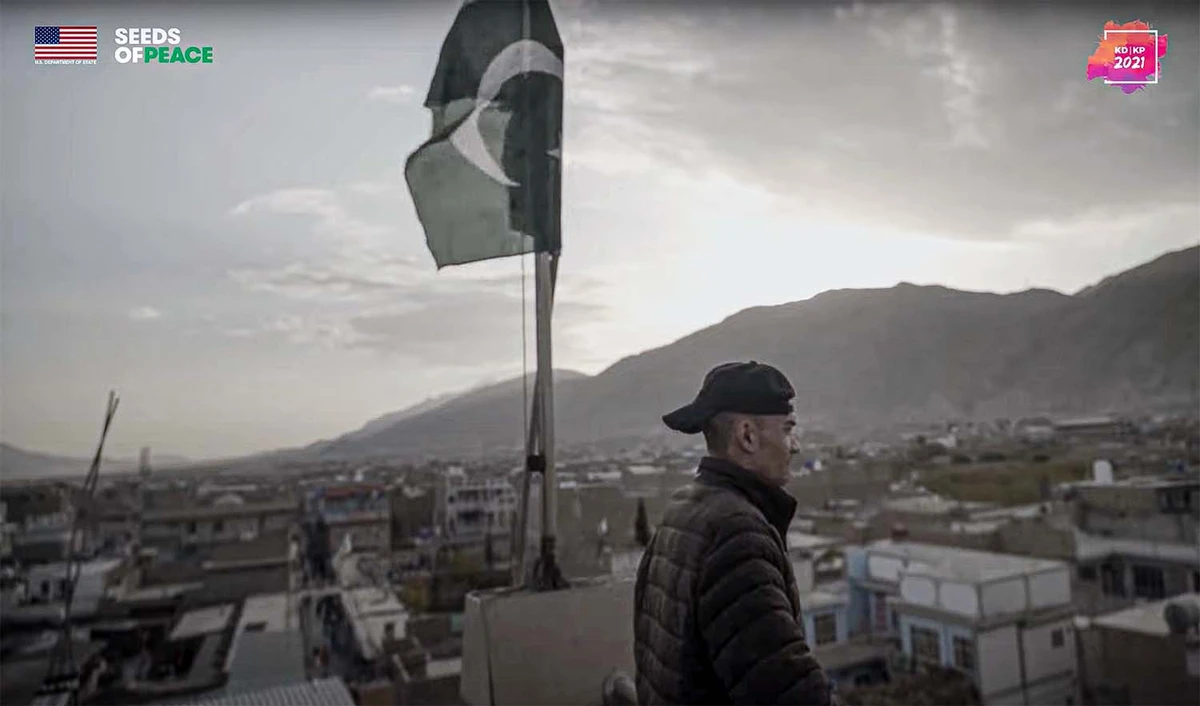
The cross-border initiative that brought together 42 emerging filmmakers, 21 from each country, was envisaged by Seeds of Peace, a New York-based non-profit organization, in collaboration with the US Department of State.
“Kitnay Duur Kitnay Paas” – So Far, So Close – was officially launched at the US consulate in Karachi on Friday.
It is a series of eight short films that focus on different dimensions of life in the two countries.
“With ‘Kitnay Duur Kitnay Paas,’ we hoped the stories they [the storytellers] would create together would celebrate the shared history and culture of Pakistan and India, encourage critical thought and peaceful coexistence, and further strengthen the ties between the people of both countries,” US Consul General Mark Stroh told the gathering.
Speaking at the occasion, Pakistani filmmaker Shahzeb Khalid said he was eager to participate in the project since it gave him the opportunity to project the bond between the two countries in a different light.
“What I was really excited about was actually making content which was about positivity,” he said while speaking at the ceremony.
His short film, “Viral,” showed how people on both sides of the border could connect on the basis of common interests.
The short video focused on two boys from Mumbai who begin to admire the work of a Pakistani filmmaker. While they reach out to him to hone their skills, the interaction gives rise to a process of mutual learning.
“All of the stories were so easily connectable on both sides,” he said.
The initiative faced challenges due to the COVID-19 pandemic, though the storytellers learned a great deal about filmmaking by their three mentors: Haya Fatima Iqbal from Pakistan, Sankalp Meshram from India and Marcus Goldbas from the US.
“Each team had to pitch more than one film idea,” Iqbal said. “Each film could be shot on both sides of the border and it had the universal value of friendship and harmony between the two countries.”
“The stories in the films ... not only resonate with our troubled and, let’s say, tragic history but they also find a way to come to terms with it," Meshram said.
The eight films include works of fiction as well as documentaries, but all of them are entertaining and explore universal themes of love and friendship.
An Indian filmmaker, Nupur Agarwal, who worked on “Eik Tha Kabootar” (There was a Pigeon), shared her experience of working on the project while joining the official launch on the film via Zoom link.
“There are so many memories which will remain special to me,” she said. “The one closest to my heart is the shoot in India. We had this pigeon on the set and his name was Salman. Imagine that the owner of this pigeon was called Shahrukh. So, on my film set, we had both Shahrukh and Salman!”
Explaining the rationale of the project, Qasim Aslam, the Pakistan partner of Seeds of Peace, told Arab News that people had the ability to rise above their differences to connect with one another.
“While we keep fearing people who are different, the reality is I have seen people from different parts of the world come together and it’s nothing but a celebration of humanity itself,” he said. “Human beings want to connect, irrespective of nationalities, religion, etc.”
The eight short films are available for viewing on the official website of “Kitnay Duur Kitnay Paas.”
The teams behind the project are also expected to meet in person next week in Dubai.