Oil Updates — Oil settled up; G7 considering ways of capping Russian oil price; US drillers add oil and gas rigs for a record 23 months

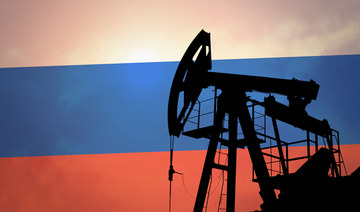
US energy firms this week added oil and natural gas rigs for a second week in a row, in a record 23-month streak of increases. (Shutterstock)
Short Url
Updated 26 June 2022
Follow

Oil Updates — Oil settled up; G7 considering ways of capping Russian oil price; US drillers add oil and gas rigs for a record 23 months

RIYADH: Oil prices settled up by more than $3 a barrel on Friday, supported by tight supply, but they notched their second weekly decline on concern that rising interest rates could push the world economy into recession.

Brent crude settled up $3.07, or 2.8 percent, at $113.12 a barrel by 12:10 p.m. EDT. US West Texas Intermediate crude settled up $3.35, or 3.2 percent, at $107.62.

No government guidance on pricing policy: Incoming Petrobras CEO 

The incoming CEO of Brazil’s state-run oil company Petrobras told a corporate committee he has not received any guidance from the government on changing the firm’s fuel pricing policy, a document showed on Saturday.

Caio Mario Paes de Andrade, a former economy ministry official appointed by President Jair Bolsonaro to run Petrobras, was approved by the eligibility committee on Friday, a key step for him to take the reins of the company.

The minutes of the meeting, published by Petrobras on Saturday, showed the committee had asked Andrade about the company’s pricing policy, a topic that helped bring down three CEOs during Bolsonaro’s tenure as price hikes created tensions with the far-right leader.

“I have no specific or general guidance from the controlling shareholder or any other shareholder in the sense of changing the company’s pricing policy,” Andrade said.

He is on the verge of taking over as CEO a month after he was named by Bolsonaro, awaiting a board vote on June 27.

G7 considering ways of capping Russian oil price

Leaders of the Group of Seven rich democracies are having “very constructive” discussions on a possible cap on Russian oil imports, a German government official said on Saturday shortly before the start of the annual three-day G7 summit.

The proposal is part of broader G7 discussions on how to further crank up the pressure on the Kremlin over its invasion of Ukraine without stoking global inflationary pressures.

The Ukraine war, energy and food shortages and the darkening global economic outlook are expected to dominate the agenda of the summit that is taking place this year in Schloss Elmau, an alpine castle resort in southern Germany.

The US, Canada and Britain have already banned imports of Russian oil while EU leaders have agreed on an embargo that will take full effect by the end-2022 as part of sanctions on the Kremlin over its invasion of Ukraine.

With energy prices soaring though, the West fears such embargoes will not actually put a dent in Russia’s war chest as the country earns more from exports even as volumes fall.

A price cap could solve that dilemma, while also avoiding further restricting oil supply and fueling inflation, officials say, but for it to work, it requires buy-in from heavy importers like India and China.

“We are on a good path to reach an agreement,” the official said.

The official said the G7 was also discussing the need to combine ambitious climate goals with the need for some countries to explore new gas fields as Europe rushed to wean itself off Russian gas imports.

US drillers add oil and gas rigs for a record 23 months

US energy firms this week added oil and natural gas rigs for a second week in a row, in a record 23-month streak of increases, as high crude prices and prodding by the government prompted drillers to return to the well pad.

The oil and gas rig count, an early indicator of future output, rose 13 to 753 in the week to June 24, its highest since March 2020, energy services firm Baker Hughes Co. said in its closely followed report on Friday.

Baker Hughes said that puts the total rig count up 283, or 60 percent, over this time last year.

US oil rigs rose 10 to 594 this week, their highest since March 2020, while gas rigs gained three to 157, their highest since September 2019.

That put the overall oil and gas rig count up for a record 23 months in a row, gaining 26 in June. It also put the count up for seven quarters in a row, the longest streak of gains since 2011.

The oil rig count was up for a record 22 months in a row, rising 20 in June. It also increased for the seventh quarter, the most quarters since 2012.

The gas rig count rose by six in June, rising for a 10th month in a row, tying the record set in May 2010. It also put the gas count up for seven quarters in a row, matching the record set in 2004.

(With inputs from Reuters) 


AI will never replace human creativity, says SRMG CEO 

Updated 30 January 2026
Follow

AI will never replace human creativity, says SRMG CEO 

  • Speaking to Maya Hojeij, senior business anchor at Asharq with Bloomberg, Jomana R. Alrashid expressed pride in SRMG platforms that had absorbed and adopted AI

RIYADH: Jomana R. Alrashid, CEO of Saudi Research and Media Group, highlighted how AI cannot replace human creativity during a session at The Family Office’s “Investing Is a Sea” summit at Shura Island on Friday. 

“You can never replace human creativity. Journalism at the end of the day, and content creation, is all about storytelling, and that’s a creative role that AI does not have the power to do just yet,” Alrashid told the investment summit. 

“We will never eliminate that human role which comes in to actually tell that story, do the actual investigative reporting around it, make sure to be able to also tell you what’s news or what’s factual from what’s wrong ... what’s a misinformation from bias, and that’s the bigger role that the editorial player does in the newsroom.”

Speaking on the topic of AI, moderated by Maya Hojeij, senior business anchor at Asharq with Bloomberg, the CEO expressed her pride in SRMG platforms that had absorbed and adopted AI in a way that was “transformative.”

“We are now translating all of our content leveraging AI. We are also now being able to create documentaries leveraging AI. We now have AI-facilitated fact-checking, AI facilities clipping, transcribing. This is what we believe is the future.”

Alrashid was asked what the journalist of the future would look like. “He’s a journalist and an engineer. He’s someone who needs to understand data. And I think this is another topic that is extremely important, understanding the data that you’re working with,” she said.

“This is something that AI has facilitated as well. I must say that over the past 20 years in the region, especially when it comes to media companies, we did not understand the importance of data.”


The CEO highlighted that previously, media would rely on polling, surveys or viewership numbers, but now more detailed information about what viewers wanted was available. 

During the fireside session, Alrashid was asked how the international community viewed the Middle Eastern media. Alrashid said that over the past decades it had played a critical role in informing wider audiences about issues that were extremely complex — politically, culturally and economically — and continued to play that role. 

“Right now it has a bigger role to play, given the role again of social media, citizen journalists, content creators. But I also do believe that it has been facilitated by the power that AI has. Now immediately, you can ensure that that kind of content that is being created by credible, tier-A journalists, world-class journalists, can travel beyond its borders, can travel instantly to target different geographies, different people, different countries, in different languages, in different formats.”

She said that there was a big opportunity for Arab media not to be limited to simply Arab consumption, but to finally transcend borders and be available in different languages and to cater to their audiences. 


The CEO expressed optimism about the future, emphasizing the importance of having a clear vision, a strong strategy, and full team alignment. 

Traditional advertising models, once centered on television and print, were rapidly changing, with social media platforms now dominating advertising revenue.

“It’s drastically changing. Ultimately in the past, we used to compete with one another over viewership. But now we’re also competing with the likes of social media platforms; 80 percent of the advertising revenue in the Middle East goes to the social media platforms, but that means that there’s 80 percent interest opportunities.” 

She said that the challenge was to create the right content on these platforms that engaged the target audiences and enabled commercial partnerships. “I don’t think this is a secret, but brands do not like to advertise with news channels. Ultimately, it’s always related with either conflict or war, which is a deterrent to advertisers. 

“And that’s why we’ve entered new verticals such as sports. And that’s why we also double down on our lifestyle vertical. Ultimately, we have the largest market share when it comes to lifestyle ... And we’ve launched new platforms such as Billboard Arabia that gives us an entry into music.” 

Alrashid said this was why the group was in a strong position to counter the decline in advertising revenues across different platforms, and by introducing new products.

“Another very important IP that we’ve created is events attached to the brands that have been operating in the region for 30-plus years. Any IP or any title right now that doesn’t have an event attached to it is missing out on a very big commercial opportunity that allows us to sit in a room, exchange ideas, talk to one another, get to know one another behind the screen.” 

The CEO said that disruption was now constant and often self-driving, adding that the future of the industry was often in storytelling and the ability to innovate by creating persuasive content that connected directly with the audience. 

“But the next disruption is going to continue to come from AI. And how quickly this tool and this very powerful technology evolves. And whether we are in a position to cope with it, adapt to it, and absorb it fully or not.”