

Biden administration leans on Tesla for guidance in renewable fuel policy reform

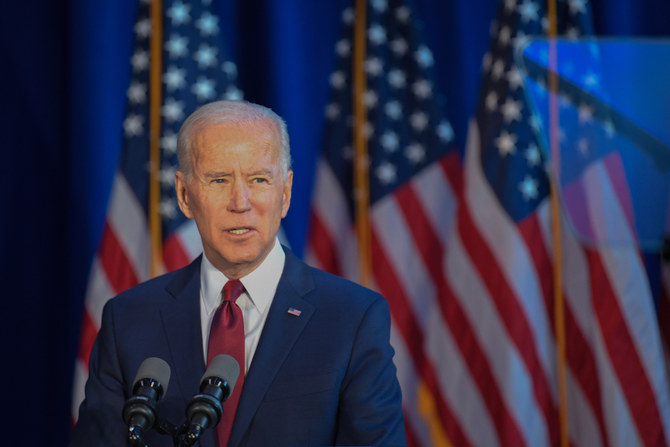
The Biden administration contacted Tesla on its first day in office (Shutterstock)
Short Url
Updated 23 June 2022
Follow

Biden administration leans on Tesla for guidance in renewable fuel policy reform

US President Joe Biden rarely mentions electric car maker Tesla Inc. in public. But privately his administration has leaned on the company to help craft a new policy to allow electric vehicles to benefit from the nation’s lucrative renewable fuel subsidies, according to emails reviewed by Reuters.

The Biden administration contacted Tesla on its first day in office, marking the start of a series of meetings on the topic between federal officials and companies linked to the EV industry over the months that followed, according to the emails.

The administration’s early and extensive outreach reflects that expanding the scope of the US Renewable Fuel Standard to make it a tool for electrifying the nation’s automobile fleet is one of Biden’s priorities in the fight against climate change.

The RFS, which dates back to 2005, is a federal program that requires transportation fuel sold in the United States to contain a minimum volume of renewable fuels. Until now, it has been primarily a subsidy for corn-based ethanol.

The White House’s outreach to Tesla also shows that, despite a public grudge match between Biden and Tesla founder Elon Musk, the Biden team tried early on to involve the carmaker in one of its key policy pushes. Biden has set a target to make half of all new vehicles sold in 2030 zero-emissions vehicles.

The US Environmental Protection Agency, which administers the RFS, is expected to unveil proposed changes to the policy sometime this year, defining new winners and losers in a multibillion-dollar market for credits, known as RINs, that has supported corn growers and biofuels producers for more than a decade.

Early signs are that the administration is leaning toward a rule that benefits carmakers like Tesla, giving them the greatest access to so-called e-RINS, or electric RINs. But the reform could also spread the subsidy to related industries too, like car charging companies and landfills that supply renewable biogas to power plants, according to industry players.

“We have heard through the grapevine that car companies are really, really going to like this rule,” said Maureen Walsh, director of federal policy with the American Biogas Council, speaking at a conference in May. But she added: “We have all been scrapping at that pile.”

The idea of including electric vehicles in the RFS has been under consideration for years, but gained steam as Biden’s transition team zeroed in on EVs as a job-friendly solution to the climate crisis.

Transport accounts for more than a quarter of US greenhouse gas emissions.

The White House did not respond to requests for comment.

The EPA said it was consulting “all interested stakeholders” in its RFS policy review.

The current RFS requires oil refiners to blend ethanol and other biofuels into the fuel pool or buy RINs from those who do. That policy has spurred an economic boom in Farm Belt states. But it has also angered environmental groups who say the extra corn production damages land and water while prolonging the era of the internal-combustion engine.

Friends of the Earth, an environmental group, has voiced disapproval over an e-RIN program. The group sees the RFS as a policy that has failed to increase production of new generation lower-carbon fuels, while also harming the environment. It also sees expanding the program as a slippery slope toward increasing the use of feedstocks for wood and wood waste, which can generate electricity.

“The RFS should be reformed to tackle giveaways for dirty corn ethanol. It shouldn’t be expanded to include new giveaways for factory farming and woody biomass,” said Friends of the Earth spokesman Lukas Ross.

Turn To Tesla 


(Shutterstock)


On the morning of Biden’s presidential inauguration in January 2021, EPA staffer Dallas Burkholder emailed a top Tesla lobbyist, Rohan Patel, to set up a meeting on how to incorporate electric cars into the RFS, according to the documents reviewed by Reuters. They scheduled a meeting for a week later, records show.

Since then, the Biden EPA has had additional meetings on the topic with Tesla, groups representing biogas producers like Waste Management Inc. and Republic Services Inc. and charging station companies like ChargePoint Holdings Inc., according to the documents.

The EPA has also set up at least one meeting with White House staff members, including climate adviser Ali Zaidi, to discuss the reforms, according to the emails.

The Biden White House has been an unapologetic supporter of the EV industry, pinning much of its climate hopes on getting more electric cars on the road. The bipartisan infrastructure bill that passed last year included $7.5 billion for new EV charging stations and Biden has sought to reinstate expired tax credits to help consumers pay for new vehicles.

Even so, Tesla’s CEO, Musk, has often been at odds with the White House, sending out harsh tweets directed at Biden. In February, Biden publicly acknowledged the role of Tesla in EV manufacturing, after Musk repeatedly complained about being ignored.

What Everyone Wants 

Tesla is seeking changes to the RFS that will allow it to earn renewable fuel credits based on kilowatt hours driven or similar metrics, according to two sources familiar with the plan. The company has also explored partnerships with biogas-producers to give them leverage in whatever market emerges from the new rule, the sources say.

Tesla did not respond to requests for comment for this story.

Members of the car-charging industry, meanwhile, are also pushing for a share.

Matthew Nelson, a lobbyist with Electrify America, a charging company trade group, wrote to the EPA in October and told them that e-RINs would do more to enable Biden’s 2030 goals of 500,000 charging stations and 50 percent EV sales than any other policy, according to the emails. He added that charging companies need the credit to compete with gasoline.

The United States currently has about 48,000 charging stations, concentrated around coastal regions, according to Department of Energy data.

Biogas producers, like landfills, also want credits, arguing they provide renewable fuel to the grid that generates the power for electric vehicles.

Biogas-derived electricity is already eligible for generating RINs. But the EPA has never approved an application from the industry because it has yet to determine the best way to trace the power entering EVs back to its origin.

In 2020, landfill gas generated about 10 billion kilowatt hours of electricity, or 0.3 percent of US utility-scale power.

“We feel that implementing the electricity program in the RFS aligns well with the Biden administration’s climate goals,” Carrie Annand, executive director of the Biomass Power Association, wrote to the EPA, according to the documents. 


Saudi Arabia sets global benchmark in AI modernization

Updated 15 January 2026
Follow

Saudi Arabia sets global benchmark in AI modernization

  • Executives hail the Kingdom’s robust infrastructure and strategic workforce programs

RIYADH: Saudi Arabia is emerging as a global leader in artificial intelligence, according to executives from OpenText, one of the world’s largest enterprise information management companies. 

With 22 years of international AI experience, Harald Adams, OpenText’s senior vice president of sales for international markets, said the Kingdom’s modernization efforts are now setting a global standard.

“From my perspective, Saudi Arabia is not only leading the modernization towards artificial intelligence in the Middle East, I think it is even not leading it only in the MENA region. I think it is leading it globally,” Adams told Arab News.

In an interview, Adams and George Schembri, vice president and general manager for the Middle East at OpenText, discussed the Kingdom’s significant investments in AI during the inauguration of OpenText’s new regional headquarters in Riyadh.

“So for us (OpenText), from our perspective, it was a strategic decision to move our MENA headquarters to Saudi Arabia because we believe that we will see here a lot of innovation coming out of the country, we can replicate not only to the MENA region, maybe even further to the global level,” Adams said.

The new headquarters, located in the King Abdullah Financial District, will serve as a central hub for OpenText customers and partners across the Middle East. Its opening reflects a broader trend of tech giants relocating to Riyadh, signaling the Kingdom’s rise as a hub for global AI innovation.

Adams attributed Saudi Arabia’s lead in AI modernization to a combination of substantial financial backing, a unified national strategy, and a remarkable pace of execution.

“I mean, a couple of things, because the ingredients in Saudi Arabia are of course, quite interesting. On the one hand side, Saudi Arabia has deep pockets and great ambitions. And they are, I mean, and they are executing fast, yeah,” he said.
“So from that perspective, at the moment, what we see is that there are, especially on the government side, I can’t see any other government organizations globally moving faster into that direction than it is happening in Saudi Arabia. Not in the region, not even on a global level, they are leading the game,” he underlined.

Schembri added, “Saudi’s AI vision is one of the most ambitious in the world, and AI on a national scale is not good without trusted, secured, and governed, and this is where OpenText helps to enable the Saudi organizations to be able to deliver on the 2030 Vision.”

“The Kingdom’s focus on AI and digital transformation creates a powerful opportunity for organizations to unlock value from their information,” Schembri stated.
“With OpenText on the ground in Riyadh, our customers gain direct access to trusted global expertise combined with local insight — enabling them to manage information securely, scale AI with confidence, and compete on a global stage,” he added.

DID YOU KNOW?

• Saudi Arabia ranks 5th globally and 1st in the region for AI growth under the 2025 Global AI Index.

• The Kingdom is also 3rd globally in advanced AI model development, trailing only the US and China.

• AI is projected to contribute $235.2 billion — or 12.4 percent — to Saudi Arabia’s GDP by 2030.

The inauguration of OpenText’s new regional headquarters was attended by Canada’s Minister of International Trade and Economic Development, Maninder Sidhu, and Jean-Philippe Linteau, Canada’s ambassador to Saudi Arabia. 

Sidhu emphasized the alignment of Saudi Vision 2030 with Canada’s economic and innovation goals.

“His Highness (Crown Prince Mohammed bin Salman) and Vision 2030, there is a lot of alignment with Canada, as you know, with the economic collaboration, with his vision around mining, around education, tourism, healthcare, you look at AI and tech, there’s a lot of alignment here at OpenText Grand opening their regional headquarters,” Sidhu told Arab News.

Saudi Arabia’s AI ambitions are projected to contribute $235.2 billion — or 12.4 percent — to its GDP by 2030, according to PwC. The Saudi Data and AI Authority, established by a royal decree in 2019, drives the Kingdom’s national data and AI strategy.

One flagship initiative, Humain, chaired by Crown Prince Mohammed bin Salman, was launched in May 2025 under the Public Investment Fund. It aims to build a full AI stack — from data centers and cloud infrastructure to models and applications — positioning Saudi Arabia as a globally competitive AI hub. The project plans to establish a data center capacity of 1.8 GW by 2030 and 100 GW of AI compute capacity by 2026.

Saudi Arabia is also expanding international partnerships. In May 2025, Humain signed a $5 billion agreement with Amazon Web Services to accelerate AI adoption domestically and globally, focusing on infrastructure, services, and talent development.

The Kingdom ranked fifth globally and first in the Arab region for AI sector growth under the 2025 Global AI Index, and third worldwide in advanced AI model development, behind only the US and China, according to the Stanford University AI Index 2025.

Education is another pillar of Saudi AI strategy. Starting in the 2025-26 academic year, AI will be taught as a core subject across all public school grades, reaching roughly 6.7 million students. The curriculum will cover algorithmic thinking, data literacy, and AI ethics.

OpenText executives emphasized their commitment to supporting Vision 2030 and the national AI strategy through workforce development.

“OpenText has put a lot of investment in the Kingdom, right. We brought cloud to the Kingdom, we’ve opened our headquarters in the Kingdom, we’ve basically hiring Saudis in the Kingdom, We basically building, if you like, an ecosystem to support the Kingdom. And on top of that, what we’re doing is we’re putting a plan together, if you like, a program to look at how we can educate, if you like, the students at universities,” Schembri said.
“So this is something that we are looking into, we are basically investigating and to see how we can support the Saudi nationals when they come into the workplace. And I’m really excited. I have Harry who is, our leadership who’s supporting this program.”
“It’s something that we are putting together. It’ll take some effort. So it’s still in play because we want to make sure what we put it basically delivers on what we're trying to achieve based on the vision of Saudi,” he added.

“The younger generation is sooner or later either working for us or maybe for a partner or for maybe for a customer. So that’s why we are to 100 percent committed to enable all of that,” Adams said.