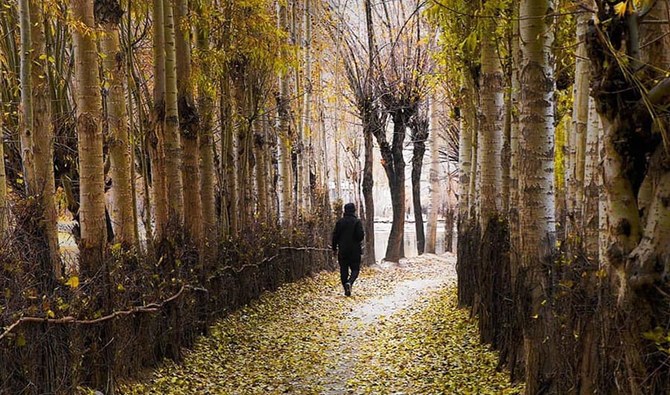

GHIZER: Over seven hundred people, local youth and officials, gathered in the picturesque Ghizer district in northern Pakistan last week for a Grand Youth Marka with a single-point agenda: to campaign for access to mental health services in an area where the prevalence of suicide has for years alarmed authorities and residents alike.
Ghizer district lies about 70 km from Gilgit, the capital of Gilgit-Baltistan, an impoverished, and remote part of the larger Kashmir, which, despite being the gateway to the China-Pakistan Economic Corridor, has so far reaped few rewards from the multibillion-dollar infrastructure and energy plan.
With nearly 170,000 inhabitants, Ghizer comprises less than a tenth of Gilgit-Baltistan’s population, but the number of suicide cases it reports is more than double that of the whole region.
Since 2001, police in Gilgit-Baltistan have recorded 412 incidents of suicide — 294 in Ghizer.
“There are 10 districts in Gilgit-Baltistan and the trend of committing suicide in Ghizer district is very high,” Ghizer Superintendent of Police Shah Mir Khalid told Arab News. “The average number of suicide cases per year is 20 to 25.”
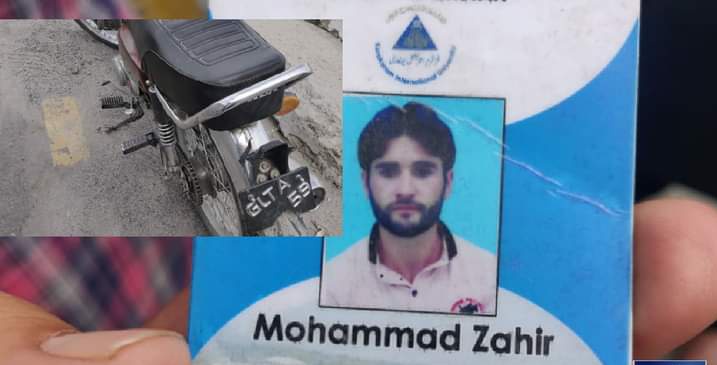
This photo shows a student of Karakoram International University from Ghizer who took his life by jumping into River Gilgit on June 15, 2022. (Social Media)
Nineteen people in Ghizar have taken their own lives since the beginning of the year — four in June alone.
Khalid said police were working with social welfare organizations and had established a local response center, but he could not pin down the main reason for the high suicide rate in the district.
“There are different reasons in all cases, we can’t attribute a single reason,” he added. “But domestic violence, poverty, high literacy rate with lack of opportunities are the causes of suicide.”
After last Sunda’s Grand Youth Marka, Gilgit-Baltistan chief minister Muhammad Khalid Khurshid issued an order to establish a special committee to investigate “the chronic issue of suicides” in the district.
While the committee is expected to submit its report in the next two weeks, residents said the most immediate need was for the government to set up a mental health facility in the area.
“Establishment of an asylum in Ghizer district is an urgent need,” Qasim Shah, a journalist from the district, told Arab News.
Social activist Hajjida Parveen, who has been monitoring the problem for the past 10 years, said she believed the main cause of suicide in the district was mental illness, and it needed to be investigated why people in the region were prone to the condition.
“Despite the mental health issue, there is no psychologist in the whole district,” she added.
There is no forensic laboratory either, which may be resulting in murder cases being reported as suicides, Israruddin Israr, the Gilgit-Baltistan coordinator for the Human Rights Commission of Pakistan, said.
“Proper investigation should be conducted to separate murder and suicide cases. And for this purpose, the presence of a forensic lab and medico-legal expert is necessary,” he told Arab News.
“Causes of suicide should be identified and diagnosed through a scientific way,” he said. “To find the real causes of suicide, a team for in-depth research should be constituted, incorporating experts of different disciplines.”