

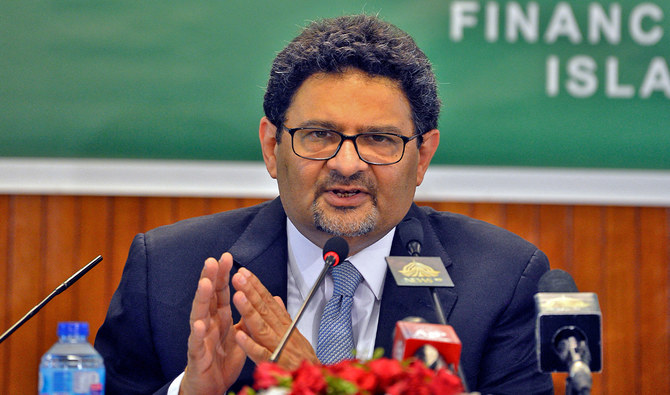

ISLAMABAD: The Pakistani finance minister said on Wednesday Islamabad had made “important progress” in talks with the International Monetary Fund and hoped to receive an updated memorandum on macroeconomic and financial targets under a $6 billion program “over the weekend,” paving the way for the disbursement of a latest tranche of up to $1 billion.
Pakistan entered the IMF program in 2019. The last disbursement was in February and the next tranche was to follow a review in March, but the government of now ousted prime minister Imran Khan introduced costly fuel subsidies which threw fiscal targets and the program off track. Pakistan’s new government has removed the price caps, with fuel prices going up by around 70 percent in less than a month.
Pakistan is hoping to get the latest tranche as its economy teeters on the brink of crisis, with foreign exchange reserves drying up fast and the Pakistani rupee at record lows against the US dollar.
Pakistan had sought an increase in the size and duration of the program when its representatives met with IMF officials in Washington in April.
“We have made important progress [in talks],” Finance Minister Miftah Ismail told Arab News. “Now over the weekend we hope to get the MEFP [memorandum of economic and financial policies].”
Ismail denied reports that the IMF had declined to increase the size of the program: “IMF has not said yet whether it will augment the money. How can anyone say they have said no?”
In a text message to Arab News, Esther Perez Ruiz, the IMF’s resident representative in Islamabad, said:
“Discussions between the IMF staff and the authorities on policies to strengthen macroeconomic stability in the coming year continue, and important progress has been made over the FY23 budget.”
Pakistan unveiled a 9.5 trillion rupee ($47 billion) budget for 2022-23 this month aimed at tight fiscal consolidation in a bid to convince the IMF to restart much-needed bailout payments. However, the lender later said additional measures were needed to bring Pakistan’s budget in line with the key objectives of the IMF scheme.
The two sides held talks on Tuesday night and agreed on the budget and fiscal measures but still need to agree on a set of monetary targets, the finance minister told Reuters.
He said he did not expect any “hiccups” in the remaining talks and expected an initial memorandum on macroeconomic and financial targets and then an official agreement.
“I am also expecting that the duration of the program will be extended by a year and the amount of loan will be augmented,” Ismail said, adding that the IMF had not committed to it yet, but based on talks he expected it to come through.
In a Twitter post on Wednesday, Ismail said a Chinese consortium of banks had signed an approximately $2.3 billion loan facility agreement, which was signed by the Pakistani side yesterday, Tuesday.
“Inflow is expected within a couple of days. We thank the Chinese government for facilitating this transaction.”


