
LONDON: The mother of an American photojournalist killed by Daesh said that one of the group’s members came “very close” to apologizing to her during a prison visit.
Alexanda Kotey, a 38-year-old former British citizen, was jailed for life in the US in April after admitting to kidnapping, conspiracy to murder and providing material support for terrorism.
Kotey was part of the so-called “Beatles” gang of Daesh fighters, who were given their nickname due to their British accents.
The group murdered journalist James Foley, who was captured by the “Beatles” in 2012 while covering the Syrian civil war. He was killed by “Jihadi John” Mohammed Emwazi in August 2014.
Kotey agreed to meet the families of his victims as part of his plea deal with American prosecutors, which will see him spending 15 years in a US jail before being transferred back to Britain.
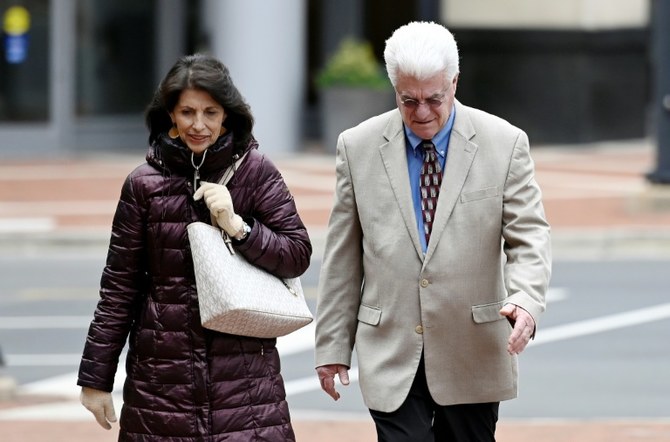
Diane Foley, who lives in the northeastern US state of New Hampshire, visited Kotey in his cell in Virginia, where they were joined by Kotey’s legal team, some FBI agents and a friend of James.
“We had quite a group of people. However, in our conversation, it seemed very much just the two of us,” she said.
“I knew our son Jim would have wanted us to meet with him. I wanted Alexanda to have the opportunity to know who Jim was as a person and to have an opportunity to meet Jim’s family.”
Speaking at a conference on how to handle former Daesh fighters at King’s College, London, she said: “I tried to be a good listener, tried to hear his side of things and how he became radicalized and how he came to see our innocent citizens as evil and the cause for all the pain and suffering that they may have felt. It’s very poignant to see how everyone lost. When hatred reigns, everyone loses. It’s been a very, very sad experience all around to be honest, but I’m hoping that, maybe, in time, we can get some reconciliation.
“Hatred has to stop, otherwise more violence just continues the cycle, is my opinion, and that’s partly why I went to see him — so there might be some little chance for mercy and forgiveness that our world so needs.”
During the meeting last October, Kotey spoke to Diane about how Muslims have been mistreated by Western powers.
She said: “He was thinking about Guantanamo, and Abu Ghraib, and some of our true missteps in the world, about atrocities that we ourselves are culpable for. It was a lot of that, and then his own difficulty fitting into society and feeling unwelcomed. In many cases, we were not as humanitarian as we should have been.”
But Kotey did not apologize for his role in her son’s death: “He’s come very close. He’s expressed a lot of remorse. He’s written me a couple of letters filled with remorse and his attempt at justifying his actions. And, to me, forgiving oneself, forgiving others, is always a long process. It’s nothing quick, but yes, he’s come very close.
“Who knows if he’s telling the truth to me, but at least it’s given him something to think about, to recognize what he did to people who were really innocent victims themselves.”
Diane is expected to meet Kotey again next week.
“They’ll most likely never see their families again,” she said. “They’ve lost their citizenship and their freedom for the rest of their life and to me that’s a very just punishment. I feel that it gives them the opportunity to make amends and use the years for some good, but it also doesn’t allow them to be free to inflict any more horror.”