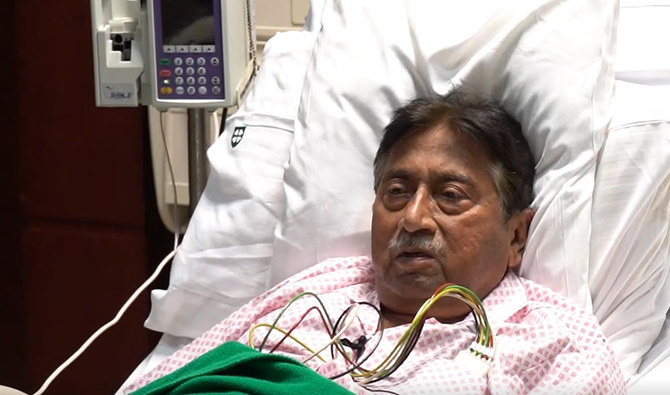
ISLAMABAD: Pakistan’s former military ruler General (r) Pervez Musharraf may not return to his home country any time soon, said one of his close confidants on Saturday, since doctors have asked him to avoid air travel.
Musharraf came into power in a bloodless coup in 1999 after former prime minister Nawaz Sharif tried to dismiss him as army chief. After ruling the country for almost a decade, he was put on a treason trial and sentenced to death in absentia for violating the constitution.
Prior to that, however, Musharraf had left Pakistan in 2016 to seek medical treatment in the United Arab Emirates. He has lived in the Arab country since then, though it was said more recently that he was in a critical condition and wanted to return to Pakistan.
In a conversation to a local newspaper, his former principal secretary, Tariq Aziz, said that “Musharraf was keen to return home but his doctors were coming in the way.”
He informed that the UAE government was prepared to provide him a wide-bodied Boeing-777 plane by converting it into an air ambulance, but the doctors were advising him against air travel.
“Aziz said that the former president was admitted to a state-of-the-art hospital in the UAE,” The News wrote. “A competent team of doctors was attending to him but staying away from the motherland was causing him uneasiness.”
Aziz, who became friends with Musharraf in the college, said he was in touch with the former general’s family in the UAE.
In the last few days, Pakistan’s top civil and military leaders have said that Musharraf should be allowed to return to the country, though there are several politicians and civil society activists who have been demanding his accountability.
Aziz said that Musharraf was grateful to all those who had prayed for his health despite their political differences with him.


![]()

Musharraf advised against flying back to Pakistan due to medical reasons — media
Short Url
https://arab.news/bscry
Musharraf advised against flying back to Pakistan due to medical reasons — media
- According to one of his close confidants, the UAE is willing to provide the former general an air ambulance
- Tariq Aziz says a competent team of doctors is looking after Musharraf in the Middle Eastern country
Latest updates


© 2026 SAUDI RESEARCH & PUBLISHING COMPANY, All Rights Reserved And subject to Terms of Use Agreement.