

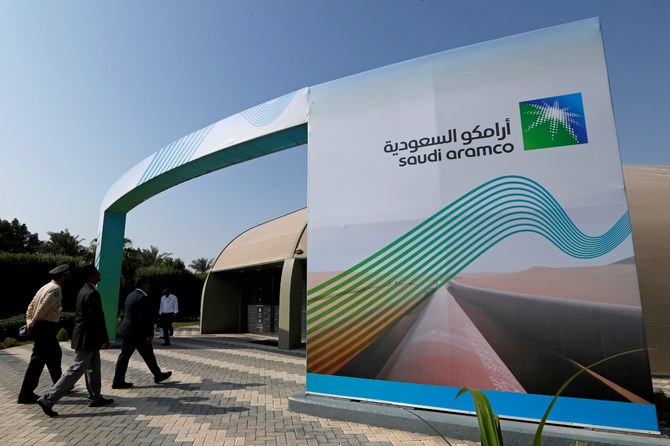
Saudi Aramco debuts on Kantar BrandZ’s list of top 100 valuable brands with 16th rank

The Kantar BrandZ report also added that the combined value of the world’s top 100 most valuable brands has increased by 23 percent to $8.7 trillion over the past year.
Short Url
Updated 15 June 2022
Follow

Saudi Aramco debuts on Kantar BrandZ’s list of top 100 valuable brands with 16th rank

RIYADH: Saudi Aramco, one of the world’s largest energy companies has been ranked 16th on Kantar BrandZ’s list of the top 100 valuable brands. 

Aramco, with a brand value of $99 billion is a newcomer on this list, along with India’s Infosys which grabbed the 64th spot. 

“Following its IPO in 2019, Aramco instantly became one of the world’s largest publicly traded companies by market capitalization,” wrote Kantar BrandZ in its report. 

Apple leapfrogged Google and Amazon to garner the top spot with a brand value of $947 billion. 

Amazon, which was on the top of the list last year, was pushed to the third spot this year with a value of $706 billion. 

Google, which was in the third spot last year, jumped into second place with a brand value of $820 billion. 

The Kantar BrandZ report also added that the combined value of the world’s top 100 most valuable brands has increased by 23 percent to $8.7 trillion over the past year, which highlights the vitality of brand strength in navigating an unsettled global economy. 

Apart from Saudi Aramco and Infosys, other newcomers in the top 100 list are Argentinian online retailer Mercado Libre at the 71st spot, followed by Chinese video-sharing app Kuaishou, Dutch payment company Adyen, and Airbnb at 82nd, 96th and 99th spots respectively. 


Crude oil prices surpass $100 a barrel as the Iran war impedes production and shipping

Updated 09 March 2026
Follow

Crude oil prices surpass $100 a barrel as the Iran war impedes production and shipping

  • 15m barrels of crude oil — about 20 percent of the world’s oil — typically are shipped every day through the Strait of Hormuz
  • Iraq, Kuwait and the UAE have cut their oil production as storage tanks fill due to the reduced ability to export crude

CHICAGO: Oil prices have eclipsed $100 per barrel for the first time in more than three and a half years as the Iran war hinders production and shipping in the Middle East.
The price for a barrel of Brent crude, the international standard, was at $101.19 shortly after trading resumed on the Chicago Mercantile Exchange, up 9.2 percent from its settlement price of $92.69 Friday.
West Texas Intermediate, the light, sweet crude oil produced in the United States, was selling for about $107.06 a barrel. That’s 16.2 percent higher than its Friday settlement price of $90.90.
Both could rise or fall as market trading continues.
The increases followed US crude prices jumping by 36 percent and Brent crude prices rising 28 percent last week. Oil prices have surged as the war, now in its second week, ensnared countries and places that are critical to the production and movement of oil and gas from the Arabian Gulf.
Roughly 15 million barrels of crude oil — about 20 percent of the world’s oil — typically are shipped every day through the Strait of Hormuz, according to independent research firm Rystad Energy. The threat of Iranian missile and drone attacks has all but stopped tankers from traveling through the strait, which is bordered in the north by Iran, carry oil and gas from Saudi Arabia, Kuwait, Iraq, Qatar, Bahrain, the United Arab Emirates and Iran.
Iraq, Kuwait and the UAE have cut their oil production as storage tanks fill due to the reduced ability to export crude. Iran, Israel and the United States also have attacked oil and gas facilities since the war started, exacerbating supply concerns.
The last time US crude futures traded above $100 per barrel was June 30, 2022, when the price reached $105.76. For Brent, it was July 29, 2022, when the price hit $104 per barrel.
The global surge in oil prices since Israel and the US attacked Iran on March 1 has rattled financial markets, sparking worries that higher energy costs will fuel inflation and lead to less spending by US consumers, the main engine of the economy.
In the US, a gallon of regular gasoline rose to $3.45 on Sunday, about 47 cents more than a week earlier, according to AAA motor club. Diesel was selling for about $4.60 a gallon, a weekly increase of about 83 cents.
The price of natural gas has also climbed, though not as much as oil. It rose about 11 percent last week and ended Friday at $3.19 per 1,000 cubic feet.
If oil prices stay above $100 per barrel, some analysts and investors say it could be too much for the global economy to withstand.
Over the weekend, Israel’s military struck oil depots in Tehran and four oil storage tankers and a petroleum transfer terminal.
Mohammad Bagher Qalibaf, the speaker of Iran’s parliament, said the war’s impact on the oil industry would spiral, warning it soon could become harder to produce and sell oil.
Iran exports roughly 1.6 million barrels of oil a day, mostly to China, which may need to look elsewhere for supply if Iran’s exports are disrupted, another factor that could increase energy prices.