

PETA calls on Pakistani officials, universities to cease ‘gory’ training practices on animals

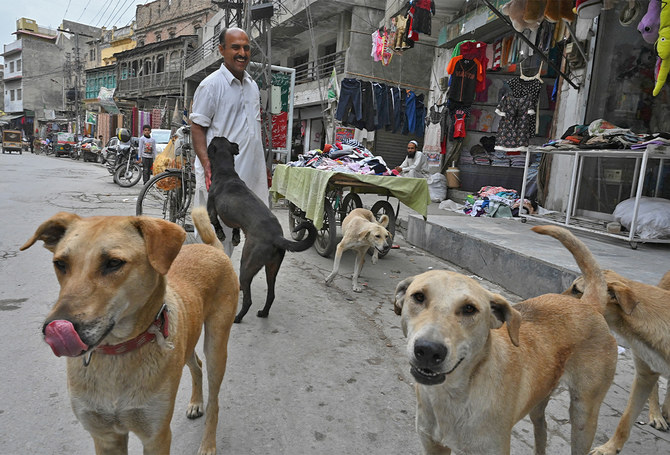
A man plays with stray dogs on a street in Rawalpindi, Pakistan, on March 21, 2021. (AFP/File)
Short Url
Updated 15 June 2022
Follow

PETA calls on Pakistani officials, universities to cease ‘gory’ training practices on animals

  • Arab News investigation last week showed live animals being used across Pakistan to teach surgical skills
  • Practice of using live animals to teach surgery has been declining in vet schools around the world

ISLAMABAD: A prominent American animal rights organization, People for the Ethical Treatment of Animals (PETA), said on Wednesday it had written letters to Pakistani officials about recently reported cases of animal cruelty at veterinary schools and called for an investigation.

Since last month, videos have circulated on social media showing animals in various states of distress after allegedly being operated upon by veterinary students. Activists and members of the public have widely condemned the practices and called for action.

At veterinary schools around the world, the practice of using live animals to teach surgery has been on the decline in the last decade. But an Arab News investigation published on June 10 quoted students and university management saying live animals were being used to teach surgical skills, though they added proper procedures were followed.

“Pls see letters (at link below) that PETA sent to Pakistan officials re the recently reported animal cruelty in veterinary training,” PETA VP Shalin Gala wrote on Twitter, in response to Salman Sufi, head of Prime Minister Shehbaz Sharif’s Strategic Reforms Unit. “Pls contact me to collaborate on reforms to modernize such training. Ready to assist.”

In the Arab News article, Sufi had promised the government would roll out reforms soon.

“We are going to roll out thorough reforms in a week or ten days to put an end to surgeries and experimentation on live animals in all our universities,” he said.

“The present practice of students training on live healthy animals is cruel and we are working on alternatives to educate our veterinary students in line with best international practices ... The proposed reforms may include house jobs and paid internships for vet students to learn the necessary skills like incision and surgery in teaching hospitals.”

PETA said on its website on Tuesday it had written letters to Pir Mehr Ali Shah Arid Agriculture University–Rawalpindi, Riphah College of Veterinary Sciences, and COMSATS University, as well as the Ministry of Federal Education and Professional Training and the Ministry of Inter-Provincial Coordination, which oversees the Pakistan Veterinary Medical Council.

“We called for the institutions to conduct an investigation, embrace humane simulation models, and ban training methods that aren’t medically necessary and don’t directly benefit the animals involved,” PETA said.

“Grisly” footage reviewed by PETA showed dogs with their legs up and mouths tied shut as surgery was performed on them, the group said, alleging that anaesthesia was not administered.

“[The students] neglected their post-operative care as they writhed and whimpered in pain, and even laughed at their suffering,” PETA added.


Pakistan’s Mahnoor Omer named among TIME’s ‘Women of the Year’ for 2026

Updated 01 March 2026
Follow

Pakistan’s Mahnoor Omer named among TIME’s ‘Women of the Year’ for 2026

  • Omer moved a Pakistani court against the so-called ‘period tax’ in Sept. 2025 which has since sparked a national debate
  • Taxes on sanitary pads in Pakistan can add up to 40 percent to retail price, UNICEF says only around 12 percent women use such products

ISLAMABAD: Pakistani women’s rights activist Mahnoor Omer, who fought against taxes on menstrual products, has been named among the TIME magazine’s ‘Women of the Year’ for 2026.

Omer’s efforts have been recognized alongside 16 activists, artists, athletes and businesswomen in the TIME’s Women of the Year 2026 list, including Olympic gold medalist Sydney McLaughlin-Levrone and Oscar-nominated filmmaker Chloe Zhao.

Dissatisfied with the efforts to educate Pakistani girls about sexual violence, Omer founded the Noor Foundation at the age of 14 and held her own workshops with village girls about everything from climate change to menstruation, according to the TIME magazine.

Two years later, a conversation with a domestic worker about the price of pads made her realize that not everyone could afford these essentials. She moved a court against the so-called “period tax” in Sept. 2025 and the case has sparked a national debate on the subject, considered a taboo by many in Pakistan, since its first hearing late last year.

“A decade and one law degree after her interest in activism was sparked, Omer, now 25, is putting her passion and expertise to work in the name of gender equity,” TIME wrote about Omer on its website.

Taxes imposed on sanitary products in Pakistan can add up to 40 percent to the retail price. UNICEF estimates just 12 percent of women in the country use commercially produced pads or tampons. The alternative, using cloth, risks health impacts including rashes and infections, and can make it impossible for girls to attend school while menstruating.

Omer’s suit, which awaits the government response, has sparked a national discussion. She says she spoke about menstruation to her father and male cousins, who thanked her for standing up for their daughters.
The 25-year-old, who is currently enrolled in a master’s degree in gender, peace, and security at the London School of Economics, sees this case as just the first of many.

“I’m not free until every woman is free,” she was quoted as saying by TIME. “I want to leave no stones unturned in terms of what I can do with the next few decades, as a lawyer for the women in my country and gender minorities in general.”