


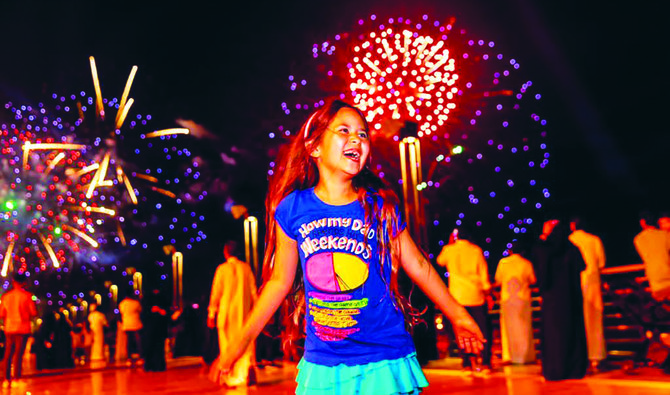
RIYADH, LONDON: What a difference six months makes. On Monday, Saudi Arabia ended its COVID-19 restrictions, including the requirement to wear face masks in closed places. And Saudis are rejoicing.
The announcement by the Saudi Press Agency (SPA) reported, citing an Interior Ministry statement, shows just how far the Kingdom has come in defeating the pandemic since Jan. 12, when it recorded its highest-ever number of new daily COVID-19 cases, including 5,362 new infections and two virus-related deaths.
In practical terms, what the latest announcement means is that Individuals will no longer be required to wear a face mask indoors, except for in the Grand Mosque in Makkah and the Prophet’s Mosque in Madinah, in addition to health facilities, public events, airplanes and public transport providers that wish to uphold the preventative measures.
According to the ministry’s statement, proof of vaccination on the Ministry of Health-approved Tawakkalna app is no longer required to enter establishments, events, activities, airplanes and public transport.
“The vaccine posed a constant pain as I was pregnant, and my physicians recommended that I not take the booster shot,” said 33-year-old Rafa Amin, a second-time mother who recently gave birth to a healthy baby boy.
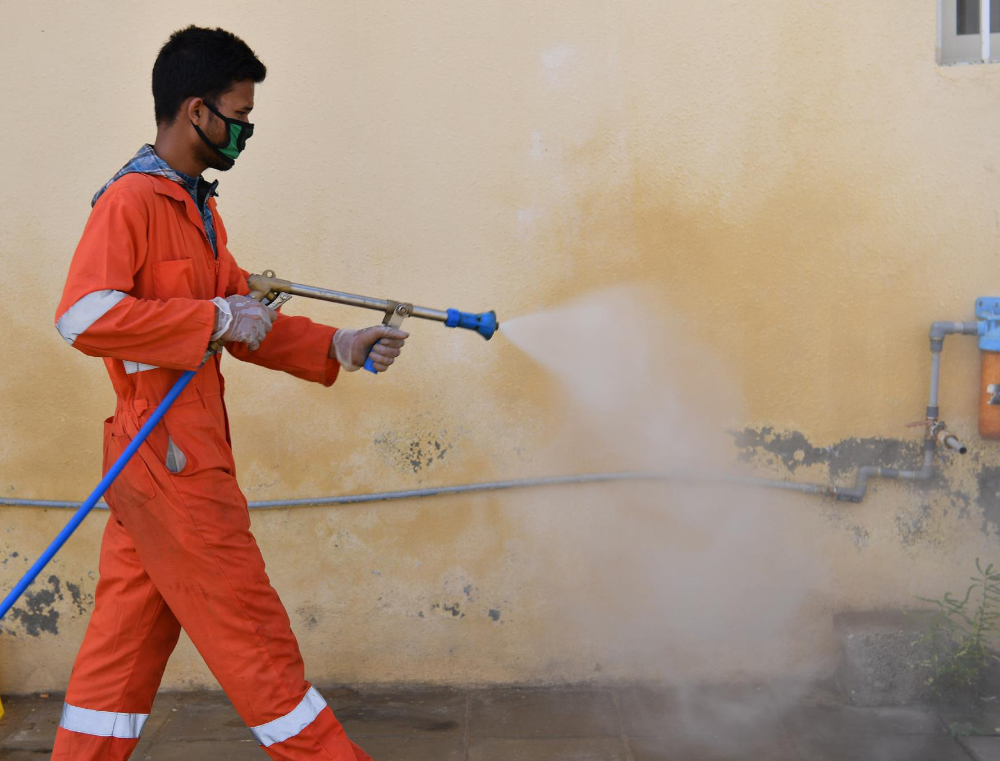
A worker disinfects a street in the southern Saudi city of Jazan. (SPA)
“The risk was high if I took the booster as I had adverse reactions, and the Ministry of Health gave me an exception. To ensure that I was exempt from the dose, I needed to go through a swift yet lengthy process, which was quite a hindrance as I was flying home to the UK at the time.”
She said the relaxing of pandemic restrictions by Saudi authorities has made the journey from one country to the other a lot easier.
Citizens who wish to leave Saudi Arabia will be required to take a third booster dose after eight months instead of three. However, the new regulation does not apply to those aged under 16 or those who have been exempt from being vaccinated by the Health Ministry.
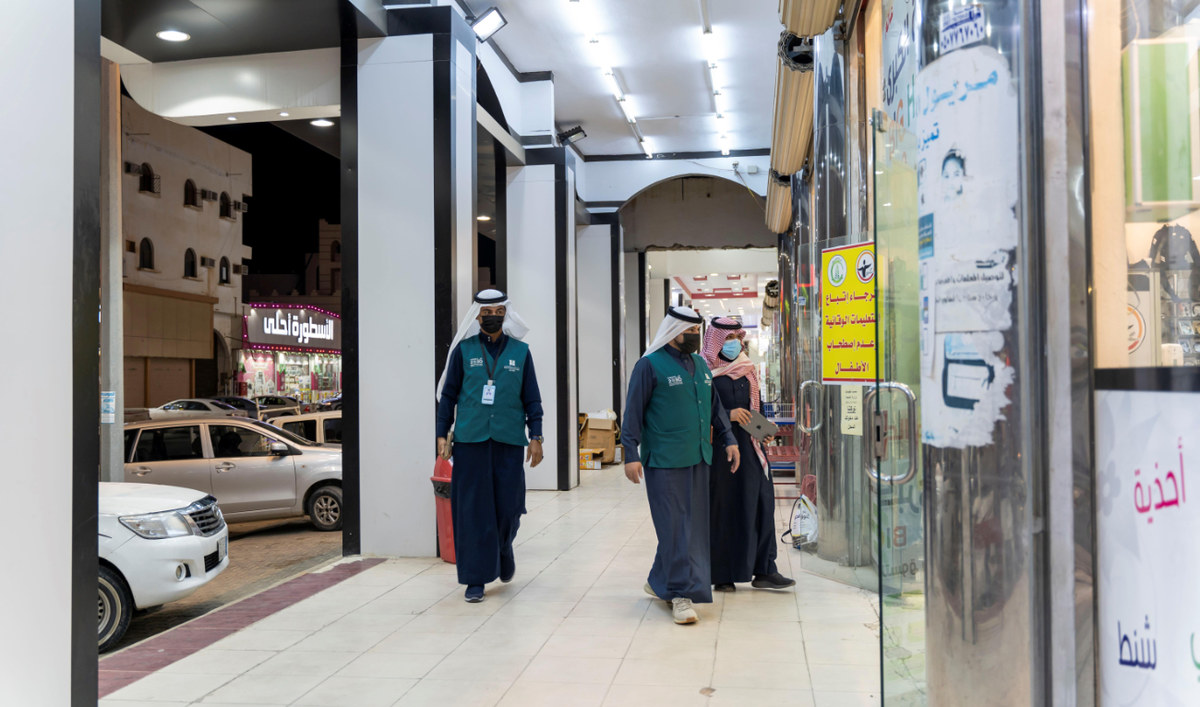
Officials enter an establishment to inspect adherence to pandemic protocols. (SPA)
The SPA report added that the ministry continues to encourage people to take the booster shot to protect themselves from the virus.
Commenting on the decision to lift precautionary measures, Saudi Minister of Health Fahd Al-Jalajel said the Kingdom’s management of the pandemic held lessons for the entire world, the main being that people come first.
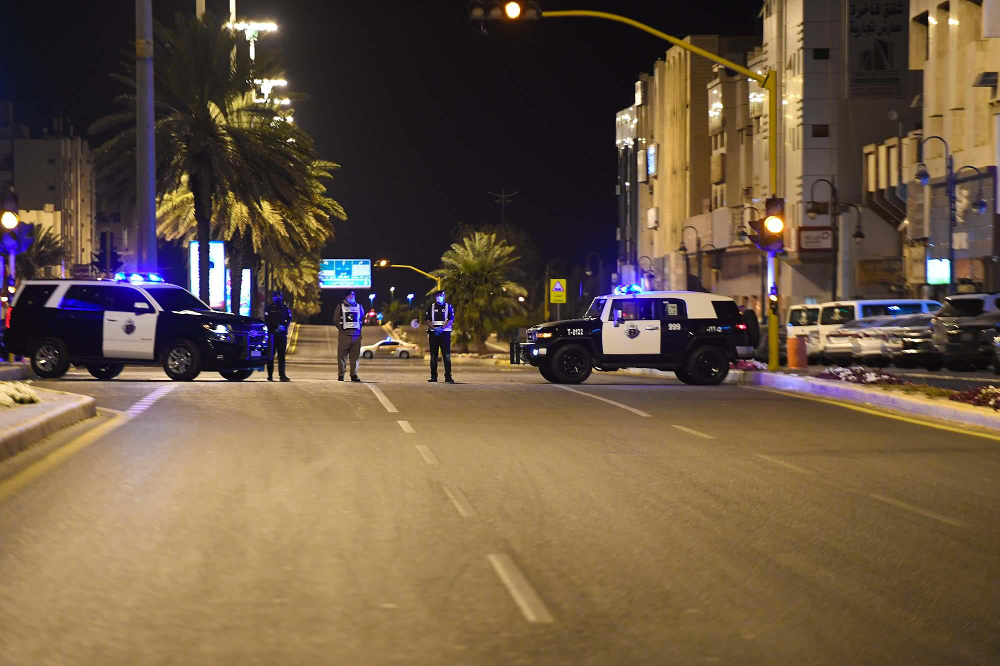
Police officers enforce a travel restriction order in Tabuk city, in nothern Saudi Arabia. (SPA)
This was evident from the day King Salman directed the government to provide free treatment for all COVID-19 patients without differentiating between citizens, residents and undocumented foreigners.
Until the emergence of the omicron variant, June 17, 2020, was regarded as the day the number of daily new cases in the Kingdom peaked. While the day’s tally of 4,919 cases seemed daunting then, it proved to be a watershed event in the chronicle of Saudi Arabia’s coronavirus fight.
In a sense, both June 17, 2020, and Jan. 12, 2022, are significant dates for Saudis to look back on when they recall their country’s battle against the microscopic enemy that brought the world to its knees.
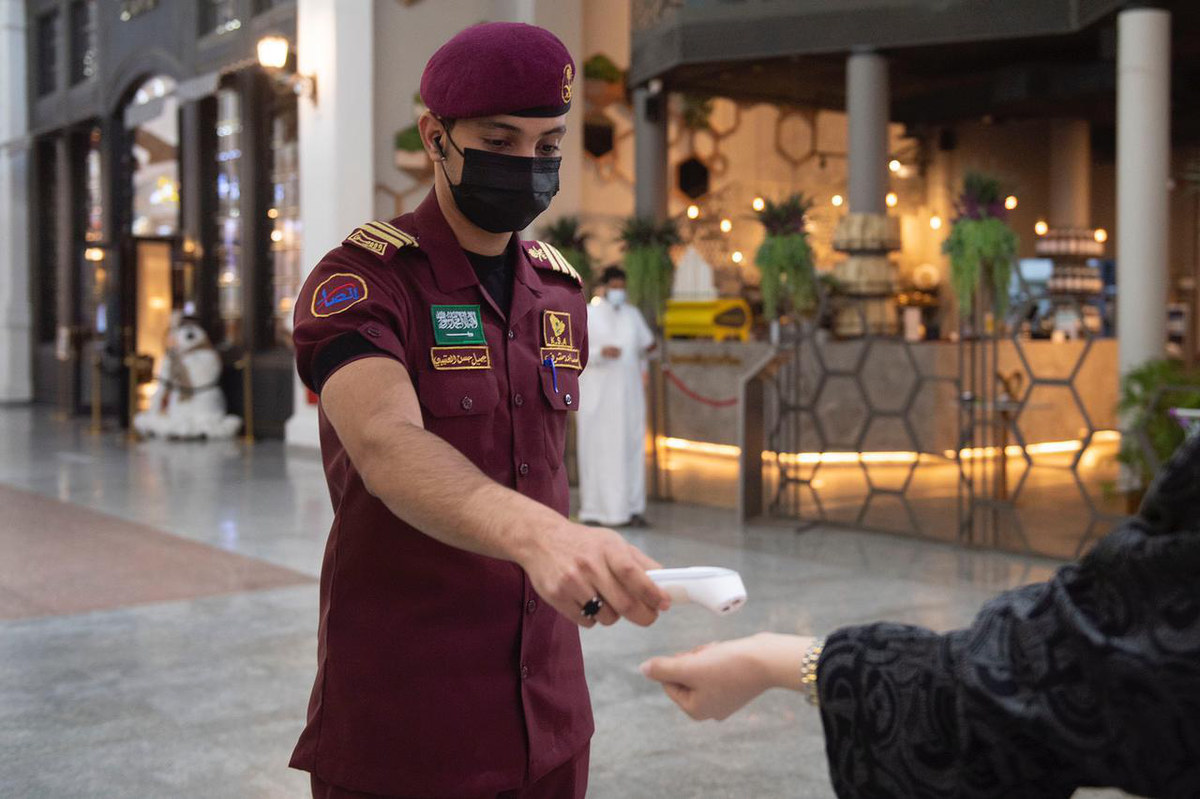
During the pandemic, the public in Saudi Arabia had grown acustomed to routine health checks in public spaces.
It is fair to say that the tide of the battle, which began with the first COVID-19 case on March 2, had turned in favor of the Kingdom after the first of the two dates.
COVID-19 emerged in Wuhan, China, in late December 2019. Months later, and thanks to the wonderful world of travel, the SARS-CoV-2 virus spread rapidly around the world, but Saudi Arabia managed to keep the enemy from its soil for three months, buying precious time to build up its defenses.
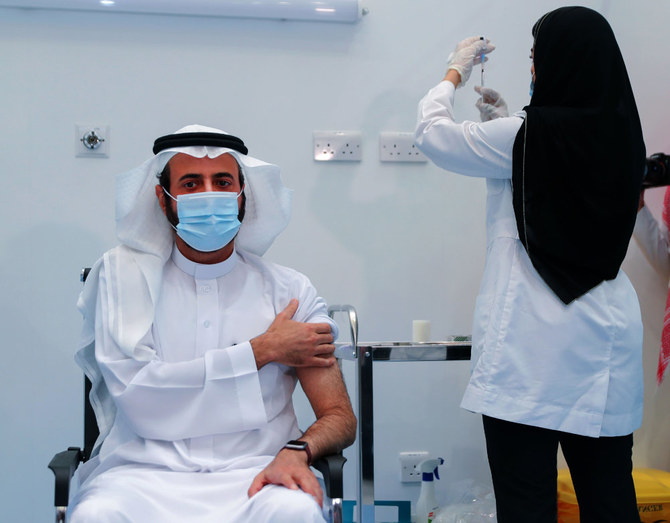
Then Saudi Health Minister Tawfiq al-Rabiah getting his booster dose of the coronavirus vaccine. More than 66.5 million doses of the COVID-19 vaccine have been administered. (SPA)
“We were luckier than many other countries because our cases started a little bit later,” Dr. Hani Jokhdar, deputy minister for public health, told the Riyadh Global Digital Health Summit in August 2020. “This gave us a small opportunity to develop our systems, watching and observing what was happening in the rest of the world.”
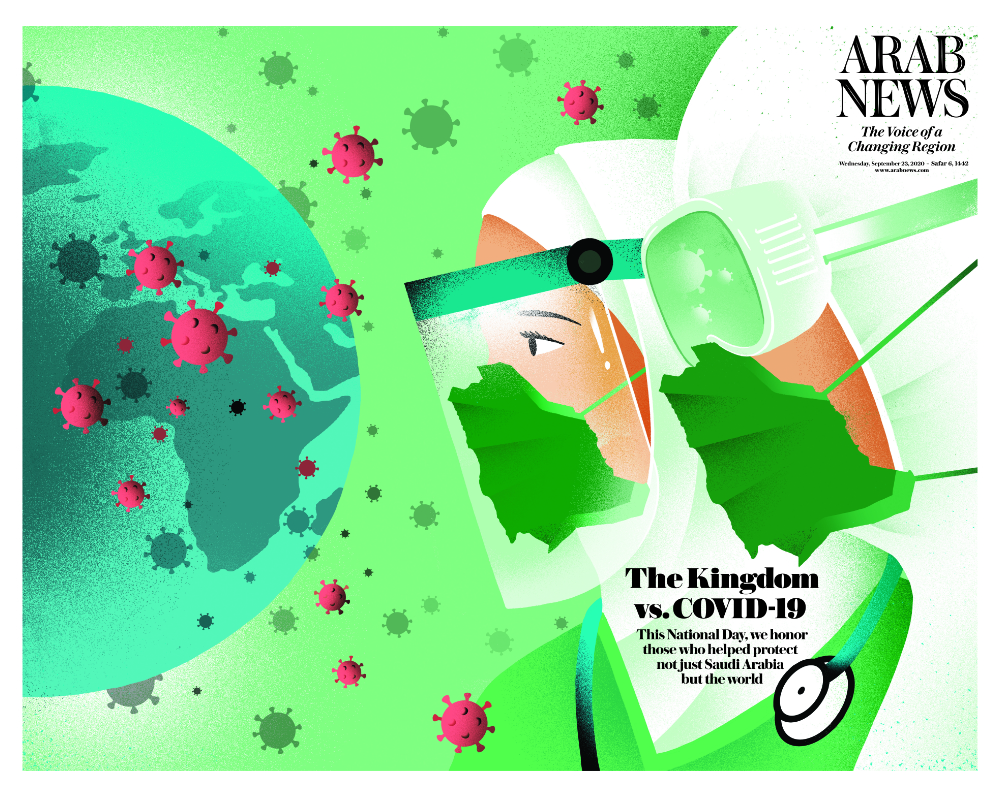
Arab News’ award-winning cover of a September, 2020, edition dedicated to those on the front lines of the fight against the virus. (AN)
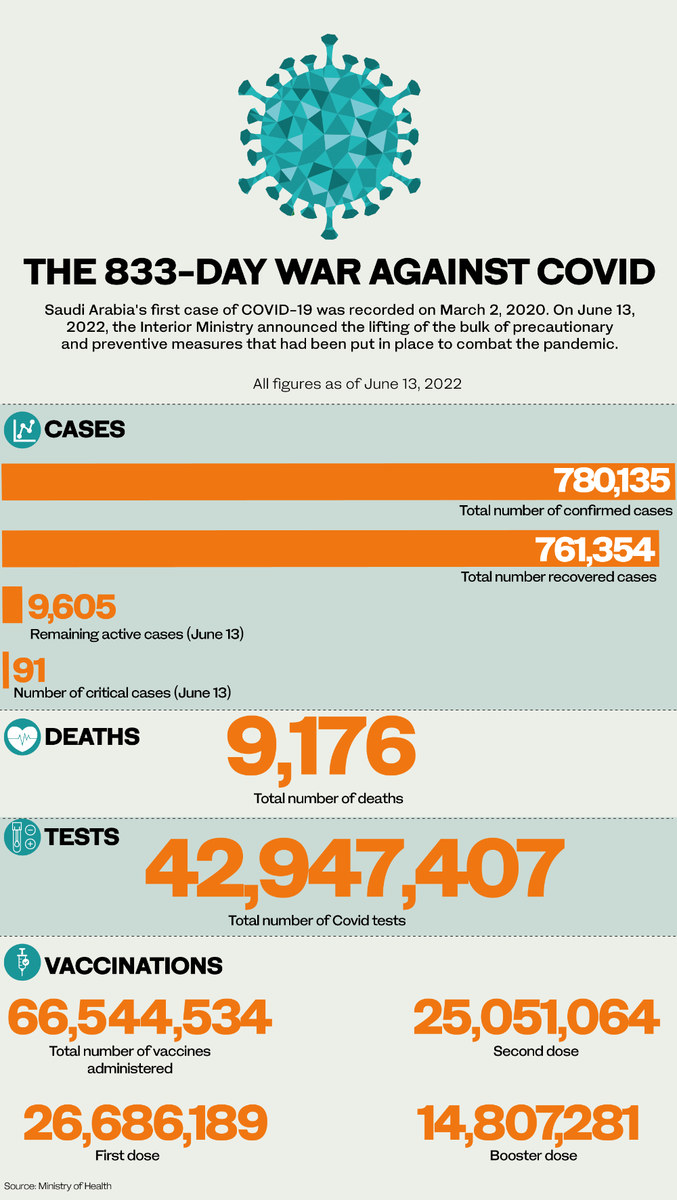
Saudi Arabia was one of the first countries in the world to set up laboratories to test for COVID-19, with tests available for anyone with symptoms from March 5, 2020, onward. Over the next five months, more than 5 million would be carried out. By Tuesday this week, over 42.9 million tests had been carried out.
In February, travel to and from infected countries was quickly curtailed, culminating in a ban on all international flights by March 15. Restrictions on internal travel followed shortly after.
And on Feb. 27, Saudi Arabia took the unprecedented but necessary step of suspending Umrah visas for foreign pilgrims. The Kingdom would also take the lead in closing mosques.
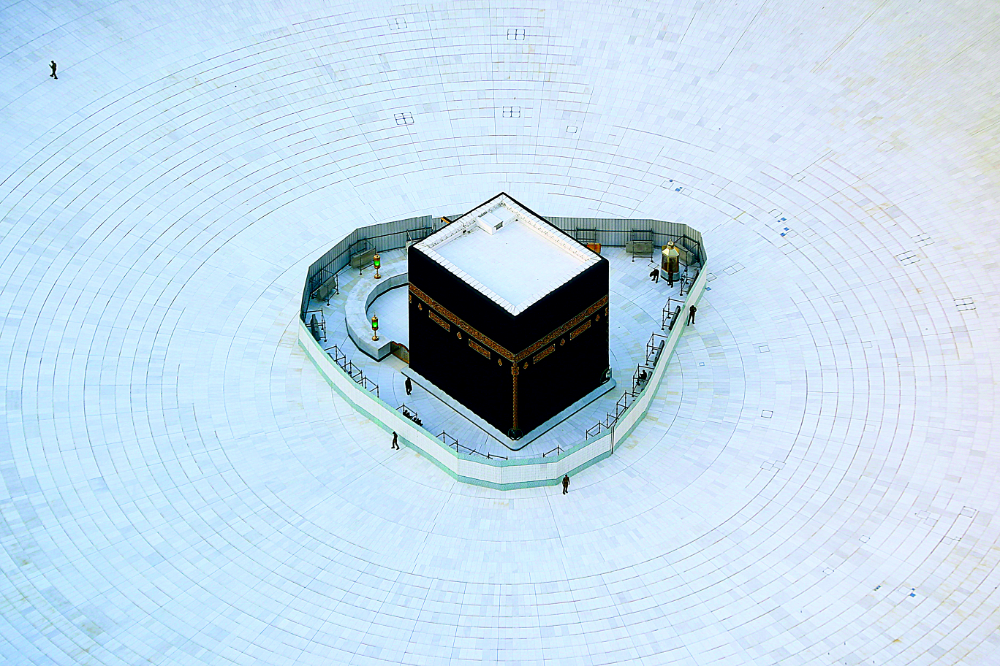
The Kaaba, inside Makkah’s Grand Mosque, one of the busiest places in Saudi Arabia, is seen cordoned off during a coronavirus lockdown in the holy city. (AFP)
Saudi Arabia’s defenses were finally breached on March 2, thanks to two citizens who had returned home infected from Bahrain, neglecting to mention that their journeys had begun in Iran, a country already in the grip of the disease.
Nevertheless, Saudi Arabia, the last of the six Gulf Cooperation Council states to be hit by the virus, was better prepared than many countries for what was coming.
A slew of smartphone apps — some established, others developed quickly in the face of the new disease — allowed citizens and residents to report symptoms, book virtual appointments and access testing.
Such technology would also play a vital role in the management of Hajj. As the custodian of Islam’s holiest sites, from the outset, Saudi Arabia was keenly aware of the consequences for itself, the region and the entire planet if it failed to manage the pilgrimage effectively.
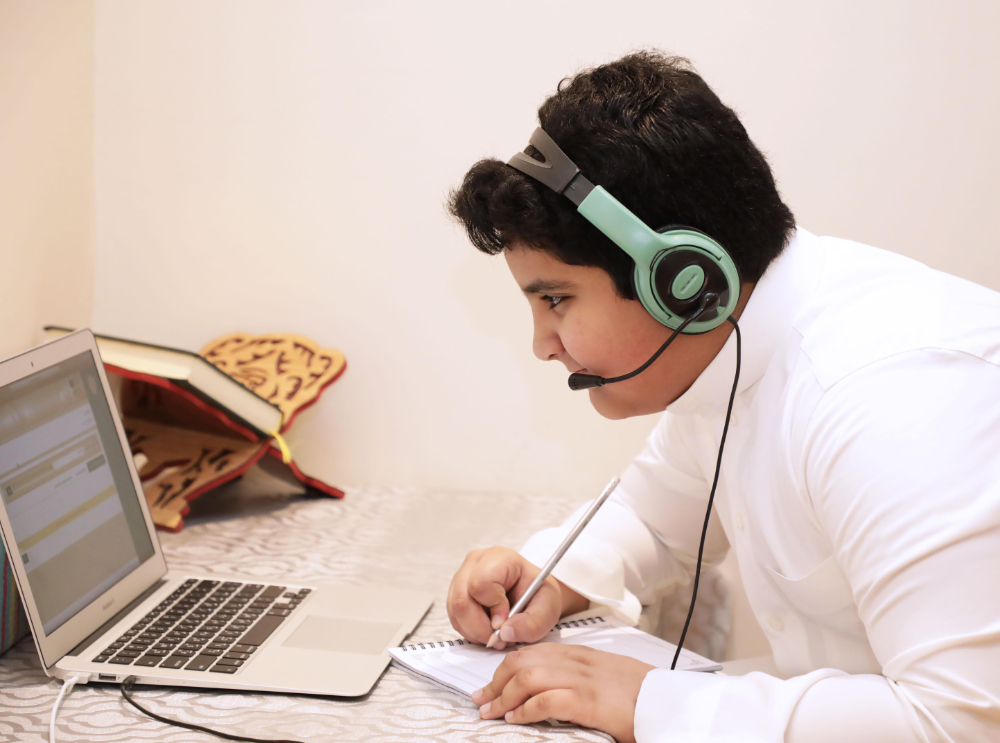
Millions of students in Saudi Arabia had to switch to distance learning as a national lockdown was announced. (SPA)
A decision was taken to limit numbers to an unprecedented but privileged 1,000, selected from nationals and foreigners already in the Kingdom. Careful screening, monitoring and meticulous management ensured that, in a remarkable year, Hajj passed off without a single case of COVID-19. The number of pilgrims reached 58,2021, with no cases detected.
For this year’s Hajj, Dr. Tawfiq Al-Rabiah, Saudi minister of Hajj and Umrah, has said that while it is appreciated that there are still many special precautions in place, “the safety of pilgrims and their safe return to their countries remain our priorities.”
Upon opening registration for this year’s Hajj, the ministry stressed priority to those who have not previously performed the rituals. The ministry added that those who are not fully immunized, as per their status on the Tawakkalna application, would be denied a Hajj permit.
Over 390,000 domestic pilgrims have registered, an e-draw has begun, and selected pilgrims will receive text messages on their registered devices.
The Kingdom has raised the capacity of pilgrims for this year’s Hajj season to 1 million, a slow but sure way of reaching a pre-pandemic total of over 2.5 million pilgrims annually.
To be sure, neither Saudi Arabia nor the world is out of the woods yet. But while the global daily tally of COVID-19 cases fluctuates, hitting a record high of 3.84 million on Jan. 21, 2022, and registering a total of 6.33 million deaths as of Tuesday, Saudi Arabia’s daily caseload hovers around the somewhat manageable 1,000 mark.
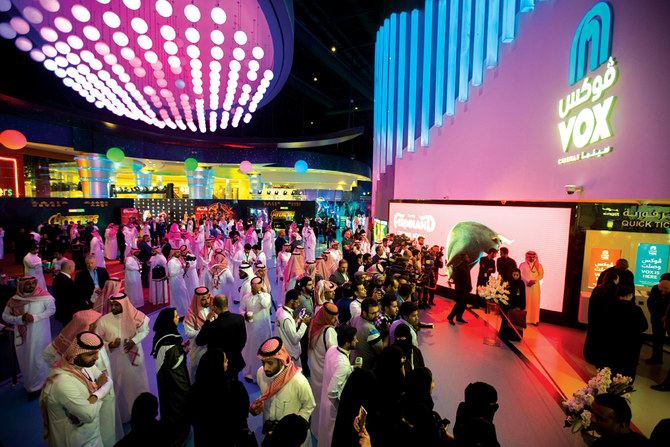
The Kingdom removed almost all COVID-related rules on Monday, signaling a return to normality more than two years after the start of the health crisis. (SPA)
To date, Saudi Arabia has recorded more than 780,000 coronavirus cases, including 760,000 recoveries, and less than 10,000 deaths. More than 66.5 million doses of the COVID-19 vaccine have been administered to its 34.5 million residents.
But one need only look at how badly many other states have fared — including some of the most powerful and advanced countries in the world — to realize just how much worse these terrible years might have been for the Kingdom were it not for its preparations and timely and decisive actions.

keywords


