

Fashion Village in Jeddah Season brings designers to the public

The brand has easy-to-wear casual pieces and designs inspired by automobiles and Saudi heritage. The pop-up in Jeddah is called Galag Garage, which is an offshoot of the main brand. (Supplied)
Short Url
Updated 08 June 2022
Follow

Fashion Village in Jeddah Season brings designers to the public

  • Held under the slogan “Our Lovely Days,” the second Jeddah Season follows on from the success of Riyadh Season, which recorded more than 15 million visits over five months

RIYADH: This year’s Jeddah Season is showcasing Saudi fashion brands and bringing them closer to the audience through Fashion Village in the City Walk zone.

One of those brands is the contemporary clothing line Galag, which has easy-to-wear casual pieces and designs inspired by automobiles and Saudi heritage.

“Galag is a collective that began in 2013 consisting of a group of automotive enthusiasts, photographers, and videographers with a passion for exploration and using road trips as a means to do so,” Galag owner Sultan Al-Faisal told Arab News. “The Galag clothing line began as a creative outlet in 2017 in response to a demand from Galag supporters for a tangible product, and it quickly gained traction in Europe, the United States, and East Asia, before being introduced to the Saudi scene in 2019.”


(Photo by Mohammed Abdulhalim)

One of the things that make Galag stand out is its shoe collection, something not many Saudi brands offer as it is hard to produce, but Al-Faisal and his team accepted the challenge.

“Our sneakers are made in Portugal, and they are our own design. We wanted to create a timeless silhouette that would go with anything, and the materials are synonymous with quality and durability.”

In Riyadh Season, the brand took part in the E’Space concept store with an earlier collection called “Cosmopolis.”



(Photo by Mohammed Abdulhalim)

The pop-up in Jeddah is called Galag Garage, which is an offshoot of the main brand.

“The experience in Jeddah Season has been great. People have been extremely enthusiastic and gave us a warm reception, which is more than we could ever ask for.

“The other participants in the season have also shown their support and that is priceless to us. We are just happy that we have been approached to take part in it and that the Jeddah Season team saw enough value in us and gave us the trust to be able to take part.”

Galag’s immediate plans are to be more involved with some of the communities and subcultures present in Jeddah.
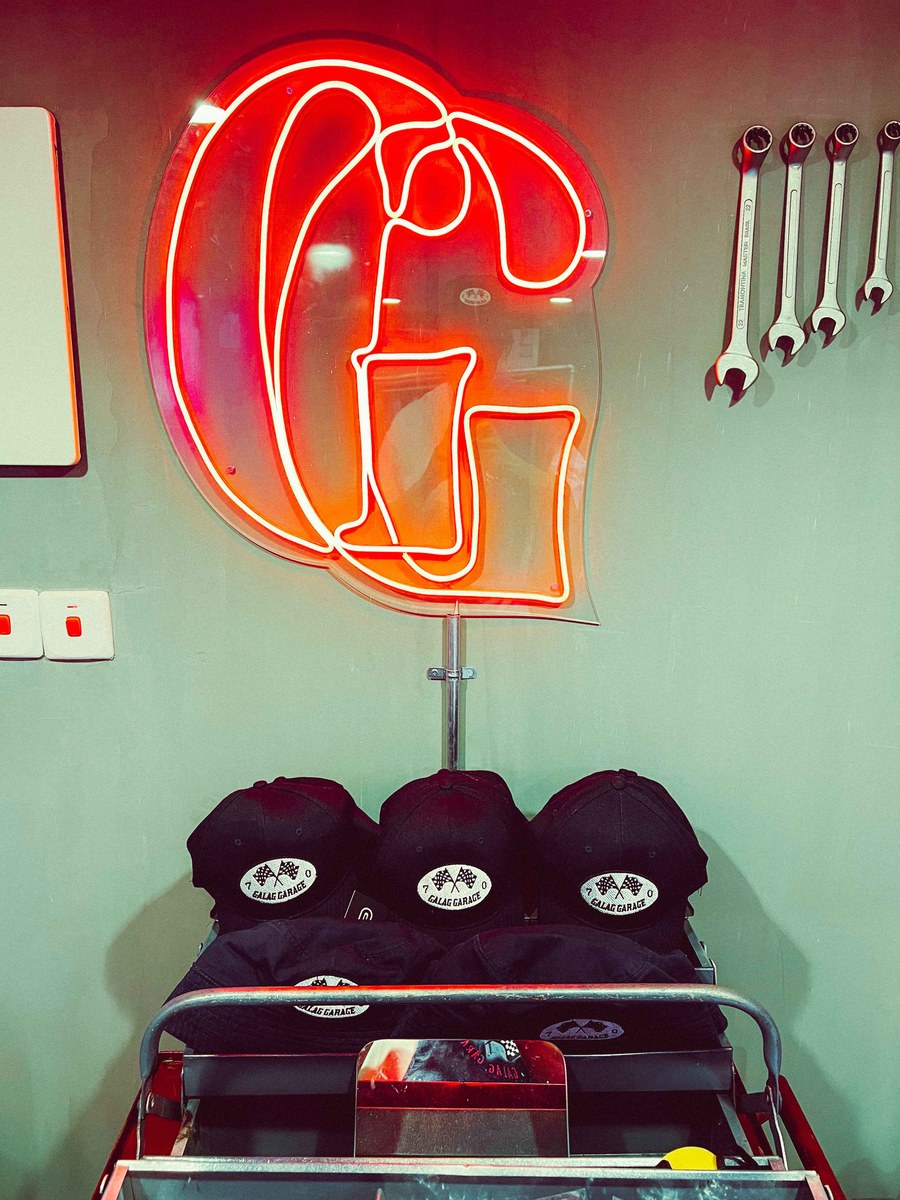


(Photo by Mohammed Abdulhalim)

“There are many communities and groups that we don’t believe have had the support and exposure that they deserve, such as the skater community group the sillyboys crew, working with them to help them grow, then it would be a success for us, definitely something to look forward to.

“At the end of the day, we just want to give different and new choices as a Saudi brand to the Saudi consumer, and that will hopefully strengthen the Saudi design language and expand it so that people don’t just look at us as one-note in terms of design.”

Held under the slogan “Our Lovely Days,” the second Jeddah Season follows on from the success of Riyadh Season, which recorded more than 15 million visits over five months. The annual Jeddah Season festival aims to highlight the city’s rich heritage and culture through a total of 2,800 activities in nine zones over the event period.


National program identifies 165 native plants for afforestation efforts in Asir

Updated 29 December 2025
Follow

National program identifies 165 native plants for afforestation efforts in Asir

  • The survey is part of broader plans focused on restoring degraded land, using native vegetation 

JEDDAH: Saudi Arabia’s National Afforestation Program has identified more than 165 species of native plants suitable for afforestation in the Asir region, highlighting the ecological diversity of one of the Kingdom’s most environmentally varied areas, the Saudi Press Agency reported.

The findings form part of broader national efforts to expand vegetation cover, address land degradation, and support sustainability goals linked to the Saudi Green Initiative and Vision 2030.

According to the program, the identified species are distributed across a wide range of natural environments in Asir, including mountainous terrain, highlands, slopes, valleys, plains, rocky landscapes, and coastal areas stretching from the Red Sea to Tihama.

The species belong to numerous plant families, including Fabaceae, Anacardiaceae, Burseraceae, Capparaceae, Ebenaceae, Euphorbiaceae, Malvaceae, Myrtaceae, Oleaceae, and Primulaceae, among others.

Plants suitable for afforestation range from large and small trees to perennial and annual shrubs, herbs, succulents, bulbs, and climbing plants. 

Among the most notable species identified are the grey mangrove, mastic tree, mooring or ben tree, juniper, sycamore fig, wild olive, henna, wild jasmine, hawthorn, and arak.

The Saudi Arabian Botanical Society described the announcement as an important step in protecting plant diversity and strengthening the ecosystem conservation in the Kingdom. 

Munirah bin Hamad Al-Hazani, founder and president of the society, said that prioritizing native species is central to sustainable afforestation.

“Focusing on the cultivation of native plants adapted to diverse environments forms the cornerstone of sustainable afforestation projects, as it plays a pivotal role in enhancing vegetation cover, combating land degradation, and conserving natural and financial resources,” she told Arab News.

Al-Hazani added that long-term success depends on cooperation between government bodies and the nonprofit sector, alongside community involvement and environmental awareness programs.

The National Afforestation Program has increasingly emphasized community participation, working with government agencies, private companies, and nonprofit organizations to support planting initiatives and environmental education. Its approach includes promoting volunteerism and discouraging harmful environmental practices, while focusing on the use of native plants adapted to local conditions.

Parallel efforts are underway in other regions of the Kingdom to support vegetation restoration through research and infrastructure development. In Jouf, often referred to as the Kingdom’s food basket, the King Salman bin Abdulaziz Royal Reserve Development Authority has established a Central Nursery and a Wild Seeds Research and Production Station to address the growing demand for reliable sources of native seeds and seedlings.

The project was launched in 2023 under the directive of Prince Abdulaziz bin Saud bin Naif, the minister of interior and chairman of the authority’s board of directors. 

Since then, the facilities has become a key component of vegetation restoration efforts within the reserve.

The authority has focused on building operational capacity by recruiting and training specialists to manage cultivation and research activities. The research and production station includes 14 mother-seed production fields containing over 400,000 trees and shrubs. 

Planting began in late 2024, with more than 30 native plant species represented, selected for their role in the reserve’s natural ecosystem. 

The facility also includes two seed storage units with a combined capacity of 3,000 kilograms. Seeds are collected annually from multiple sites within the reserve and used for seedling production habitat rehabilitation.

The Central Nursery spans 6,000 square meters and includes 30 greenhouses spanning 1,500 square meters, as well as two shade houses used during summer months. A plant hardening facility, designed to prepare seedlings for natural environmental conditions, covers 10,000 square meters and is divided into seven sections. The nursery’s annual production capacity reaches 1.5 million seedlings, representing more than 15 native plant species. 

Together, these initiatives underscore the growing role of native plant research and propagation in Saudi Arabia’s afforestation strategy, particularly as the Kingdom works to balance environmental restoration with long-term sustainability goals.