

Saudi fashion designer ‘shocked’ and ‘proud’ to see Duchess of Cornwall wearing his design

Camilla, Duchess of Cornwall, wears a daqlah created by Saudi designer Yahya Al-Bishri at Queen Elizabeth’s platinum jubilee concert. (File/AFP)
Short Url
Updated 13 June 2022
Follow

Saudi fashion designer ‘shocked’ and ‘proud’ to see Duchess of Cornwall wearing his design

  • Yahya Al-Bishri had no idea that Camilla had chosen a daqlah he created as her outfit for the queen’s platinum jubilee concert
  • In an interview with Arab News, he said the navy robe with silver embroidery was presented as a gift to Prince Charles during a visit to the Kingdom in 1998

JEDDAH: It’s not every day a fashion designer sees a member of Britain’s royal family wearing one of their designs in front of a global television audience. So Yahya Al-Bishri said he was “shocked” to learn that Camilla, Duchess of Cornwall chose a daqlah he created as her outfit of choice for the queen’s platinum jubilee concert last weekend.

“It is just a great feeling to see the whole world is talking about my outfit,” Al-Bishri told Arab News from his home in Jeddah. Yet the game-changing moment came as a complete surprise to him.

“Actually, I was engaged with friends in a small gathering when my ex-wife called me and told me, “Are you watching the Platinum Party (at the Palace)?’ She told me that Camilla was wearing my daqlah.

“As a Saudi fashion designer, I am so proud and happy that international media focused on my design, talked about the outfit and appreciated what the Duchess of Cornwall was wearing.”

The daqlah, a long robe that is open at the front and is traditionally worn over a thobe, was gifted to Camilla’s husband, Prince Charles, during a visit to the Kingdom in 1998, Al-Bishri revealed.
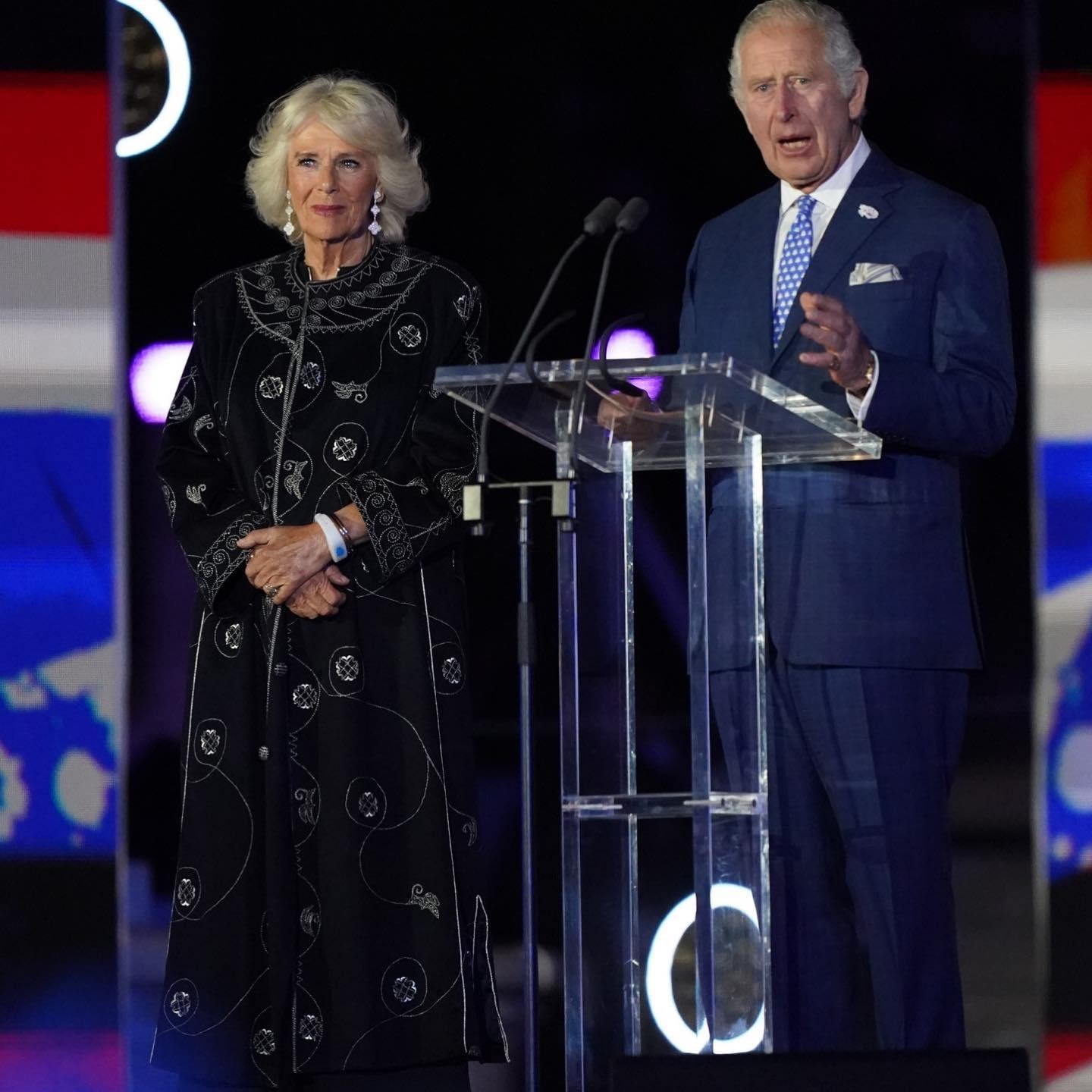


Camilla, Duchess of Cornwall, wears a daqlah created by  Saudi designer Yahya Al-Bishri at Queen Elizabeth’s platinum jubilee concert. (File/AFP)

“When Prince Charles came to Saudi Arabia, he visited a village in the Asir region and he wore the daqlah that time for the first time,” he said. “And now, after two and a half decades, the piece appeared again during the platinum (jubilee) celebrations for the queen of Britain.”

It is testament to the quality and longevity of the design that the duchess decided to repurpose the robe as her outfit for the Platinum Party at the Palace concert. The traditional robe is navy in color, with intricate Saudi inscriptions embroidered in silver reed threads on the Kashmiri woolen fabric.

Asked whether the garment can be worn by women as well as men, Al-Bishri said: “A daqlah can be worn open or closed by men. Camilla wore it buttoned up, keeping the focus on the beautiful embroidery on the fabric. She really looked beautiful in it.”
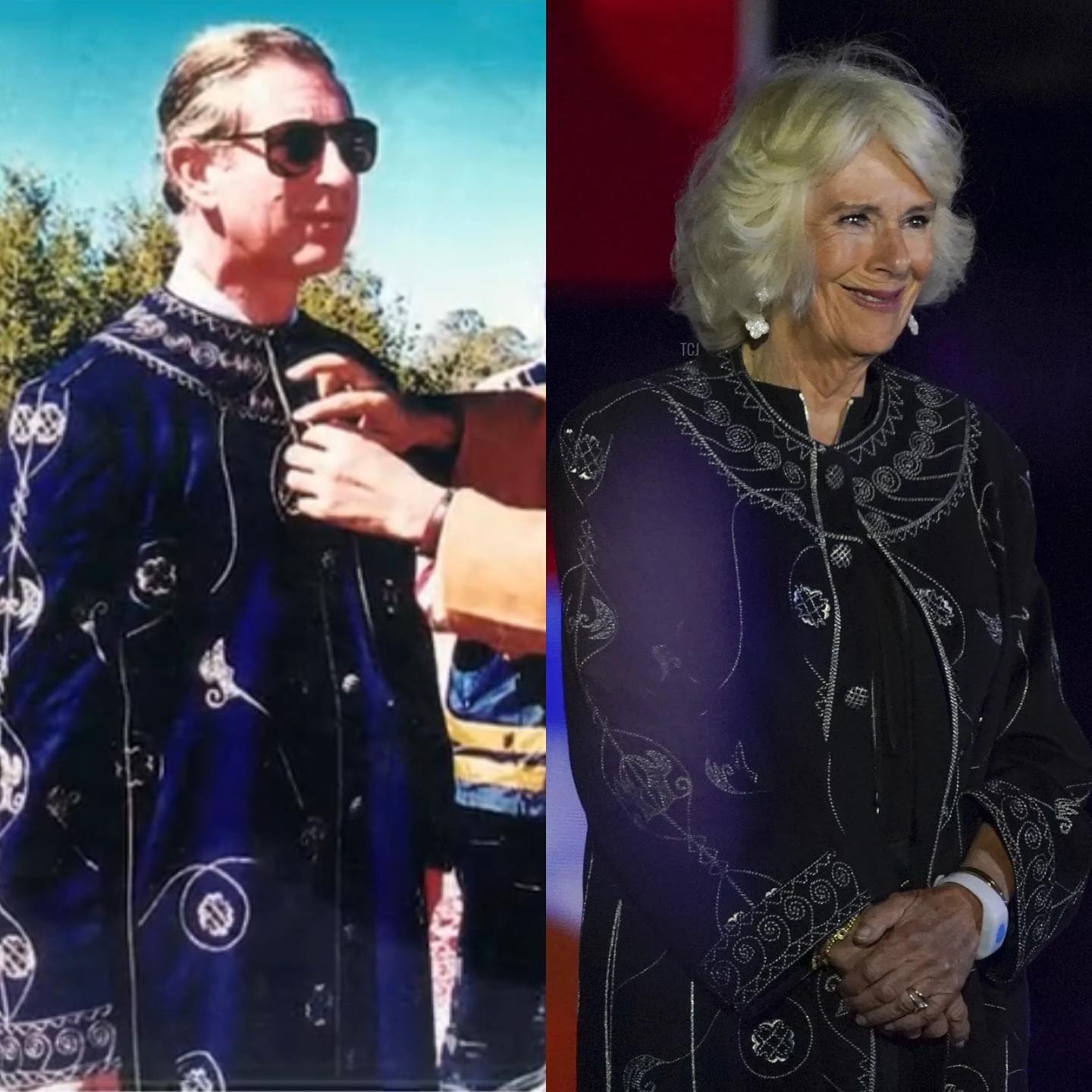


The daqlah worn by Camilla at Queen Elizabeth’s platinum jubilee concert was gifted to Prince Charles during a visit to the Kingdom in 1998. (File/AFP)

The daqlah is not his first fashion connection with the British royal family; in the mid-1980s he was commissioned to design a gown for Princess Diana.

Al-Bishri was born in 1962 in Abha, where he attended primary school before moving to Jeddah to complete his education. He developed a love of literature and poetry which led him to a career in journalism before, in 1986, he discovered fashion and set out to build a career in the industry. After initially studying in Italy, he went on to graduate from the Paris American Academy in France.
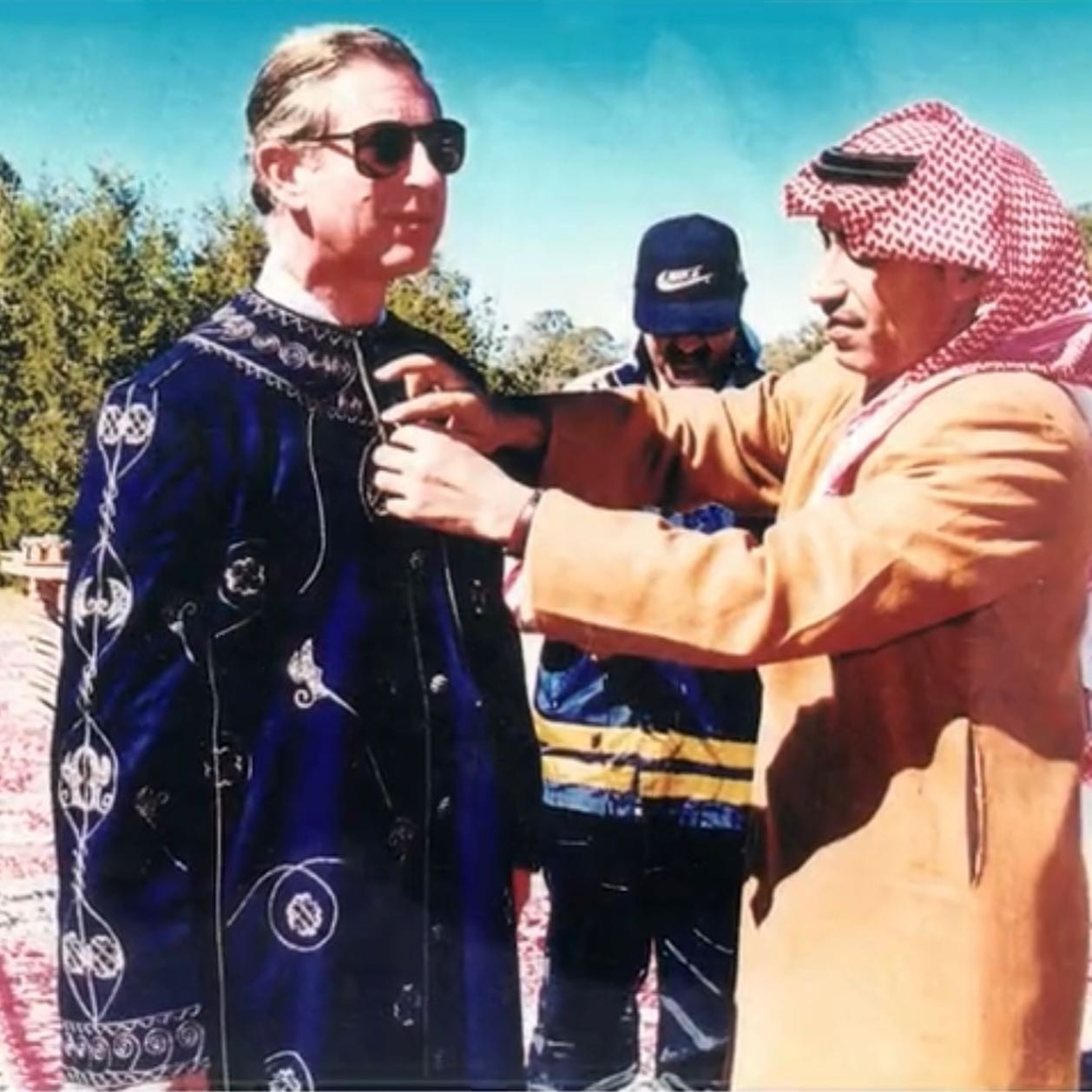


The traditional robe is navy in color, with intricate Saudi inscriptions embroidered in silver reed threads on the Kashmiri woolen fabric. (Supplied)

In 1990 he opened his fashion house, Yahya Couture, in Jeddah, which featured bridal and evening wear. Soon after, he added a menswear department and subsequently also expanded to include children’s clothing.

During a storied career his creations have appeared on runways at fashion shows around the world, including France, Russia, Jordan, Egypt, the US, Oman, Morocco, Lebanon, and, of course, his native Saudi Arabia.

The guests at these high-profile shows have included heads of states and royalty — and if Camilla’s choice of outfit last weekend is any indication, it seems the royal seal of approval for Al-Bishri’s designs is set continue.


Draped in history, Saudi fashion designers look to the future

Updated 22 February 2026
Follow

Draped in history, Saudi fashion designers look to the future

  • Saudi designers are reimagining the Kingdom’s heritage through modern fashion

RIYADH: The fast-growing fashion industry in Saudi Arabia is looking through the lens of history and heritage to produce clothing draped in the history of traditional garb worn during the time of the Kingdom’s founding.

At the Saudi Cup on Feb. 13, a number of designers showcased their couture inspired by the country’s rich history.

Saudi designer Fahda Al-Battah, one of the minds behind brand Adara by Fa alongside Abeer Al-Moammar, spoke to Arab News about their debut collection “Journey Through Time.”

Saudi designers showcased their couture inspired by the Kingdom’s rich history at the recent Saudi Cup in Riyadh, which is becoming  a hotspot for the latest styles. (Supplied)

The emerging brand’s collection was designed with the intention of displaying the country’s diversity.

The collection’s six pieces each represent a region of the Kingdom, either through motifs, symbolism, or patterns that are hand drawn by Al-Battah and her team.

The first dress is heavily inspired by the Qassim and Al-Ahsa regions, and features illustrated scenes of people collecting dates from palm trees and using them in various ways. “It’s a story, basically,” Al-Battah said.

“Heritage must be preserved and if anything new comes up now, we must create new heritage and not replicate the past,”

Amar Al-Amdar, Saudi designer

Another piece uses the patterns and colors that are prominent in the Southern region as motifs, with a backdrop of lush mountains and colorful architecture.

A drapey blue piece is inspired by the coasts of both Jeddah and the Eastern Province. “It's very fluid, even in design,” she said.

Adara by Fa's debut collection "Journey Through Time" highlights the beauty of Saudi Arabia's various regions. (AN photo by Abdulrahman bin Shalhoub)

Two other pieces are inspired by the central Najd region, the designer said, a dark green ensemble with wing sleeves and another white dress, each elevated with decorative pieces resembling a string of dates.

The hero piece is an extravagant gown that displays every part of Saudi Arabia chronologically along the trim, starting with Najd and meshing into the other regions.

“The last dress has each part of Saudis, any culture and heritage, and it unifies us with the sheila (headscarf), which has King Abdulaziz’s quote, ‘We united on the word of monotheism, and so our hearts and lands united,’ which shows unification of us as a whole region,” she said.

MD29, another brand supported by the Fashion Commission, was inspired by the Saudi spirit of hospitality, taking Saudi coffee as a central element in their latest collection. (AN photo by Abdulrahman bin Shalhoub)

“Saudi is very rich in heritage. So, most of the designers right now are looking for a way to identify themselves in the global market and showcase the beauty of what Saudi has.

“Each designer in Saudi is paving the way in a new field, which makes it very exciting and very creative,” Al-Battah said.

ASL Line, for example, was inspired by the lavender found in the heart of the desert. The soul of the plant was translated into a story through stitching and colorful motifs.

“We don’t look for inspiration from far away … we go back to our land,” according to a post on the brand’s social media account.  

MD29, another brand supported by the Fashion Commission, was inspired by the Saudi spirit of hospitality, taking Saudi coffee as a central element in their latest collection.

“You can see in the collection the color variations from the plant to the grind. This time, they wanted to highlight the character more, not just in the silhouettes, but in the fabrics, in the Arab spirit,” Manal Al-Dawood, founder of the brand, told Arab News.

Through their technique of layering the fabric, the prints used in the collection try to show the journey of coffee beans, from the moment they are planted into the earth to making it to the grinding process.

Saudi designer Amar Al-Amdar shared with Arab News his thoughts on the art scene through his experience of being a prominent figure in the industry.

He said: “We are now in phases of focusing on respecting the identity and culture in Saudi designs across all its regions, of course.

“And that’s a beautiful thing, but an important thing to focus on in this phase is that, in the past, when they were working on creating our pieces and wearing these (traditional) designs, that was considered innovation. That was the new look.

“When there was a swift pause on the development of our clothing, our past became heritage. But heritage must be preserved and if anything new comes up now, we must create new heritage and not replicate the past.”

He did not mince words about the wave of amateur designers that are adapting traditional clothing to use as decorative elements for newer, unconventional designs.

“For example, some of the worst things I’ve seen is taking something like the shemagh (scarf) and incorporating it into pants, or taking the agal (headwear) and making it a belt.

“This mix and crossing is wrong. Long ago, when they designed something for the head, it was intended to serve a purpose. It wasn’t decorative,” he said.

He felt it was important to caution novel fashion designers to innovate for the future and not simply look to the past for inspiration, and not create pieces that use heritage as merely a decorative motif.

“We need to form new paths, some renewal. There was a functionality to things, everything served a purpose in its design.

“But when design only becomes shifting a placement of something, that’s the biggest misuse of the original Saudi design … heritage is made to serve a purpose, so if we want to innovate it, it must have a functionality to it,” he said.