

Raging inflation squeezes the poor in Pakistan

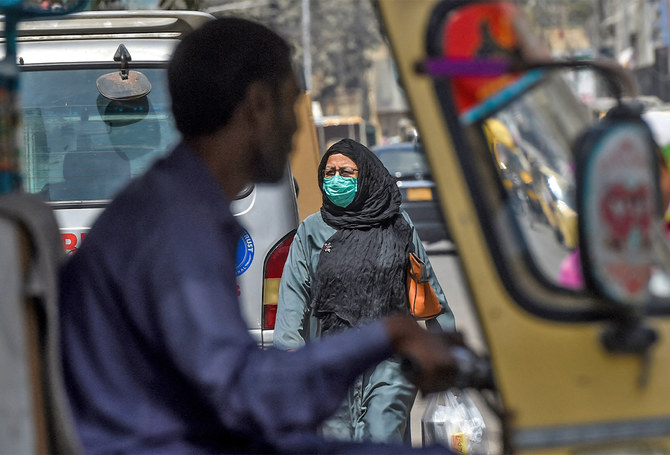
A woman crosses a road in Karachi on March 13, 2020. (AFP/File)
Short Url
Updated 08 June 2022
Follow

Raging inflation squeezes the poor in Pakistan

  • Every penny counts for Anser Mai, a widow and mother of three 
  • Crippling inflation is driving up prices of everything in Pakistan

KARACHI: Every penny counts for Anser Mai, a widow and mother of three, as Pakistan strains under the high inflation that’s hitting the globe.

She earns about $134 US dollars a month working as a domestic helper.

But everyday costs are piling up.

The price of eggs and dairy have put even essentials out of reach.

Same for the cost of getting around the fare for an everyday ride on a bicycle rickshaw- has jumped from around $2 to $3.

It may not sound like much but being the sole provider for three kids and family back home means Pakistanis like Anser are feeling the pinch:

“Sometimes my children eat flatbread with just salt and pepper or pickle. They yearn for good food.”

“I was able to buy this half-kilo of oil for 75 cents a week ago. Now its price is $1.20. What will the poor do? I was able to buy this kilo of sugar for 40 cents a month ago, now it is up to 60.”

The country’s central bank said earlier it expected inflation to remain high after Pakistan’s government removed fuel and power subsidies to secure bailout money from the IMF.

Economists fear low-income and lower middle class earners will slide into poverty as a result of current inflation.

Anser, who is illiterate herself, dreamed of a house of her own, good food and her children going to school, but now she said she is losing hope.

“I don’t know. God knows better. We don’t know what will happen to us. How will we survive?“


Pakistan explores new food export routes, protections for farm supply amid Middle East conflict

Updated 10 March 2026
Follow

Pakistan explores new food export routes, protections for farm supply amid Middle East conflict

  • Senior ministers review alternative sea routes, new markets amid the war in Iran
  • Pakistan relies heavily on Middle Eastern sea lanes for its imports and exports

ISLAMABAD: Pakistan reviewed the supply of perishable food items and fertilizer stocks on Monday, according to the state media, as the escalating conflict in the Middle East threatens to disrupt shipping routes and energy supplies critical to the country’s trade and agriculture.

The meetings, chaired separately by Deputy Prime Minister and Foreign Minister Ishaq Dar and Food Security Minister Rana Tanveer Hussain, came as tensions following US-Israeli strikes on Iran have raised concerns about the security of key maritime routes and energy markets that underpin Pakistan’s economy.

Pakistan relies heavily on Middle Eastern sea lanes for both fuel imports and exports of agricultural and food products, making disruptions in the region particularly sensitive for the country.

Dar chaired a meeting of the PM’s Committee to review the supply and export of perishable food items, examining steps to maintain domestic availability while ensuring timely exports of surplus produce.

“In the light of evolving regional trade dynamics and disruptions to some traditional routes, the committee explored alternative export pathways, sea routes, and potential new markets,” Radio Pakistan reported after the meeting.

Officials also discussed proposals from exporters and emphasized improving storage facilities, logistics and market access while assessing global demand and pricing trends to support export competitiveness.

In a separate meeting in Islamabad, Food Security Minister Rana Tanveer Hussain said the government would ensure stable fertilizer availability despite regional uncertainties.

“Agricultural productivity and food security will remain protected despite external challenges,” he said while chairing a meeting of the Fertilizer Review Committee.

He stressed the need for close coordination among manufacturers, distributors and provincial authorities to maintain uninterrupted fertilizer supply across the country.

The committee also reviewed fertilizer pricing and distribution mechanisms to prevent artificial shortages and hoarding, officials said, adding that authorities would monitor prices closely to ensure farmers have access to affordable inputs.