GENEVA: The World Health Organization said Sunday that 780 laboratory-confirmed monkeypox cases had been reported to it from 27 non-endemic countries, while maintaining that the global risk level was moderate.
The WHO said the 780 figure, for cases from May 13 to Thursday, was probably an underestimate due to limited epidemiological and laboratory information.
“It is highly likely that other countries will identify cases and there will be further spread of the virus,” the UN health agency added.
Few hospitalizations have been reported, apart from patients being isolated.
The WHO listed the non-endemic countries reporting the most cases as Britain (207), Spain (156), Portugal (138), Canada (58) and Germany (57).
Besides Europe and North America, cases have also been reported — in single figures — in Argentina, Australia, Morocco and the United Arab Emirates.
One case of monkeypox in a non-endemic country is considered an outbreak.
“Some countries are reporting that new generations of cases are no longer appearing only among known contacts of previously confirmed cases, suggesting that chains of transmission are being missed through undetected circulation of the virus,” the WHO said.
“Although the current risk to human health and for the general public remains low, the public health risk could become high if this virus exploits the opportunity to establish itself in non-endemic countries as a widespread human pathogen,” it said in a disease outbreak update.
“WHO assesses the risk at the global level as moderate considering this is the first time that many monkeypox cases and clusters are reported concurrently in non-endemic and endemic countries.”
Most reported cases so far have been presented through sexual health or other health services and have mainly involved men who have sex with men, said the WHO.
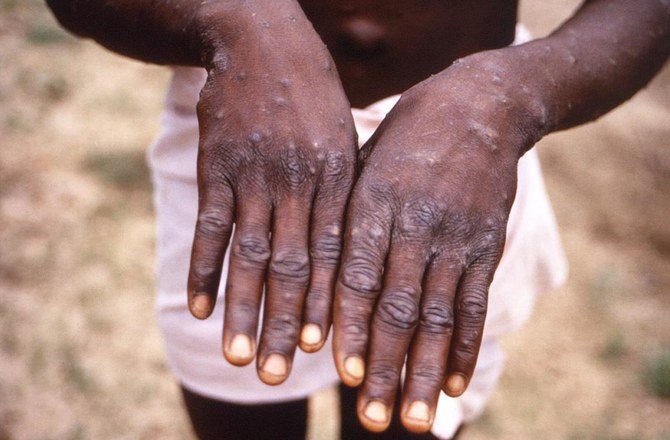
The organization said many cases were not presenting with the classical clinical picture for monkeypox: some have described having pustules appear before symptoms such as fever, and having lesions at different stages of development — both of which are atypical.
The WHO said there had been no deaths associated with outbreaks in non-endemic countries, but cases and deaths continue to be reported from endemic areas.
The WHO listed the endemic states as Cameroon, the Central African Republic, Congo-Brazzaville, the Democratic Republic of the Congo, Liberia, Nigeria, Sierra Leone, Gabon and Ivory Coast, plus Ghana where it has been identified in animals only.
From the first seven of those countries, 66 deaths were reported in the first five months of 2022.
Last week the WHO convened virtually more than 500 experts and over 2,000 participants to discuss monkeypox knowledge gaps and research priorities.
Experts stressed the need for clinical studies of vaccines and treatments to better understand their effectiveness, and called for faster research into the disease epidemiology and transmission.


![]()

WHO: 780 monkeypox outbreak cases
Short Url
https://arab.news/r2ayh
WHO: 780 monkeypox outbreak cases
- WHO: Figure probably an underestimate due to limited epidemiological and laboratory information
- Few hospitalizations have been reported, apart from patients being isolated


Latest updates


© 2026 SAUDI RESEARCH & PUBLISHING COMPANY, All Rights Reserved And subject to Terms of Use Agreement.