

Saudi, Spain to strengthen global tourism as Kingdom prepares to host UNWTO summit


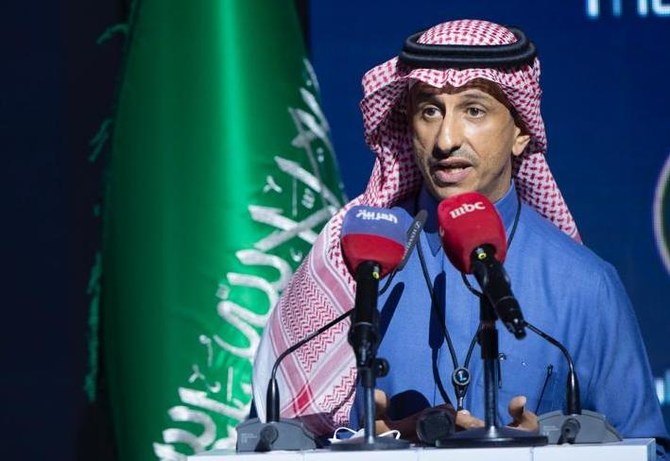
Saudi Tourism Minister Ahmed Al-Khateeb spoke at the Saudi-Spanish Investment Forum in Riyadh on June 5. (Supplied/File)
Short Url
Updated 06 June 2022
Follow

Saudi, Spain to strengthen global tourism as Kingdom prepares to host UNWTO summit


RIYADH: Buoyed by strong bilateral trade totaling $3.5 billion annually, Saudi Arabia and Spain look to play a key role in strengthening global tourism as both the countries continue to share strong business relationships. 

As Saudi Arabia prepares to host the 116th Executive Council of the UN World Tourism Organization on June 7-8 in Jeddah, with around 180 participants worldwide, it can benefit from Spain’s expertise and experience in the tourism sector. 

“There is a great opportunity in front of us and together we will seize it,” said Saudi Tourism Minister Ahmed Al-Khateeb, during the Saudi-Spanish Investment Forum in Riyadh on Sunday.

 The two countries announced a partnership last December within the UN World Tourism Organization to revitalize and strengthen the tourism sector after the pandemic. 
“We are showing the world that collaboration and partnership will help protect jobs and livelihoods across the world,” said Al-Khateeb.

He also added that Saudi Arabia has now become one of the world’s most compelling places to invest. 
The minister said the Saudi-Spanish Infrastructure Fund with a capital of $1 billion will finance infrastructure projects in the Kingdom, in addition to another fund worth $5 billion for private sector investments.

“We look to Spain with respect for what it has achieved domestically and internationally, and that’s in the heart of our model of Vision 2030,” he added.

Al-Khateeb highlighted the state’s giga-projects which are currently under development, including AlUla, The Red Sea, NEOM, Diriyah Gate and Qiddiya. 

“The momentum of opportunities in these projects is incredible,” said Al-Khateeb.

Backed by its Vision 2030, Saudi Arabia has emerged as a key player in the world to revive the tourism sector post-pandemic.  

Recent findings of a survey, conducted by YouGov and commissioned by the Saudi Tourism Ministry,  found Saudis to be the most optimistic about the prospect of taking either a holiday or business trip abroad in the next six months, reflecting the strong performance of the Saudi economy.

The two-day UNWTO event that Saudi Arabia will host in a few days time will deliberate on all necessary measures to implement the council’s decisions and recommendations to support the sector.
The organization opened its first regional office in Riyadh in May 2021, to act as a hub for the UNWTO to coordinate policies and initiatives across 13 Middle East countries.

UNWTO sees the tourism sector as one of the most critical aspects of economic growth and an essential pillar for development.


Kuwait PMI climbs to 54.5; Egypt falls to 48.9 in February: S&P Global 

Updated 7 sec ago
Follow

Kuwait PMI climbs to 54.5; Egypt falls to 48.9 in February: S&P Global 

RIYADH: Kuwait’s non-oil private sector continued to expand in February, supported by growth in output and new orders, while business conditions in Egypt weakened, an economy tracker showed. 

According to the latest Purchasing Managers’ Index surveys released by S&P Global, Kuwait’s PMI rose to 54.5 in February from 53 in January, extending the current run of improving business conditions to a year and a half. 

The expansion in Kuwait’s non-oil sector aligns with a broader trend across the Gulf Cooperation Council region, where countries are pursuing diversification strategies to reduce reliance on crude revenues. 

The surveys were conducted before regional tensions escalated following US and Israeli strikes on Iran and Tehran’s retaliatory attacks across the Gulf, which have since disrupted markets and energy trade. 

Commenting on the February survey, Andrew Harker, economics director at S&P Global Market Intelligence, said: “Growth momentum strengthened in Kuwait’s non-oil private sector in February as companies were again successful in securing new business.”  

According to the report, key factors supporting expansions in new orders and business activity included the provision of good-quality products at competitive prices and successful marketing efforts. 

The rate of job creation was modest in February and unchanged from January. 

Firms continued hiring staff for advertising and project-related work, resulting in a twelfth consecutive monthly increase in employment. 

“The main issue facing firms at present is being able to grow workforce numbers quickly enough to keep up with workloads,” said Harker. 

He added: “With backlogs rising at a fresh record pace for three months in a row now, fulfilling customer requirements in a timely manner is becoming more difficult, although companies did expand their purchasing activity at a near-record pace in February to help make sure the necessary materials are available going forward.”

Overall input cost inflation hit a nine-month high in February, with both purchase prices and staff costs rising at faster rates compared to January. 

The report added that some companies increased their selling prices in response to higher input costs. 

Regarding the outlook, companies expressed optimism, with sentiment reaching a 26-month high in February, driven by product variety, competitive pricing and good-quality customer service. 

Egypt’s non-oil sector contracts 

Egypt’s non-oil private sector contracted in February, driven by rising costs and softer demand, according to S&P Global. 

The country’s PMI fell to 48.9 in February from 49.8 in January. 

Although the reading remained below the 50 neutral threshold, it was still above its long-run average of 48.3, the report said. 

Output declined for the first time in four months in February, and all five sub-components of the PMI indicated weaker business conditions compared to January. 

“The February PMI data pointed to a slowdown in the Egyptian non-oil private sector as activity curtailed and new order volumes weakened,” said David Owen, senior economist at S&P Global Market Intelligence.

That said, he added that the dip followed an unusually strong run in business performance, and that the latest figures are consistent with annual GDP growth of approximately 4.5 percent. 

Egyptian non-oil companies also reported a decline in order book volumes during the month. 

Sales fell across manufacturing, wholesale and retail, and services, while construction was the only monitored sector where new orders improved. 

Employment fell for the third consecutive month in February, though at a slower rate, as companies continued active job cuttings and hiring freezes. 

The report revealed that cost pressures accelerated across the month, driven by rising ⁠global commodity prices, particularly oil and metals. 

Selling prices, however, were up only fractionally, with just a small proportion of firms choosing to pass cost increases onto their customers.

“Egyptian non-oil companies were notably exposed to the uplift in global commodity prices, with firms emphasising the impact of higher prices for oil and metals, resulting in the sharpest increase in business costs for nine months and hitting margins at a time when firms are reluctant to raise their selling prices,” said Owen. 

He concluded: “Firms will therefore be keen to see commodity markets settle, especially as recent periods of high input cost inflation have typically constrained business output.”