Oman culture and history displayed at Waseda University

1 / 4
Waseda University and the embassy of Oman held a join cultural evening to mark the 50th anniversary of diplomatic relations between Japan and Oman. (ANJP)
2 / 4
Waseda University and the embassy of Oman held a join cultural evening to mark the 50th anniversary of diplomatic relations between Japan and Oman. (ANJP)
3 / 4
Waseda University and the embassy of Oman held a join cultural evening to mark the 50th anniversary of diplomatic relations between Japan and Oman. (ANJP)
4 / 4
Waseda University and the embassy of Oman held a join cultural evening to mark the 50th anniversary of diplomatic relations between Japan and Oman. (ANJP)
Short Url
Updated 04 June 2022
Follow

Oman culture and history displayed at Waseda University

  • Students of politics, economics and physics told Arab News Japan they enriched their knowledge about the world and Oman

TOKYO: Waseda University and the embassy of Oman held a joint cultural evening to mark the 50th anniversary of diplomatic relations between Japan and Oman.

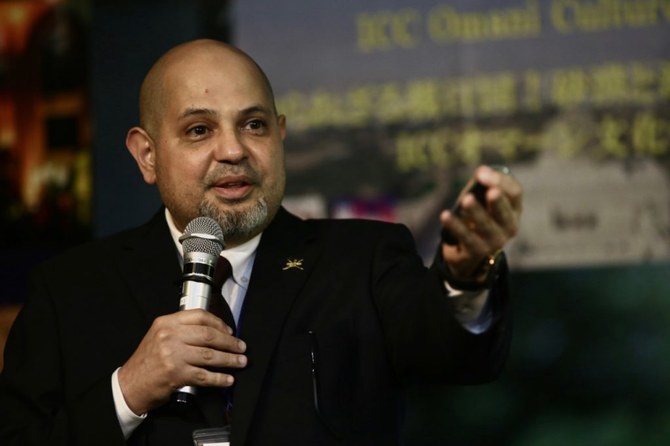
Dr. Mohamed Said Al Busaidi, the Ambassador of the Sultanate of Oman to Japan made the opening speech in front of approximately 80 students and a number of professors. His speech highlighted the importance of the bilateral diplomatic relations which have officially existed for fifty years, but which in reality began 400 years ago between the two countries.

The ambassador pointed out the important geopolitical aspect of Oman which is at the crossroads of trade between Asia, the Middle East and Africa.  After his formal presentation, he described the many scenic features that make his country a special destination for travelers.

Students of politics, economics and physics told Arab News Japan they enriched their knowledge about the world and Oman. 

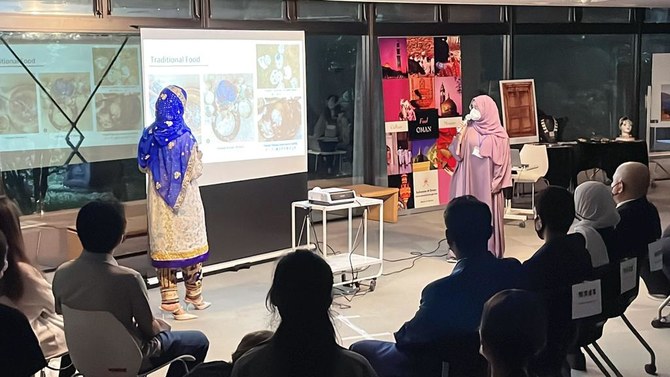
The event also included a presentation on daily life in Oman, and Arabic lessons by students from Oman. Some students also wore traditional costumes from different regions of Oman and demonstrated an Arabic coffee ceremony.  

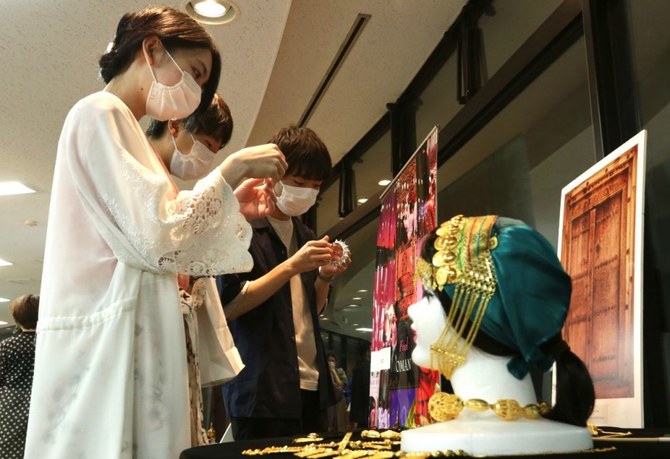
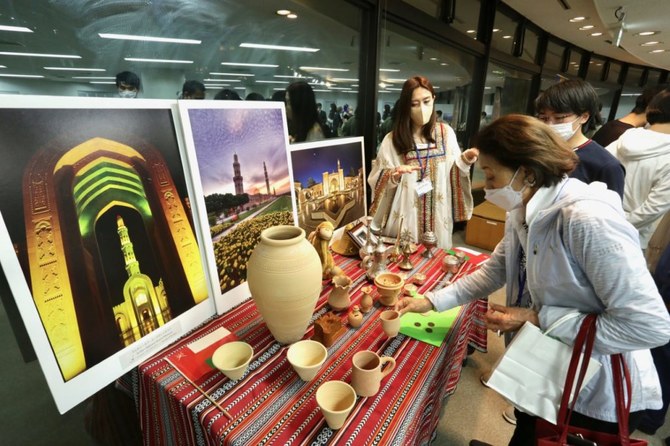
Traditional items and jewelry were displayed alongside films and photos that illustrated the unique culture of Oman. 

A quiz was held at the end with prizes related to Oman and all participants received a small gift to remind them of the event. 

This is the second time that an event like this has been organized at Waseda University. Similar events to mark the bilateral relations and raise cultural awareness of the country are to follow, according to the embassy.


Attacks on Sudan health care facilities killed 69 this year: WHO

Updated 8 sec ago
Follow

Attacks on Sudan health care facilities killed 69 this year: WHO

  • “Five attacks on health care have already been recorded in Sudan, killing 69 people and injuring 49,” WHO chief wrote on X
  • The WHO has confirmed at least 206 attacks on health care facilities since the start of the war

CAIRO: Five attacks on health care facilities have killed dozens of people in Sudan since the beginning of the year, the WHO said Saturday, as the war nears the start of its fourth year.
The fighting between Sudan’s army and the paramilitary Rapid Support Forces has dismantled an already fragile medical system, with more than a third of facilities currently out of service.
“During the first 50 days of 2026, five attacks on health care have already been recorded in Sudan, killing 69 people and injuring 49,” WHO chief Tedros Adhanom Ghebreyesus wrote on X.
On Sunday a hospital was targeted in the southeastern state of Sennar, leaving three patients dead and seven people wounded, including an employee, Tedros said.
In three other attacks early this month, more than 30 people were killed when medical centers were targeted in South Kordofan, a vast region south of the capital Khartoum that is currently a focus of the fighting.
The WHO has confirmed at least 206 attacks on health care facilities since the start of the war in April 2023, resulting in the deaths of around 2,000 people and injuries to several hundred.
Last year alone, 65 attacks killed more than 1,620 people, accounting for 80 percent of all deaths worldwide linked to attacks on the medical sector, according to the WHO.
Since it broke out, Sudan’s civil war has killed tens of thousands of people and forced 11 million to flee their homes, triggering what the UN says is one of the world’s worst humanitarian crises.
According to the WHO, the country is facing multiple disease outbreaks, notably cholera, malaria, dengue and measles, in addition to malnutrition.
Some 4.2 million cases of acute malnutrition are expected to arise in Sudan this year, including more than 800,000 cases of severe acute malnutrition, the WHO chief said earlier this month.
Around 33 million people will be left without humanitarian aid in 2026, with the United Nations warning in January that its aid stocks could run out by the end of March.