
NEW YORK: The UN Security Council on Friday welcomed the extension of the truce between the Yemeni government and the Houthis, which was agreed a day earlier.
However, council members expressed concern about grave humanitarian effects of ongoing road closures around Taiz and called on the Iran-backed militia “to act with flexibility in negotiations and immediately open the main roads.”
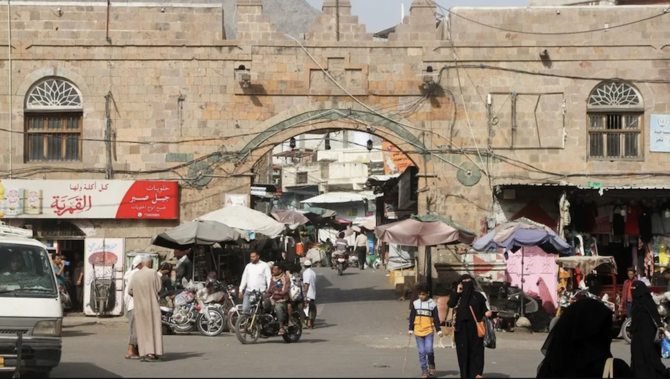
Taiz governorate has been under siege since 2015, when the Houthis closed main routes and encircled the city center, largely cutting it off from the rest of the country. It remains under siege deespite this week’s extension of a truce between the militia and government forces.
The council members reiterated their appreciation of the steps taken by all sides to uphold the truce, which began on April 2 and has now been extended for another two months. It has led to “real and tangible benefits” for the Yemeni people, they said, including a significant reduction in civilian casualties and the improved flow of humanitarian aid.
In a joint statement, they welcomed the Yemeni government’s flexibility in allowing ships carrying fuel to enter Hodeidah port, and enabling international flights to resume between Sanaa, Amman and Cairo. They also commended regional partners for their support.
The council expressed hope that the truce will lead to “a durable ceasefire and an inclusive, comprehensive political settlement, under the auspices of the UN.” Members again emphasized the importance of a minimum of 30 per cent participation by women in decision-making processes in Yemen, in line with the outcomes of the National Dialogue Conference, as enshrined in Security Council Resolution 2624, which was adopted this year.
They encouraged all sides in Yemen to continue to engage with the UN’s special envoy for the country and “to negotiate and communicate with each other with a spirit of mutual respect and reconciliation.”
The risk of famine is also a great concern, council members said as they encouraged international donors to fully fund the UN humanitarian response to the crisis.
They also highlighted the need for “an inclusive, comprehensive political settlement to address the humanitarian and economic crises, and to protect civilians.”
'Dire' situation
The spokesperson of the UN Commission on Human Rights also reiterated the commission's repeated request for the reopening of the city, warning that the consequences of the blockade is "dire".
“We urge serious efforts to ensure that roads into the city of Taiz are reopened,” UNHCR spokesperson Liz Throssell said on Friday.
Residents of Taiz hope UN-sponsored talks in Amman will end in a deal that enables them to go to work and school and facilitate the flow of aid and goods.
Mohsen Al-Najdi, 53, who has blood cancer, has to drive more than three hours along narrow mountain roads to receive chemotherapy in Taiz. Before the Houthis encircled the city, the journey from his rural home took less than an hour.
“Sometimes I miss appointments because of a flat tire or other problems on the bumpy roads ... since treatment is only available until 2 p.m.,” said Najdi, a teacher. “I wanted to go to Cairo but I don’t have the means ... God’s door is always open so maybe a benefactor will help.”
Taiz governorate has a population of 5 million, including 400,000 the city. The Houthis control the governorate’s industrial areas, and the road closures have driven up food and fuel prices and disrupted access to basic services.
“The essentials of normal human life are missing in Taiz whether for education or health services. Many people die while traveling the mountain roads,” said local resident Anisa Al-Yousefi.
Another Taiz resident, Moham- med Mahrous, has not been able to visit relatives for seven years. “It is depressing living under siege even inside the city, as if you are in a big prison,” he said.
(With agencies)