BAGHDAD: Assassinations, bomb attacks and threats in Iraq and an “environment of fear and intimidation” targeting activists and protesters has put a stranglehold on freedom of expression, the UN mission warned Thursday.
In a report documenting 26 incidents since May 2021 that it said were “aimed at suppressing dissent and criticism carried out by ‘unidentified armed elements’,” the United Nations warned of the deadly threats that activists face.
Among the 26 cases investigated, they include “one targeted killing, three attempted targeted killings, five violent assaults, one house raid, 14 attacks using improvised explosive devices (and) one abduction,” the report read.
It refers to the “persistent impunity with respect to targeted attacks against protesters” as well as against people “seeking accountability for these attacks, and activists and critics espousing views critical of armed elements and affiliated political actors.”
The report, focusing on the period of May 2021 to May 2022 and based on 27 interviews including with judicial officials in the capital Baghdad and southern Iraq, was compiled by the UN’s Office of the High Commissioner for Human Rights (OHCHR) and the UN Assistance Mission for Iraq (UNAMI).
The report notes, however, that “significant progress” has been made in providing compensation to the families of those killed during the bloody anti-government protests that rocked the country for months from late 2019.
More than 500 families have so far received compensation of some $7,000 dollars each, it said.
The demonstrations were sparked by rampant corruption, a lack of job opportunities and poor living conditions.
Nearly 600 people were killed and tens of thousands injured when the authorities cracked down on the protests. Dozens of activists and protesters were targeted in assassinations or attempted killings.
While the violence against protesters was never claimed, many critics accuse powerful pro-Iranian armed factions.
“Information indicates that individuals detained and convicted for these incidents may belong to well-known armed elements operating outside state control,” the UN report said.
The consequence, the UN warns, is that it “propagates an environment of fear and intimidation that continues to severely restrict the enjoyment of the rights to freedom of expression and peaceful assembly.”
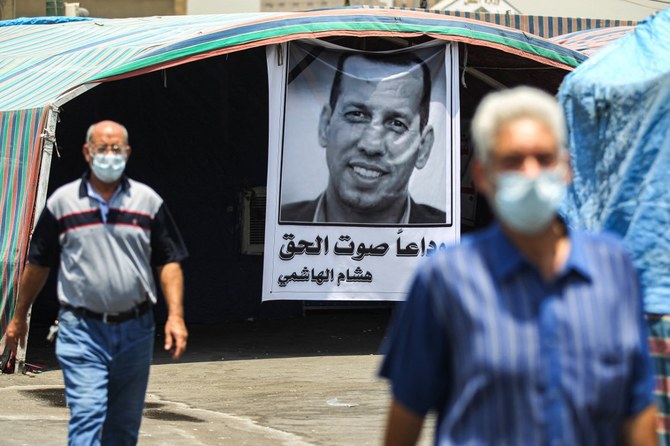
The report also looked at fallout from the fatal July 2020 shooting of security adviser and researcher Hisham Al-Hashemi, and the trial of a policeman for his murder.
After repeated delays, the trial has again been postponed — this time with no new start-date — “due to the ‘inability of bringing the defendant to the court’,” the report added.


![]()

Iraqi activists suffering in ‘environment of fear’: UN
Short Url
https://arab.news/p9rqk
Iraqi activists suffering in ‘environment of fear’: UN
- The United Nations warned of the deadly threats that activists face
- The report was compiled by the UN's Office of the High Commissioner for Human Rights and the UN Assistance Mission for Iraq


Latest updates


© 2026 SAUDI RESEARCH & PUBLISHING COMPANY, All Rights Reserved And subject to Terms of Use Agreement.