


LONDON: An Afghan asylum seeker who arrived in Britain as a child has told The Independent that he would “rather die” than be sent to Rwanda under the UK government’s controversial new asylum removal policy.
Hakim Khan, 32, spoke about his fears of being sent to the African country after he was detained at an immigration removal center this month and informed by British authorities that he might be deported.
Khan, who arrived in Britain as a child in 2008, said: “This is not the right thing to do. I just want to be free, I want to be with my family, I want to be a human. I have hopes like other people. I want to have rights. There are no deportations to Afghanistan — why are they keeping me here?”
Khan is among around 100 asylum seekers believed to have been sent “notices of intent,” letters that detail how their situation is being reviewed to determine if they can be “removed elsewhere.”
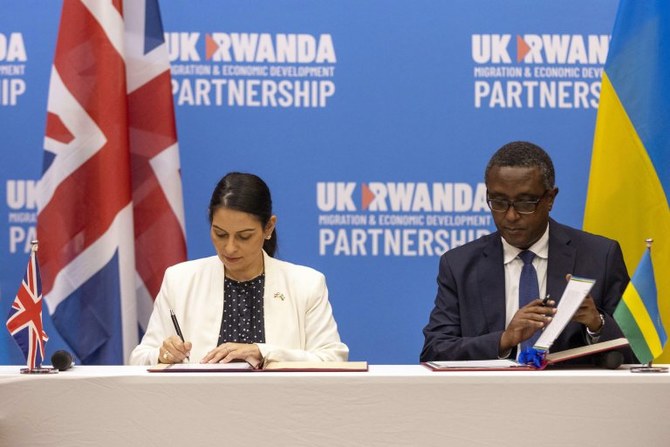
Rwanda is a possible destination after the UK’s recently announced deal with the country.
Ministers signed off the plan to deter small boat migrant crossings over the English Channel, with hundreds of thousands of migrants making the perilous journey in recent years.
The plan will see thousands of people shipped 4,000 miles away to Rwanda to have their asylum claims processed.
Khan said his asylum claim was refused when he turned 18 in 2012. He then eventually traveled to France to claim asylum but was returned to Britain under the Dublin Regulations, which require a migrant to process asylum claims in the country where they first made an application.
His next claim in Britain was refused. He traveled to France again, telling The Independent that he was homeless with “no home, no food, no nothing.”
He returned to the UK on May 14, 2022, after the Rwanda plans were announced, and was served notice that he could be sent to Africa.
The Home Office announced on Thursday that 24 percent of people making small boat crossings to Britain had come from Afghanistan, highlighting the significant migration crisis sparked by the Taliban’s recapture of Kabul.
Khan said that most of his family fled after the fall of Kabul and had been traveling to Europe to seek refuge.
“I’ve been here for years. I want to enjoy my life in the UK,” he added.
Emma Ginn, of Medical Justice, said the mental health risks of the detention and deportation plans were significant. A poll of some of the charity’s recently detained clients found that 87 percent reported suicidal or self-harming thoughts.
“There is potential for an even worse situation than during the concentrated program of charter removal flights in 2020, characterized by high levels of distress, self-harm, and suicidal ideation,” she added.


