Netflix launches new collection and features on Global Accessibility Awareness Day

Netflix will display badges for shows and films that have AD and SDH on web and iOS. (Supplied)
Short Url
Updated 23 May 2022
Follow

Netflix launches new collection and features on Global Accessibility Awareness Day

  • “Celebrating Disability with Dimension” collection features 50+ shows and films about people with disabilities

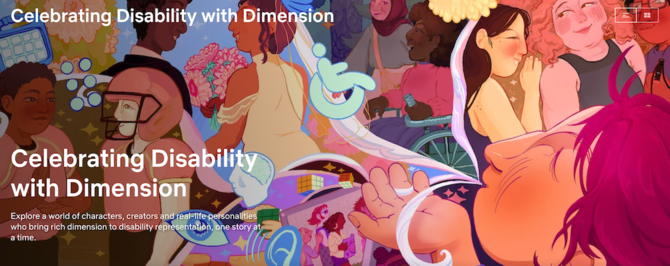
DUBAI: Netflix is marking Global Accessibility Awareness Day (May 19) by launching a new collection, “Celebrating Disability with Dimension” that features over 50 shows and movies highlighting characters and stories about people living with disabilities.

The collection includes shows such as “Raising Dion,” “Special,” and “Atypical” and movies that include “The Fundamentals of Caring” and “Feel the Beat.”

“How we access stories has changed a lot,” said Heather Dowdy, Netflix’s director of product accessibility, in a blog post.

“Whether it’s video conference calls, texting, or the flashing doorbell, nowadays technology can build bridges to access for many people living with disabilities.”

Netflix is therefore expanding its language availability of Audio Descriptions (AD) and Subtitles for the Deaf and Hard of Hearing (SDH). These features will be made available across more of the streaming giant’s catalog in languages including Spanish, Portuguese, and French.

“For decades, your access to entertainment was determined by where you lived and what language you spoke, meaning that until recently people who needed AD or SDH could only enjoy a story if it was made in their local language,” said Dowdy.

“By increasing our SDH and AD language availability to over 20 languages, we hope to give all of our members the ability to see their lives reflected on screen, no matter where you’re from, what language you speak, or what abilities you have.”

Netflix will also display badges for shows and films that have AD and SDH on web and iOS, as well as host accessibility screenings in select countries around the world.

“With over 1 billion people living with disabilities globally, the opportunity to tell more inclusive stories and bond within our communities over storytelling is tremendous,” said Dowdy.


Paris exhibition marks 200 years of Le Figaro and the enduring power of the press

Updated 17 January 2026
Follow

Paris exhibition marks 200 years of Le Figaro and the enduring power of the press

  • The exhibition celebrated the bicentennial of Le Figaro, offering visitors a rare opportunity to step inside the newspaper’s vast historical archive

PARIS: One of France’s most influential newspapers marked a major milestone this month with a landmark exhibition beneath the soaring glass nave of the Grand Palais, tracing two centuries of journalism, literature and political debate.
Titled 1826–2026: 200 years of freedom, the exhibition celebrated the bicentennial of Le Figaro, offering visitors a rare opportunity to step inside the newspaper’s vast historical archive. Held over three days in mid-January, the free exhibition drew large crowds eager to explore how the title has both chronicled and shaped modern French history.
More than 300 original items were displayed, including historic front pages, photographs, illustrations and handwritten manuscripts. Together, they charted Le Figaro’s evolution from a 19th-century satirical publication into a leading national daily, reflecting eras of revolution, war, cultural change and technological disruption.
The exhibition unfolded across a series of thematic spaces, guiding visitors through defining moments in the paper’s past — from its literary golden age to its role in political debate and its transition into the digital era. Particular attention was paid to the newspaper’s long association with prominent writers and intellectuals, underscoring the close relationship between journalism and cultural life in France.
Beyond the displays, the program extended into live journalism. Public editorial meetings, panel discussions and film screenings invited audiences to engage directly with editors, writers and media figures, turning the exhibition into a forum for debate about the future of the press and freedom of expression.
Hosted at the Grand Palais, the setting itself reinforced the exhibition’s ambition: to place journalism firmly within the country’s cultural heritage. While the exhibition has now concluded, the bicentennial celebrations continue through special publications and broadcasts, reaffirming Le Figaro’s place in France’s public life — and the enduring relevance of a free and questioning press in an age of rapid change.