MOSCOW: Belarus has introduced the death penalty for attempts to carry out acts of terrorism — charges faced by exiled opposition leader Svetlana Tikhanovskaya, who on Wednesday joined the United States in denouncing the decision.
Belarus — a close ally of Russia that has supported its military offensive in Ukraine — is the only country in Europe that continues to carry out executions despite calls for a moratorium.
“Lukashenko signed a law on the possibility of the death penalty for an attempted terrorist act,” Russia’s state news agency RIA Novosti reported on Wednesday, citing an online government portal for legal information in Belarus.
It said the law would come into force 10 days after its publication.
Two years ago, Belarus faced historic protests against the re-election of strongman leader Alexander Lukashenko, who has ruled the ex-Soviet country with an iron fist for more than two decades.
Thousands of activists were arrested in the crackdown and the key leaders of the opposition movement are now either jailed or in exile.
Among them is Tikhanovskaya, a political novice who ran against Lukashenko in the August 2020 polls in place of her jailed husband.
She now leads the Belarusian opposition from exile in Lithuania, while her husband Sergei Tikhanovsky is serving 18 years in prison on what supporters say are politically motivated charges.
Last March, Belarusian prosecutors charged Tikhanovskaya in absentia with “preparing acts of terrorism as part of an organized group,” according to Belarusian state news agency Belta.
Tikhanovskaya on Wednesday denounced the decision of the “lawless regime” to expand the use of the death penalty, saying it targeted anti-government activists.
“This is a direct threat to activists opposing the dictator and the war,” Tikhanovskaya tweeted.
“I urge the international community to react: sanction lawmakers and consider any tools to prevent the political killings,” she added.
The United States condemned the legislation, calling it a desperate move by Lukashenko to retain power.
“These actions are those of an authoritarian leader desperate to cling to power through fear and intimidation,” said Secretary of State Antony Blinken.
Belarus and its leadership are already under a litany of Western sanctions over its handling of the opposition protests and over its support for Moscow’s military campaign in Ukraine.
But many opposition activists remain behind bars in Belarus awaiting trial.
On Wednesday, a Belarusian court in the north-western city of Grodno started a closed-door hearing in the case against 12 activists accused of “preparing acts of terrorism,” according to Belarusian rights group Vyasna.
Among them is veteran activist Nikolai Avtukhovich, who has already served more than seven years in prison. The 59-year-old faces other charges, including treason.
The activists are accused of setting a policeman’s home and car on fire, and burning another policeman’s car in the autumn of 2020.
Capital punishment in Belarus — carried out by shooting — is highly secret and there are no official statistics.
The country’s last known death sentence was carried out against Victor Pavlov, who was arrested in January 2019 on suspicion of murder and larceny, according to the UN Human Rights Committee.
The committee had called for his execution to be halted while it examined his allegations of torture in detention but said in March that his family had been informed it had taken place, without any information about when he was executed.
Pavlov was the 15th person executed in Belarus since 2010 while their case was still pending before the committee, it said.


![]()

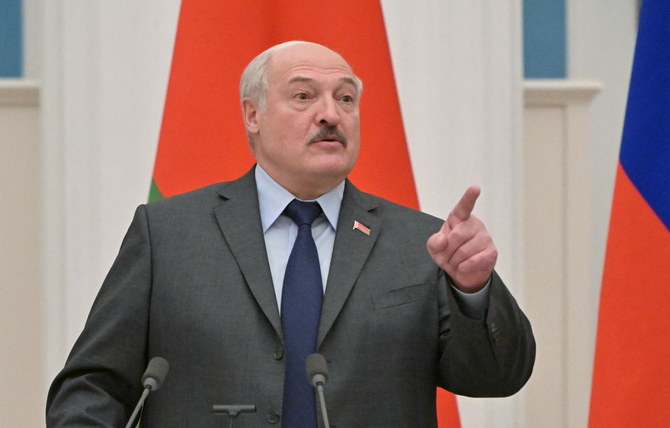
Belarus introduces death penalty for ‘attempted’ terrorism
Short Url
https://arab.news/g88pq
Belarus introduces death penalty for ‘attempted’ terrorism
- Belarus is the only country in Europe that continues to carry out executions despite calls for a moratorium
- Lukashenko signed a law on the possibility of the death penalty for an attempted terrorist act


Latest updates


Recommended


© 2026 SAUDI RESEARCH & PUBLISHING COMPANY, All Rights Reserved And subject to Terms of Use Agreement.