Arab Women Forum kicks off two days of discussion in Dubai

(AN photo)
Short Url
Updated 22 July 2022
Follow

Arab Women Forum kicks off two days of discussion in Dubai

DUBAI: War reporting as a female journalist, how to tackle fraud, and the potential of women in the Middle East and North Africa were all part of the discussions on the opening morning of the Arab Women Forum, held in Dubai.

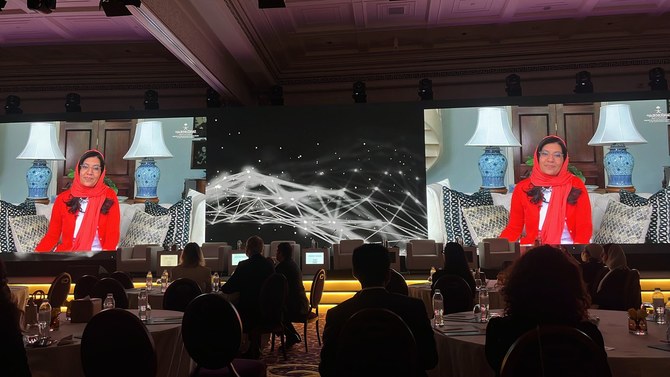
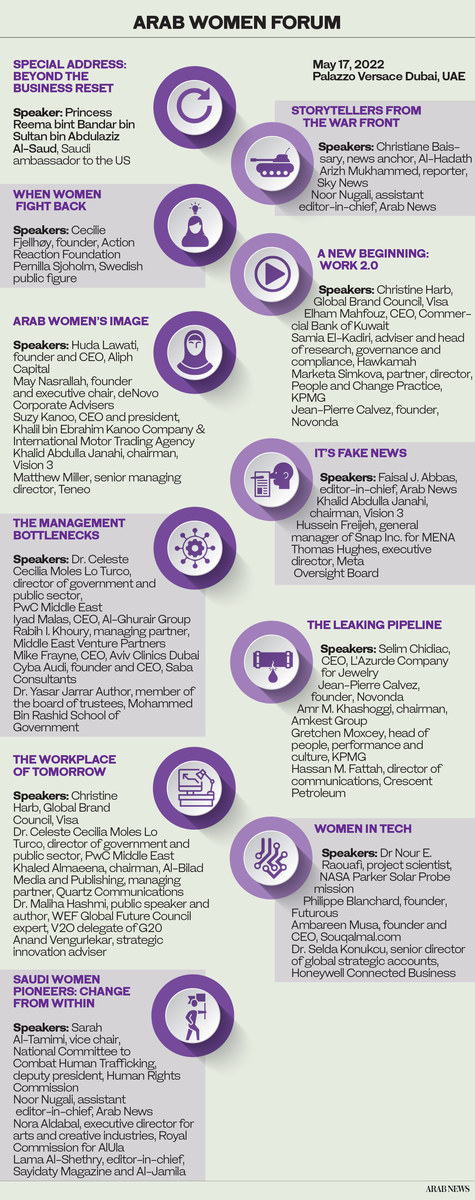
The two-day event is set to see speakers from a range of industries, with Saudi Ambassador to the United States Princess Reema bint Bandar delivering remarks by video at the beginning of the first sessions. 

Others addressing the forum include Arab News’ Assistant Editor-in-Chief Noor Nugali, Skynews reporter Arizh Mukhammed, and the Tinder Swindler’s Cecilie Fjellhøy and Pernilla Sjoholm.
“Reporting about the war is an extraordinary, unpredictable event”
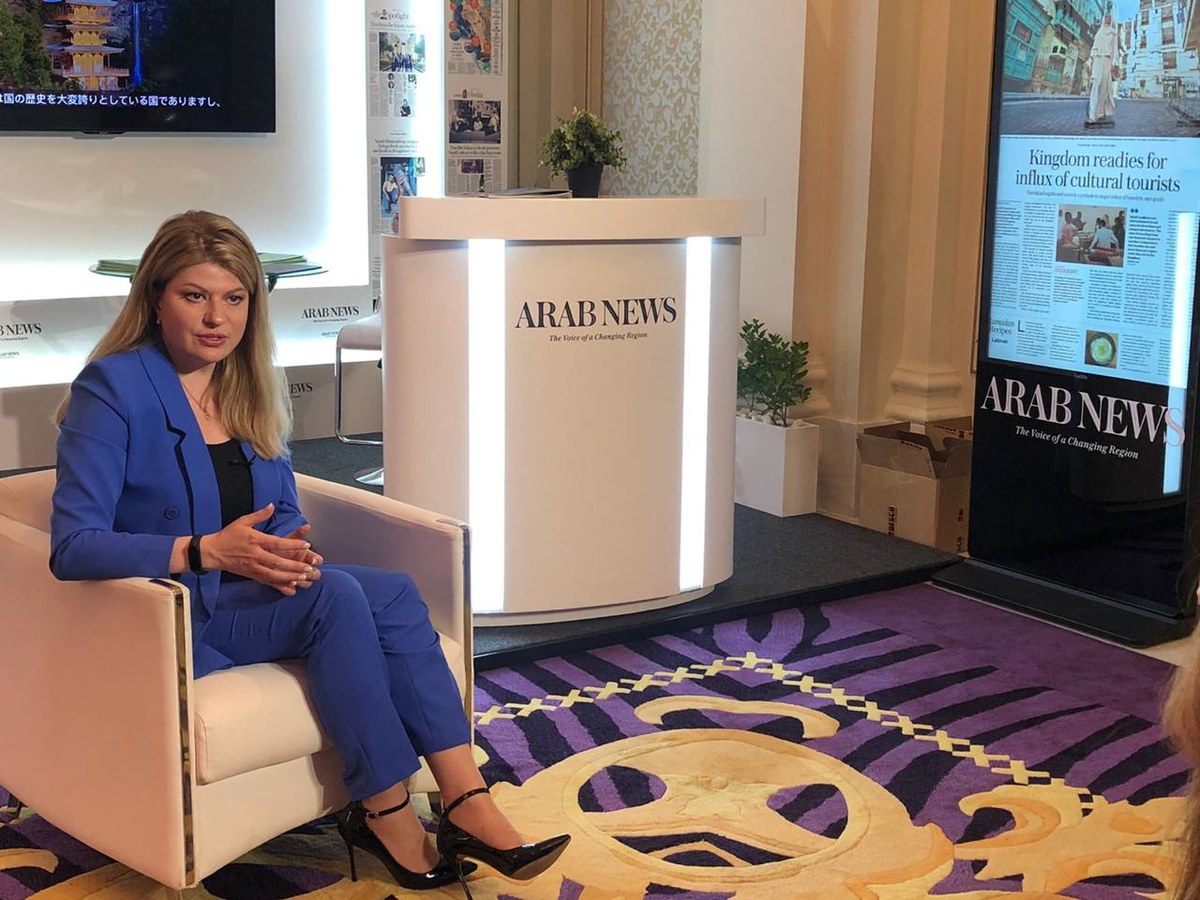


Sky News' Arizh Mukhammed speaking to Arab News (AN)

“I prefer not to categorize myself as a war reporter. I am prepared to report on politics and business wherever the story carries me,” Sky News' Arizh Mukhammed told Arab News in a fascinating interview on the sidelines of the event. “My advice to a young female reporter is to educate herself, always look at two sides of a story and assess if you are objective enough to report on a story.”

The half-Russian, half-Syrian speaks three languages and holds a doctorate in pharmacology but describes her current role as one of the most challenging and rewarding of her life.

GCC gets snappy

Engagement on Snapchat in the Gulf Cooperation Council region is amongst the highest in the world, according to the company's general manager for the Middle East and North Africa, Hussein Freijeh.

While speaking at the forum he said: “This region for Snapchat has a highly engaged community on app and more specifically in the GCC, overall Qatar, UAE, and Saudi Arabia.” 

He added that a human touch blended with technology is necessary to eliminate the spread of fake news on online platforms.  

“Army of journalists needed”
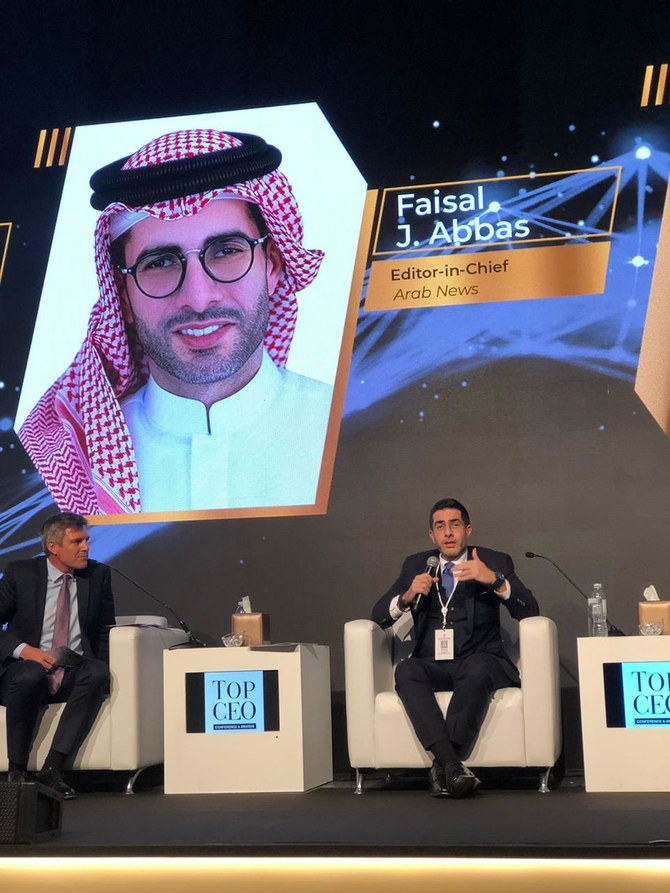


Faisal Abbas, Arab News Editor-in-Chief, at the Arabian Women Forum in Dubai (AN)

Fake news was here before the advent of social media platforms, Faisal Abbas, Arab News Editor-in-Chief, said during his speech at the forum. 

According to Abbas, fake news or lying is part of human society, dating back to the early days of humanity with Adam and Eve — long before Twitter or Facebook. 

“I think it important to distinguish [a] very important fact: fake news was not invented with social media, we are suffering now due to speed and availability of the tools in everybody’s hands,” Abbas said.

“Profound and historic change for women in Saudi Arabia in the region”


Princess Reema bint Bandar, Saudi Arabia’s ambassador to the US, used her keynote speech to talk up the importance of not just opening doors for women to enter the workplace, but welcoming them in.

“We have millions of talented, motivated women eager to contribute, and they are the key to social, cultural and economic progress in the Kingdom and, frankly, in the Arab world and around the world, she said.

Storytellers From The War Front
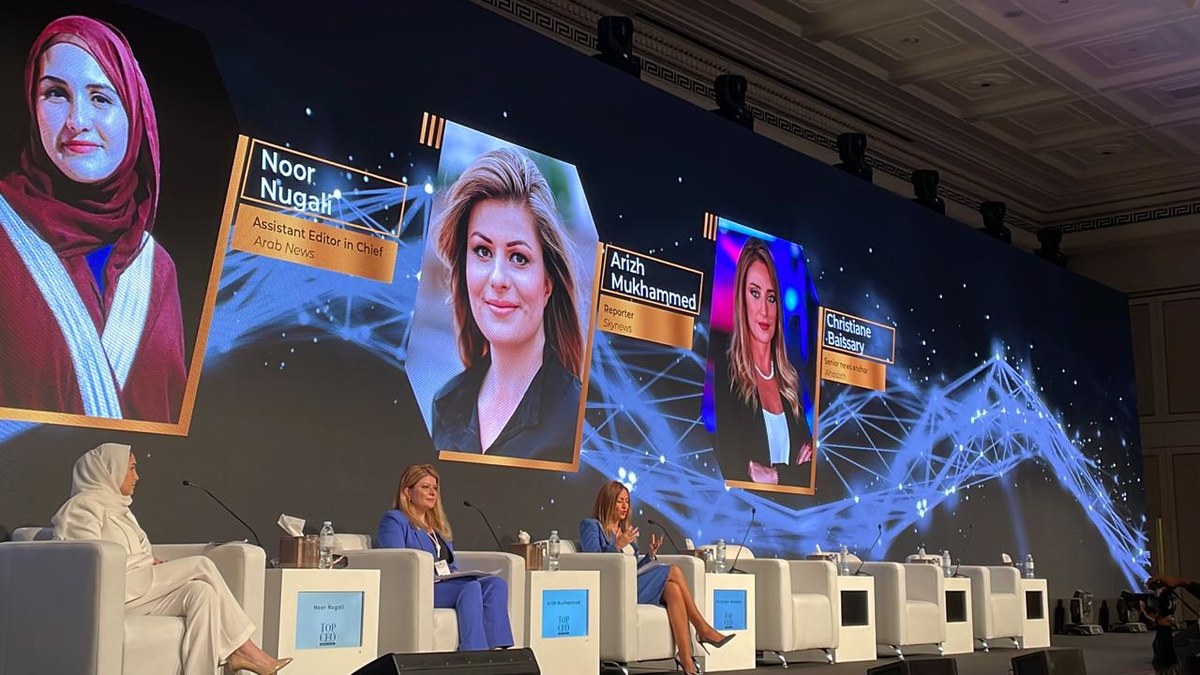
Assistant Editor-in-Chief, Arab News Noor Nugali moderated the Storytellers From The War Front session at the Arab Women Forum, Dubai, featuring Skynews reporter Arizh Mukhammed and Alhadath Senior News Anchor Christiane Baissary.

Baissary told the forum that there is a common misconception that women are not suited for war coverage as people think women are emotional and sensitive compared to men, Baissary told the forum. 

“A soldier told me that women should not cover in the war zone. He was trying to convince me that I should not stay to cover the war, it's not the mentality in the Middle East but everywhere,” said Baissary. 

Baissary noted that things have changed now, and women are currently getting more chances to cover wars. 

During the session, Sky News reporter Arizh Mukhammed said that fear will be there in the minds of reporters as they cover from the war front.

“Your courage must have limits. When you are going to cover war, you have your fears, but they must be put under control,” said Mukhammed. 

She also added that women differ from men in war reporting as they create humanitarian journalistic materials. 


Building bridges: Saudi Arabia leads Gulf-Asia tech leap

Updated 01 January 2026
Follow

Building bridges: Saudi Arabia leads Gulf-Asia tech leap

ALKHOBAR: Saudi Arabia is forging new academic connections with Asia as the Kingdom’s Vision 2030 accelerates reforms in education and innovation.

Two academics — Prof. Eman AbuKhousa, a data science professor at the University of Europe for Applied Sciences in Dubai, and Prof. Hui Kai-Lung, acting dean of the HKUST Business School in Hong Kong —emphasize that the Kingdom’s transformation is reshaping the development of artificial intelligence and fintech talent across the region.

For AbuKhousa, responsible AI is not just about technology; it is fundamentally about intention. “It is about aligning technology with human values: ensuring fairness, transparency, and accountability in every system we build.”

She highlighted that the Middle East’s heritage of trust and ethics gives the region a competitive advantage. “Institutions should embed ethics and cultural context into AI education and create multidisciplinary labs where engineers collaborate with social scientists and ethicists,” she said.

At the University of Europe for Applied Sciences in Dubai, AbuKhousa trains students to question data, identify bias, and integrate integrity into innovation. 

Asian universities like HKUST play a growing role in cross-border education partnerships with Saudi institutions.

“Educators must model responsible use by explaining how data is sourced and decisions are made,” she explained. “Ultimately, responsible AI is less about algorithms than about intention; teaching future innovators to ask not only ‘Can we?’ but ‘Should we?’”

She further noted:“Saudi Arabia’s Vision 2030 has turned digital education into a national movement placing technology and innovation at the heart of human development.”

AbuKhousa emphasized the transformative opportunities for women in the Kingdom: “Today, Saudi female students are designing models, leading AI startups, and redefining what digital leadership looks like.”

Prof. Hui views this transformation through the lens of fintech. “Fintech is deeply embedded in Vision 2030, serving as a key enabler of its three pillars: a vibrant society, a thriving economy, and an ambitious nation,” he said.

Hui stressed that Saudi Arabia’s investment capacity and modern regulatory framework “create a conducive environment for innovation.” Having collaborated with Aramco, The Financial Academy, and Prince Mohammed Bin Salman College of Business and Entrepreneurship, he highlighted the strategic potential of the Kingdom’s young population. “The Kingdom has one of the youngest populations in the world, with a median age below 30,” he said. 

Opinion

This section contains relevant reference points, placed in (Opinion field)

“This demographic presents a tremendous opportunity for higher education to shape future leaders, and our collaborations in Saudi Arabia are highly targeted to support this goal.”

AbuKhousa argued that universities must lead innovation rather than follow it. “Universities must evolve from teaching institutions into innovation ecosystems,” she said. “The real bridge between research and industry lies in applied collaboration: joint labs, shared data projects, and co-supervised capstones where students solve live industry challenges.”

“At UE Dubai, we’ve introduced an Honorary Senate of Business Leaders to strengthen that bridge, bringing decision-makers directly into the learning process,” she added.

DID YOU KNOW?

Vision 2030 has made digital education central to Saudi Arabia’s development strategy.

Women in Saudi Arabia are now designing AI models and leading startups.

Universities are transforming into innovation ecosystems bridging research and industry.

Cross-border collaborations with Hong Kong and Dubai are accelerating fintech and AI growth.

Hui noted that cross-border cooperation between Hong Kong and Saudi Arabia is growing rapidly. “Saudi Arabia’s scale, strategic location, and leadership in the Arab world offer Hong Kong an ideal partner,” he said. “Hong Kong’s academic and regulatory experience can help the Kingdom fast-track its digital transformation.”

He highlighted lessons from Hong Kong’s fintech journey. “Hong Kong’s fintech journey offers critical lessons for Saudi Arabia, particularly in creating a balanced ecosystem for innovation,” he said. “Education and regulation are both important. We need education at all levels and beyond schools to expose people to these ideas; having diverse and rich experiences also helps, as the education needs to be supplemented by real-life implementation and usage experience. That is what Hong Kong can offer.”

AbuKhousa emphasized that women’s participation in technology must extend beyond access to influence. “Empowering women in technology begins with reimagining representation: from inclusion to influence,” she said. “We need more women not only learning tech, but leading teams, designing systems, and shaping AI policy. Institutions must normalize women’s presence in decision-making spaces and provide visible mentorship networks to counter imposter syndrome.”

Both experts agreed that innovation must remain human-centered and accountable. “As AI becomes integral to financial systems, governments must strike a careful balance between innovation, data ethics, and compliance,” Hui said. “Establishing clear regulatory frameworks and transparency standards is crucial.”

AbuKhousa concurred, emphasizing the role of education in AI adoption: “Educators must position generative AI as a thinking partner, not a shortcut. The goal is to teach students how to use AI critically, not merely that they can.”

Hui predicts that “AI, blockchain, and cybersecurity will be transformative forces in the region’s financial sector.” AbuKhousa sees a similar momentum in education: “The Gulf is entering a defining phase where AI becomes the backbone of education and workforce development.”

The experts concluded that the Kingdom’s digital transformation, anchored in Vision 2030, is connecting classrooms, industries, and continents through human-centered innovation.