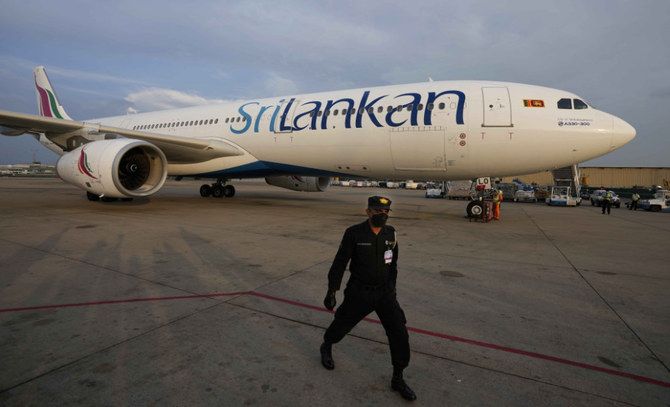
COLOMBO, Sri Lanka: Sri Lanka’s new prime minister on Monday proposed privatizing the country’s loss-making national airline as part of reforms aimed at solving the country worst economic crisis in decades.
Prime Minister Ranil Wickremesinghe said in a message to the people that he plans to propose a special relief budget that will take the place of the development-oriented budget earlier approved for this year, He said it would channel funds previously allocated for infrastructure development to public welfare.
He said the country’s financial health is so poor that the government has been forced to print money to pay the salaries of government workers and buy other goods and services.
President Gotabaya Rajapaksa appointed Wickremesinghe as prime minister last Thursday in a bid to quell the island nation’s political and economic crisis.
The president’s brother, Mahinda Rajapaksa, stepped down as prime minister on May 9 amid violence that left nine people dead and more than 200 wounded. Protesters have demanded the powerful Rajapaksa family resign to take responsibility for leading the country into the economic crisis.
For months, Sri Lankans have been forced to wait in long lines to purchase scarce imported essentials such as medicines, fuel, cooking gas and food because of a severe shortage of foreign currency. Government revenues have also plunged.
Wickremesinghe said Sri Lankan Airlines lost about $123 million in the 2020-2021 fiscal year, which ended in March, and its aggregate losses exceeded $1 billion as of March 2021.
“Even if we privatize Sri Lankan Airlines, this is a loss that we must bear. You must be aware that this is a loss that must be borne even by the poor people of this country who have never stepped on an airplane,” Wickremesinghe said.
Sri Lankan Airlines was managed by Emirates Airlines from 1998 to 2008.
Sri Lanka is nearly bankrupt and has suspended repayment of about $7 billion in foreign loans due this year out of $25 billion to be repaid by 2026. The country’s total foreign debt is $51 billion. The finance ministry says the country currently has only $25 million in usable foreign reserves.
Wickremesinghe said about $75 billion is needed urgently to help provide people with essential items, but the country’s treasury is struggling to find even $1 billion.
Shortages of medicines are so acute that it is difficult to buy anti-rabies medicines and drugs to treat heart disease, he said.
“I have no desire to hide the truth and to lie to the public. Although these facts are unpleasant and terrifying, this is the true situation. For a short period, our future will be even more difficult than the tough times that we have passed,” Wickremesinghe said.
“We will face considerable challenges and adversity. However, this period will not be long,” he said, adding that countries with which he has spoken have pledged to help in the next few months.
Wickremesinghe is struggling to form a new Cabinet, with many parties reluctant to join his government. They say Wickremesinghe’s appointment goes against tradition and the people’s will because he was defeated in 2020 elections and joined Parliament only through a seat allocated to his party.
However, parties have said they will support positive measures by Wickremesinghe to improve the economy while they remain in the opposition.
The main opposition United People’s Force party has introduced a no-confidence motion against the president for “not having properly exercised, performed and discharged the powers of the president under the constitution.”
The motion, to be taken up Tuesday, accuses Rajapaksa of being responsible for the economic crisis by introducing untimely tax cuts and prohibiting the use of agrochemicals, which resulted in crop failures.
Passage of the motion would not legally bind Rajapaksa to quit, but his refusal to do so could intensify anti-government protests and rock negotiations with other countries on economic aid. A challenge of Wickremesinghe’s appointment could also endanger the negotiations, which he leads.


![]()

Sri Lanka proposes privatizing national airline amid crisis
Short Url
https://arab.news/5kjaq
Sri Lanka proposes privatizing national airline amid crisis
- President Gotabaya Rajapaksa appointed Wickremesinghe as prime minister last Thursday in a bid to quell the island nation’s political and economic crisis


Latest updates





© 2026 SAUDI RESEARCH & PUBLISHING COMPANY, All Rights Reserved And subject to Terms of Use Agreement.