

Woman killed, scores injured in blast in Pakistan's Karachi

Security officials gather at the blast the site in Karachi on May 16, 2022. (AN Photo)
Short Url
Updated 17 May 2022
Follow

Woman killed, scores injured in blast in Pakistan's Karachi

  • The blast occurred in the densely populated Kharadar area of the city
  • The bomb, planted on a motorbike, appeared to target a police patrol

KARACHI: A woman was killed and nearly a dozen others were wounded in a bomb blast in the southern Pakistani port city of Karachi, police said on Monday. 

The blast occurred in the densely populated Kharadar area of the city, according to eyewitnesses. It appeared to target a police patrol. 

There was no immediate claim of responsibility, but a senior police official said it could have been carried out by the same group that claimed last week’s blast in the nearby Saddar area.  

“Similar method and explosives have been used in both blasts and the law enforcement has remained the target in congested markets,” Raja Umar Khattab, a senior counter-terrorism police official, told Arab News. 
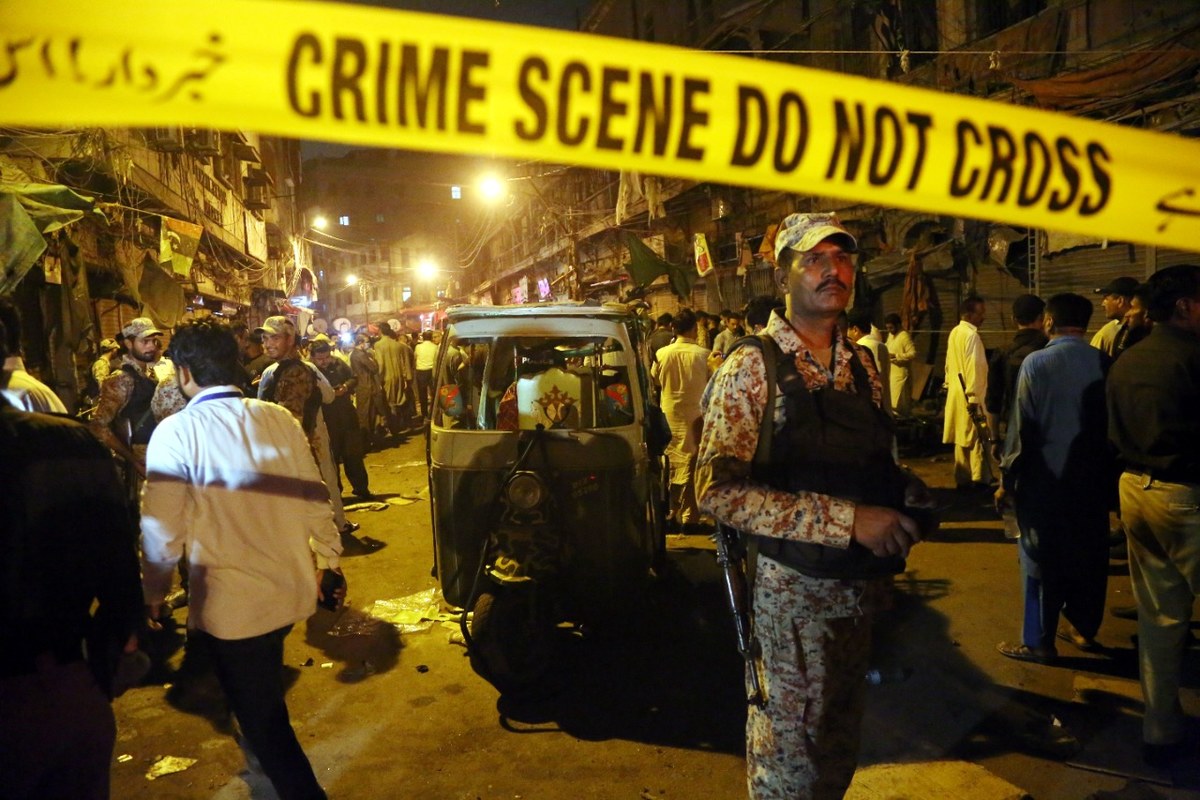


Security officials inspect the site after a bomb blast in Karachi, Pakistan, on May 16, 2022. (AN Photo)

The bomb was planted on a bike parked next to a police mobile, said S M Alim, chairman of the local market association, who was present at the site.  

"It went off at around 9:50pm and injured 12 people," Alim said. 

The injured persons were immediately rushed to Civil Hospital after the blast, which damaged the police vehicle and nearby shops. 
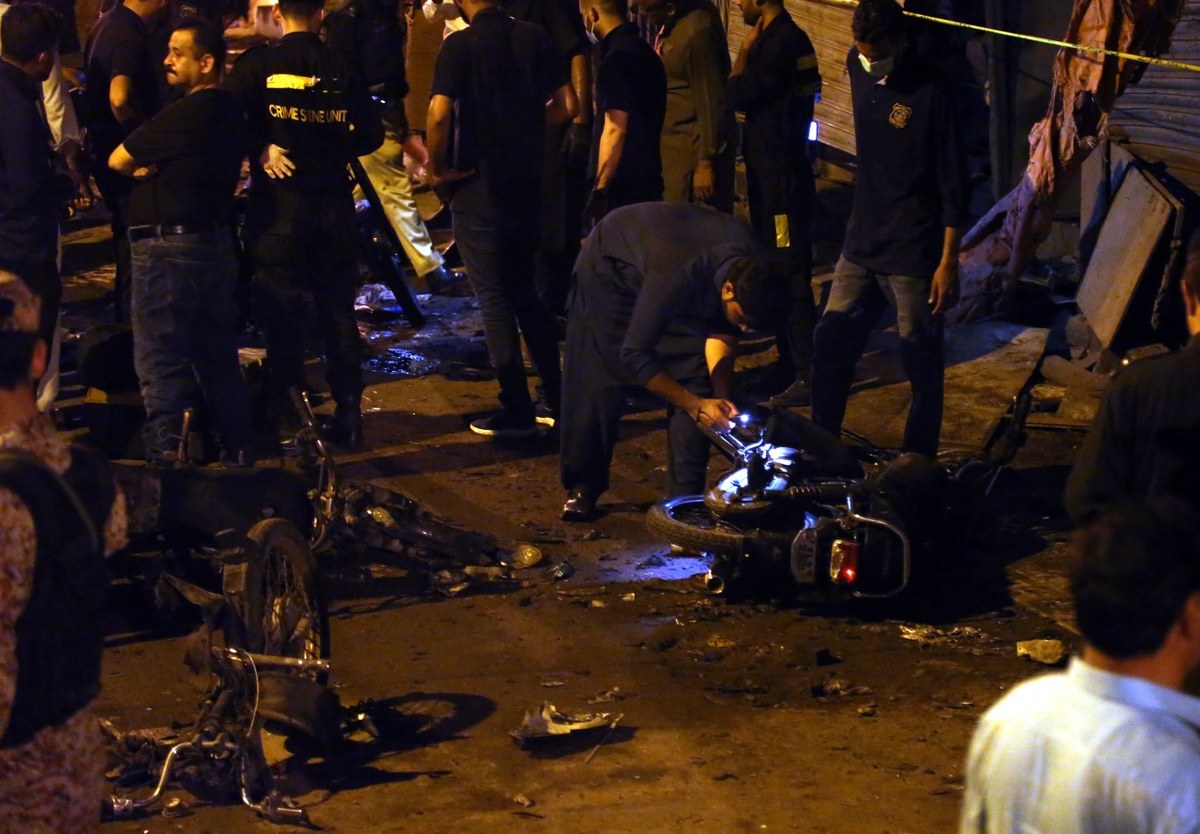


Security officials inspect the site after a bomb blast in Karachi, Pakistan, on May 16, 2022. (AN Photo)

On May 12, a similar attack killed one person and wounded 13 others in the busy Saddar area, just a few kilometers away. The Sindhudesh Revolutionary Army (SRA), a shadowy secessionist organization that wants Sindh to break away from the Pakistani federation, claimed the Saddar attack.

Sindh Chief Secretary Sohail Rajput imposed an emergency at Civil and Jinnah hospitals after the blast. 

Prime Minister Shehbaz Sharif condemned the incident and extended his heartfelt sympathies to the families of the victim and injured persons, PM’s office said. 

He directed authorities to immediately arrest the perpetrators, assuring the Sindh government of the federation’s full support. 


IMF Executive Board to review $1.2 billion loan disbursement for Pakistan today

Updated 4 sec ago
Follow

IMF Executive Board to review $1.2 billion loan disbursement for Pakistan today

  • Pakistan, IMF reached a Staff-Level Agreement in October for second review of $7 billion Extended Fund, climate fund program
  • Economists view IMF bailout packages as essential for cash-strapped Pakistan grappling with a prolonged macroeconomic crisis

ISLAMABAD: The Executive Board of the International Monetary Fund (IMF) is set to meet in Washington today to review a $1.2 billion loan disbursement for Pakistan, state media reported on Monday.

Pakistan and the IMF reached a Staff-Level Agreement (SLA) in October for the second review of a $7 billion Extended Fund Facility (EFF) and the first review of its $1.4 billion Resilience and Sustainability Facility (RSF). 

The agreement between the two sides took place after an IMF mission, led by the international lender’s representative Iva Petrova, held discussions with Pakistani authorities during a Sept. 24–Oct. 8 visit to Karachi, Islamabad and Washington D.C.

“The International Monetary Fund’s (IMF) Executive Board is set to meet in Washington today to review and approve $1.2 billion in loan for Pakistan,” state broadcaster Pakistan TV reported. 

Pakistan has been grappling with a prolonged macroeconomic crisis that has drained its financial resources and triggered a balance of payments crisis for the past couple of years. Islamabad, however, has reported some financial gains since 2022, which include recording a surplus in its current account and bringing inflation down considerably.

Economists view the IMF’s bailout packages as crucial for cash-strapped Pakistan, which has relied heavily on financing from bilateral partners such as Saudi Arabia, China and the United Arab Emirates, as well as multilateral lenders including the IMF, World Bank, Asian Development Bank and Islamic Development Bank. 

Speaking to Arab News last month, Pakistan’s former finance adviser Khaqan Najeeb said the $1.2 billion disbursement will further stabilize Pakistan’s near-term external position and unlock additional official inflows.

“Continued engagement also reinforces macro stability, as reflected in recent improvements in inflation, the current account, and reserve buffers,” Najeeb said.

Pakistan came close to sovereign default in mid-2023, when foreign exchange reserves fell below three weeks of import cover, inflation surged to a record 38% in May, and the country struggled to secure external financing after delays in its IMF program. Fuel shortages, import restrictions, and a rapidly depreciating rupee added to the pressure, while ratings agencies downgraded Pakistan’s debt and warned of heightened default risk.

The crisis eased only after Pakistan reached a last-minute Stand-By Arrangement with the IMF in June 2023, unlocking emergency support and preventing an immediate default.