

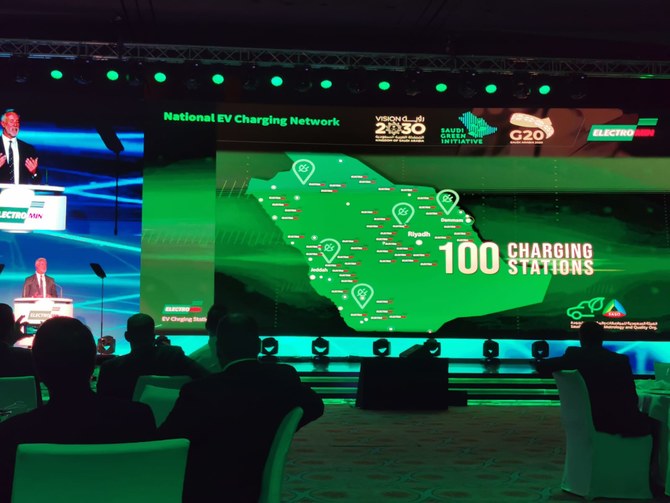
Saudi Electromin rolls out 100 charging stations for electric vehicles across the Kingdom

Tony Mazzone, Electromin’s director of energy and EV infrastructure, at the launching ceremony in Jeddah on Monday. Supplied
Short Url
Updated 17 May 2022
Follow

Saudi Electromin rolls out 100 charging stations for electric vehicles across the Kingdom

  • 1.8m EVs likely to be sold in next 8 years with introduction of the service

JEDDAH: Electromin, a wholly owned e-mobility turn-key solutions provider under Petromin, has announced the rollout of electric vehicle charging points across the Kingdom.  

The network includes 100 locations across the Kingdom powered by a customer-centric mobile application, company's officials announced at a ceremony in Riyadh.

It will enable drivers to go on long journeys with easy access to EV charging stations. 

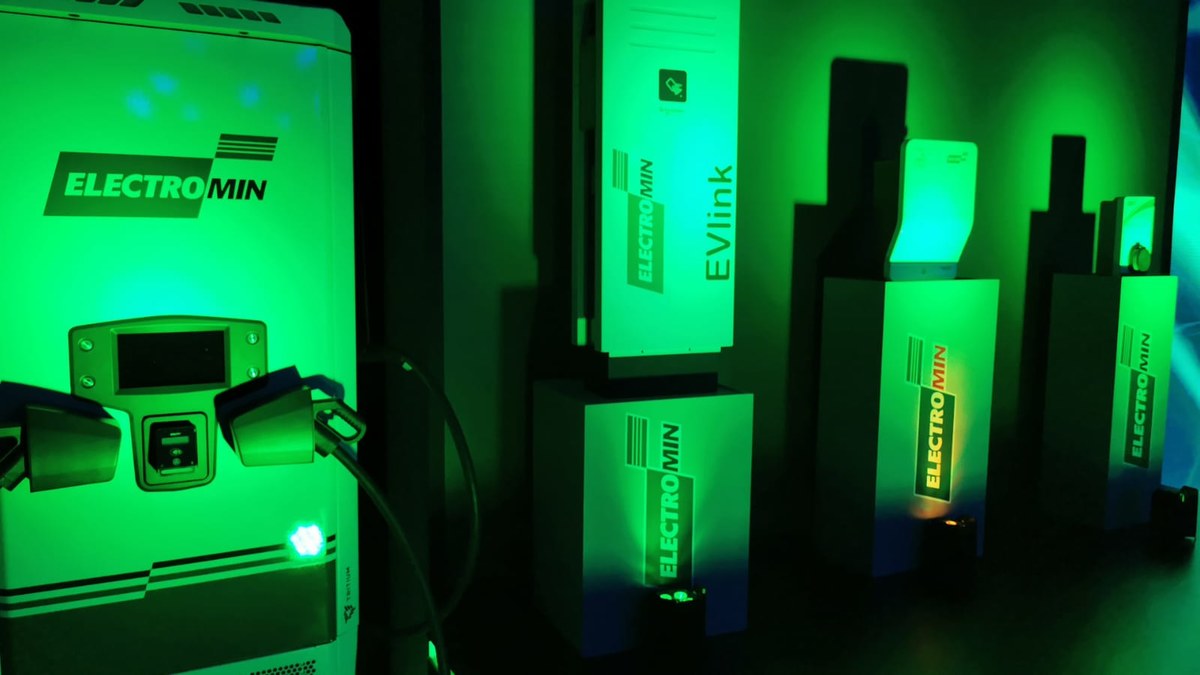
Electromin’s charging network will offer a complete spectrum of services — from AC home/office chargers, DC fast chargers, all the way through to DC ultra-fast chargers, catering for all customer segments.
According to a statement, the chargers installed in phase 1 will be compatible with all homologated vehicles approved by the Saudi Standards, Metrology and Quality Organization using AC Type 2 connectors. The second phase will include additional AC chargers and DC chargers up to 360kW, effectively allowing users to add up to 100 kilometers in 4 minutes. 

The app will be show all charging locations within the selected Petromin Express and Petromin AutoCare outlets in early May. It will allow customers to locate the nearest public charger, plan their route, check the status of the charger to ensure it is available, and allow them to fully control the start and finish of their charging session. The app will also facilitate payments and bookings. 

Tony Mazzone, Electromin’s director of energy and EV infrastructure, said: “The rollout of EV charging points across the Kingdom is our first phase of a significant national strategy that extends to 2030 and beyond.”

HIGHLIGHTS

The chargers installed in phase 1 will be compatible with all homologated vehicles approved by the Saudi Standards, Metrology and Quality Organization using AC Type 2 connectors.

The second phase will include additional AC chargers and DC chargers up to 360kW, effectively allowing users to add up to 100 kilometers in 4 minutes.

The network includes 100 locations across the Kingdom powered by a customer-centric mobile application.

The app will be show all charging locations within the selected Petromin Express and Petromin AutoCare outlets in early May.

He said Electromin’s advanced solutions will help contribute to the development of the “Saudi EV ecosystem in line with the national priorities and commitments of achieving net-zero greenhouse gas emissions by 2060 and 30 percent of vehicles in Riyadh being electric by 2030.” 

Building on our national network of charging stations will mean less pollution, more employment opportunities, and cleaner cars to deliver on the Kingdom’s clean energy investments

Tony Mazzone

“Studies show that EV sales in the Kingdom will increase with a projection of 1.3 million electric vehicles sold in the next 8 years. Building on our national network of charging stations will mean less pollution, more employment opportunities, and cleaner cars to deliver on the Kingdom’s clean energy investments.”

Graham Tunks, commercial director of Electromin added: “Electromin is the first in KSA to offer a public charging solution using SASO-regulated chargers, with full approval by municipalities, enabling drivers to make the switch to EVs knowing that there is a complete network for them to rely on.”
Electromin will be introducing added features and upgrades in their app soon to align with the future expansion of their value proposition and rollout of the network. 

Customers will need to download the app via Google Play or Apple Store, register their payment card details, and they are good to go. A dedicated call center will also guide and help EV users with charging, faults, or technical errors.

Additionally, customers can now benefit from the assistance of the Electromin Mobile EV Recovery Service. The key feature of this service is to ensure the on-road issues facing customers whose EVs have run out of battery. The recovery service will be initially limited to Riyadh, Jeddah, and Dammam.


Foreign buying of Saudi stocks hits $1.33bn ahead of Feb rule change 

Updated 4 sec ago
Follow

Foreign buying of Saudi stocks hits $1.33bn ahead of Feb rule change 

RIYADH: Foreign investors made net purchases of around SR5 billion ($1.33 billion) in Saudi stocks during January, coinciding with the announcement that the market would be opened to all categories of non-resident foreign investors — individuals and institutions from around the world — directly and without conditions. 

According to the Financial Analysis Unit at Al-Eqtisadiah, January’s foreign buying represents the largest monthly purchases since 2022, excluding June 2024, when Aramco held a secondary offering, and September 2025, following a Bloomberg report that the Saudi Capital Market Authority, or CMA, would allow foreigners to hold majority stakes in listed companies. 

Since the market-opening announcement on Jan. 6, Saudi stocks rose by about 10.6 percent by the end of the month. These results were accompanied by a rally in the banking sector, which is expected to benefit most from the lifting of ownership restrictions and strong fourth-quarter results. 

Rising oil prices also supported increases in Aramco, the largest stock by weight on the Tadawul All Share Index, alongside gains in Maaden following new discoveries and higher gold prices, as well as SABIC, after news of asset sales in Europe and the Americas that had previously caused losses for the company. 

The new amendments removed the regulatory framework for swap agreements, which had been used to allow non-resident foreign investors to gain only the economic benefits of listed securities and to enable direct investment in stocks listed on the main market. 

Foreign purchases in January reflected buying by foreign investors who were already in the market ahead of the decision’s implementation in early February. 

Foreign buying last month was likely driven by active funds. With the easing of restrictions, the market’s weight in emerging-market indices is expected to rise later, which could in turn attract additional inflows from passive funds that follow market and company weights in these indices. 

The largest impact is expected on TASI’s weight in emerging-market indices, following the proposed increase in foreign ownership caps for listed companies, pending CMA approval. 

Foreign investors accounted for around 41.7 percent of total market purchases in January, compared with just 5.6 percent in 2018, before joining emerging-market indices, highlighting their growing influence in the market. 

With the market rally and foreign buying in January, the value of foreign investors’ holdings rose to SR465.5 billion, representing 4.87 percent of the total market and 12.67 percent of free-floating shares. Their influence also increased in terms of free-floating shares, rising from 11.01 percent at the end of 2024 to 12.4 percent by year-end. 

The latest regulatory decision is expected to improve market liquidity over the long term, make stock valuations fairer, expand the investor base, deepen the market, and enhance overall efficiency. 

Foreign investment rules in Saudi stocks 

Foreign investments in Saudi stocks are currently subject to several restrictions, including that non-resident foreign investors, excluding strategic foreign investors, may not own 10 percent or more of the shares of any listed company or its convertible debt instruments. 

Foreign investors — all categories, resident or non-resident, except strategic foreign investors — may not collectively hold more than 49 percent of any listed company’s shares or convertible debt. 

These limits are in addition to any restrictions set out in companies’ bylaws, other statutory regulations, or instructions issued by the relevant authorities that apply to listed companies.