


LONDON: American scientists have announced that they have discovered the source of what caused thousands of soldiers to fall sick during the 1991 Gulf War with puzzling symptoms, the BBC reported on Wednesday.
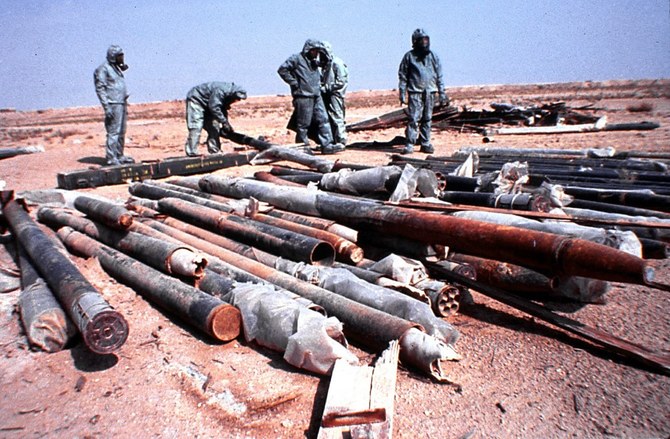
The study, funded by the US government, said nerve agent sarin, which pervaded the atmosphere after Iraqi bomb stores were destroyed, affected thousands of troops after they breathed it in.
The rise of so-called Gulf War Syndrome puzzled researchers and medical teams for decades, as veterans from the conflict were hit with a raft of mysterious health issues such as chronic fatigue, joint pain and speech problems.
After returning home, many otherwise-healthy soldiers developed bizarre illnesses that researchers now think were caused by diluted doses of the nerve gas.
The lead researcher in this new study, Dr. Robert Haley from the University of Texas Southwestern Medical Center, said while sarin can be fatal, it was diluted, so the soldiers who came into contact with it were not killed.
But he added that “it was enough to make people ill if they were genetically predisposed to illness from it.”
Haley said people fell ill if they had a particular version of the PON1 gene, which is crucial for breaking down chemicals and toxins in the body.
Soldiers who were deployed during the war were more likely to fall sick if they had a less effective version of the gene.
More than 1,000 randomly selected American Gulf War veterans were used for what Haley described as “the most definitive study.”
He added: “We believe it will stand up to any criticism. And we hope our findings will lead to treatment that will relieve some of the symptoms.”
Over 53,000 British troops served during the war, with 33,000 thought to be still struggling from Gulf War Syndrome, according to veterans charity the Royal British Legion.
Many people did not take the symptoms seriously because they did not understand how otherwise-healthy and uninjured soldiers were suddenly blighted with sickness.
The National Gulf Veterans and Families Association said the study is a step in the right direction for veterans who had been struggling with health conditions after the war.
“For 30 years they have been disowned, ignored and lied to by consecutive governments, with no positive answers to their questions about exposure to toxic substances and gases and the affect it had on them both physically and mentally,” it said in a statement.
“We hope the UK government takes this report on board and will respond by offering Gulf veterans access/opportunity to have the tests.
“This will hopefully lead to more meaningful and proper medical treatment which they have for too long been denied.”
The British Ministry of Defence said: “We continue to monitor and welcome any new research that is published around the world and financial support is available to veterans whose illness is due to service through the MoD War Pensions and the Armed Forces occupational pension schemes.”


