

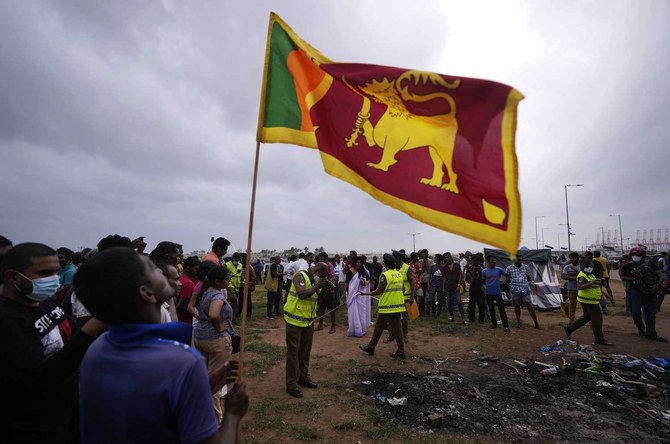

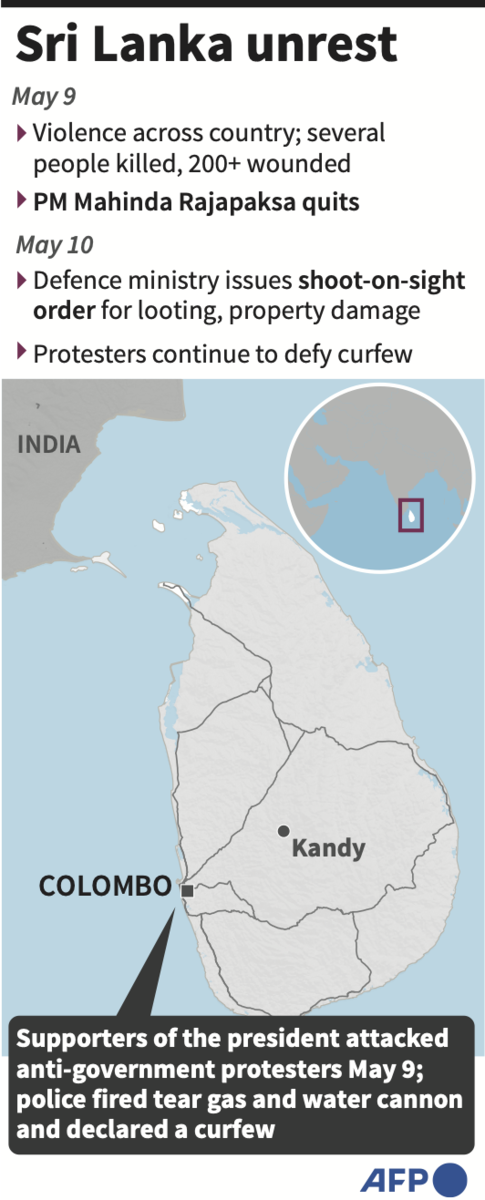
COLOMBO/ NEW DELHI: Protests continued in Sri Lanka on Tuesday despite a nationwide curfew imposed a day after violent clashes saw the resignation of the prime minister, sparking fears over escalating civil unrest.
For over a month, citizens have been taking to the streets across Sri Lanka demanding the resignation of President Gotabaya Rajapaksa, as they blame him and his brother, Prime Minister Mahinda Rajapaksa, for the country’s worst economic crisis since independence from Britain in 1948.
The prime minister’s resignation came after violence erupted when the Rajapaksa's supporters attacked protesters in Colombo on Monday. After at least seven people, including a ruling party lawmaker, were killed and 200 wounded in the clashes, authorities imposed the curfew and deployed troops in many parts of the country.
Dr. Dayan Jayatillake, Sri Lanka’s former top envoy to the UN in Geneva, told Arab News the situation was worsening, and the only thing that could defuse the tension would be the president’s decision to follow in the footsteps of his brother.
“Unless President Gotabaya Rajapaksa steps down from his post, the current turmoil is not going to end,” Jayatillake said. “The whole thing can be defused if the president steps down from his post.”
But it is unlikely to happen immediately.
Dr. Pakiasothy Saravanamuthu, head of the Colombo-based Centre for Policy Alternatives, said that a new prime minister must be appointed first.
“The constitution says when the president resigns, the prime minister takes over, and within 30 days parliament elects one of their own to complete the unexpired term of the president,” Saravanamuthu told Arab News. “He should do that. Parliament should then move immediately to put someone as president.”
The person appointed, he added, should not be from the Rajapaksa family.
“The protesters do not want the president to stay in office, and that’s why we have to go outside of the Rajapaksa family to find that political leadership,” Saravanamuthu said.
The Rajapaksas are the country’s most influential political dynasty. The younger brother of the president and prime minister, Basil Rajapaksa, was Sri Lanka’s finance minister until he resigned last month.
Jehen Perera, executive director of the National Peace Council of Sri Lanka, a research and advocacy nongovernmental organization based in Colombo, said conflict may intensify if the president does not resign.
“The president leaving would do a lot to restore normalcy. If he doesn’t leave, there will be a tussle, there will be continuing conflict, continuing grievance on the part of the protesters and people who want change,” Perera said.
The next step, he added, would be to form an interim government, one that is “acceptable to all, at least in parliament,” and would engage with the International Monetary Fund for a bailout to prevent the country from defaulting on its foreign debts.
“And that government needs to take economic decisions to stabilize the economy, to repay our debts, negotiate with the IMF. After that, the next step would be to hold new elections so that we have a popularly elected government.”


