

Half-century-old bespoke shoe shop in Islamabad loses customers to branded footwear

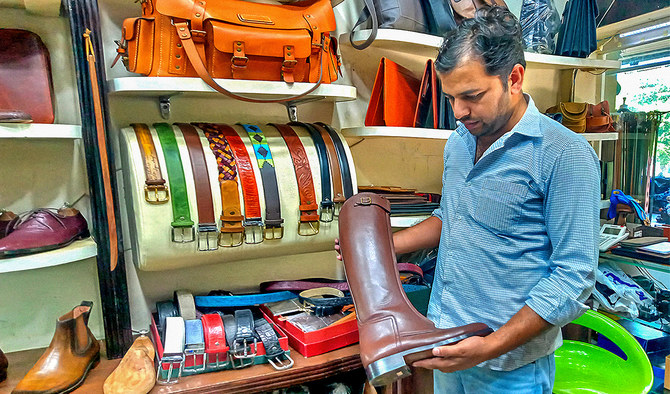
Amjad Rehman holds up a handmade leather boot at his shop in Islamabad, Pakistan, on April 27, 2022. (AN photo)
Short Url
Updated 06 May 2022
Follow

Half-century-old bespoke shoe shop in Islamabad loses customers to branded footwear

  • Amjad Rehman's family runs 'Jenza Leather' in Islamabad's upscale F-6 neighbourhood
  • Owners lament high tax on imported raw material, lack of technical institutes to grow craft

ISLAMABAD: Amjad Rehman and his family have been selling handmade bespoke shoes and bags for the last fifty years, serving high-end customers, including top diplomats, at a shop in the Pakistani capital, Islamabad.

Today, they are considering new ventures as their business, which combines art and craftsmanship, fast loses customers to a rising demand for branded footwear.

“We have always had a select group of customers since not everyone can afford bespoke shoes,” Rehman told Arab News at his shop, Jenza Leather, in Islamabad’s upscale F-6 neighborhood. “However, we are also losing them to brands now.”

There are also no technical institutes in Pakistan imparting the skill to new artists, and knowledge of the field is mostly passed down generationally.

“This is an excellent skill to develop due to the lack of trained craftsmen in this field,” Arif Mahmood, one of ten artisans who work flexible hours at Jenza Leather, told Arab News.

“But the new generation doesn’t appreciate the skill,” he added. “People don’t give due value to it.”
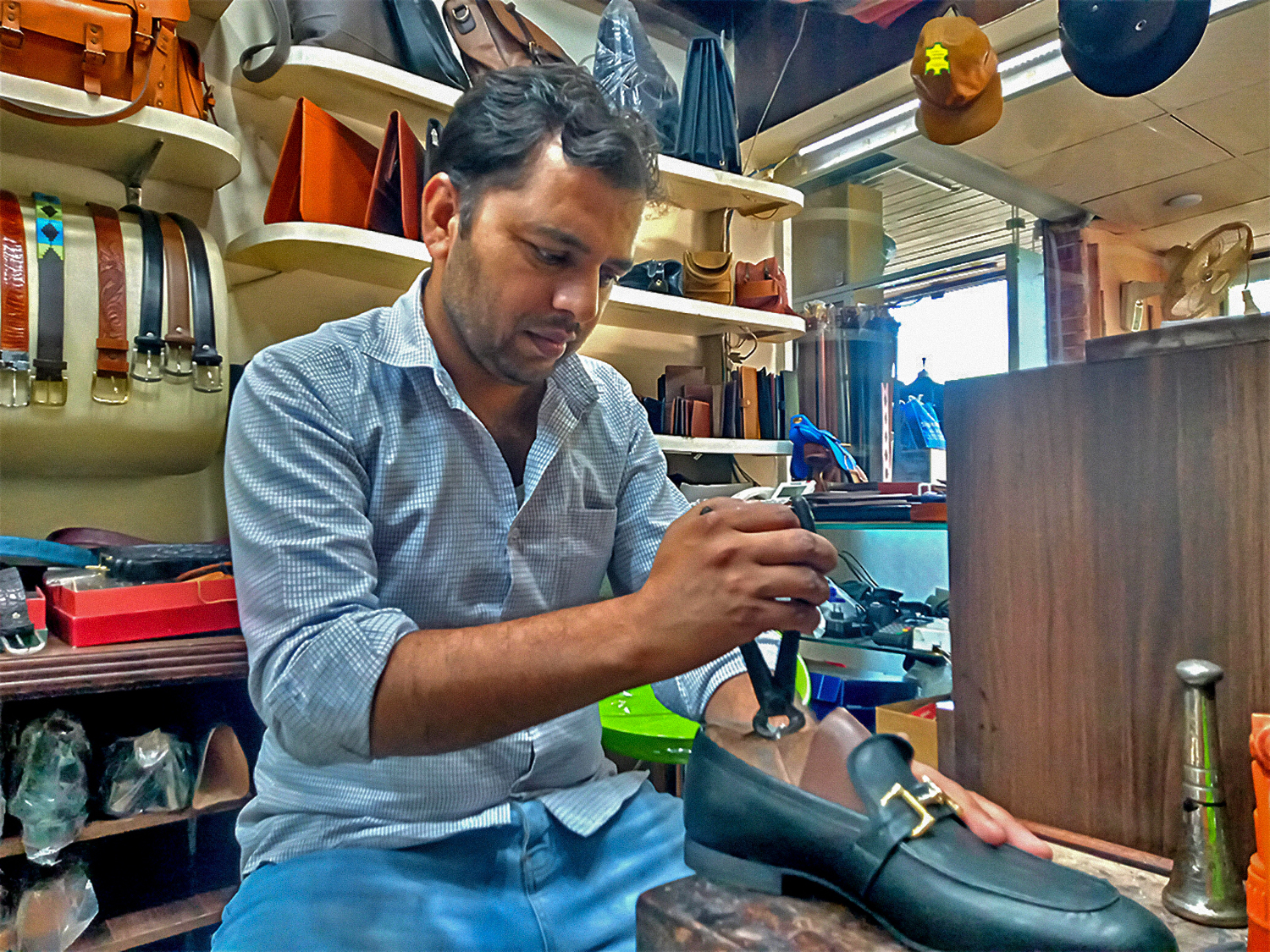


Amjad Rehman works on a bespoke shoe at his shop in Islamabad, Pakistan, on April 27, 2022. (AN photo)

At Rehman’s shop, original goat, sheep and cow skins are used to make formal and casual shoes that are sold for up to Rs25,000 ($135) a pair, depending on the design and material. Plastic or rexine are never used, Rehman said. 

Bags, purses, wallets, belts and jackets made from leather are also sold at the shop.

Sometimes exotic materials such as ostrich skin are used as per customers’ demands and the raw material has to be imported and hefty taxes paid.

“We only deal in leather skins which are legal in Pakistan,” he said, adding that customers sometimes requested crocodile and other banned skins, which “we politely decline.”

“Our customers come up with different designs downloaded from the internet with an expectation that we will prepare exactly the same article,” he said. “Thank God, we always manage to deliver.”
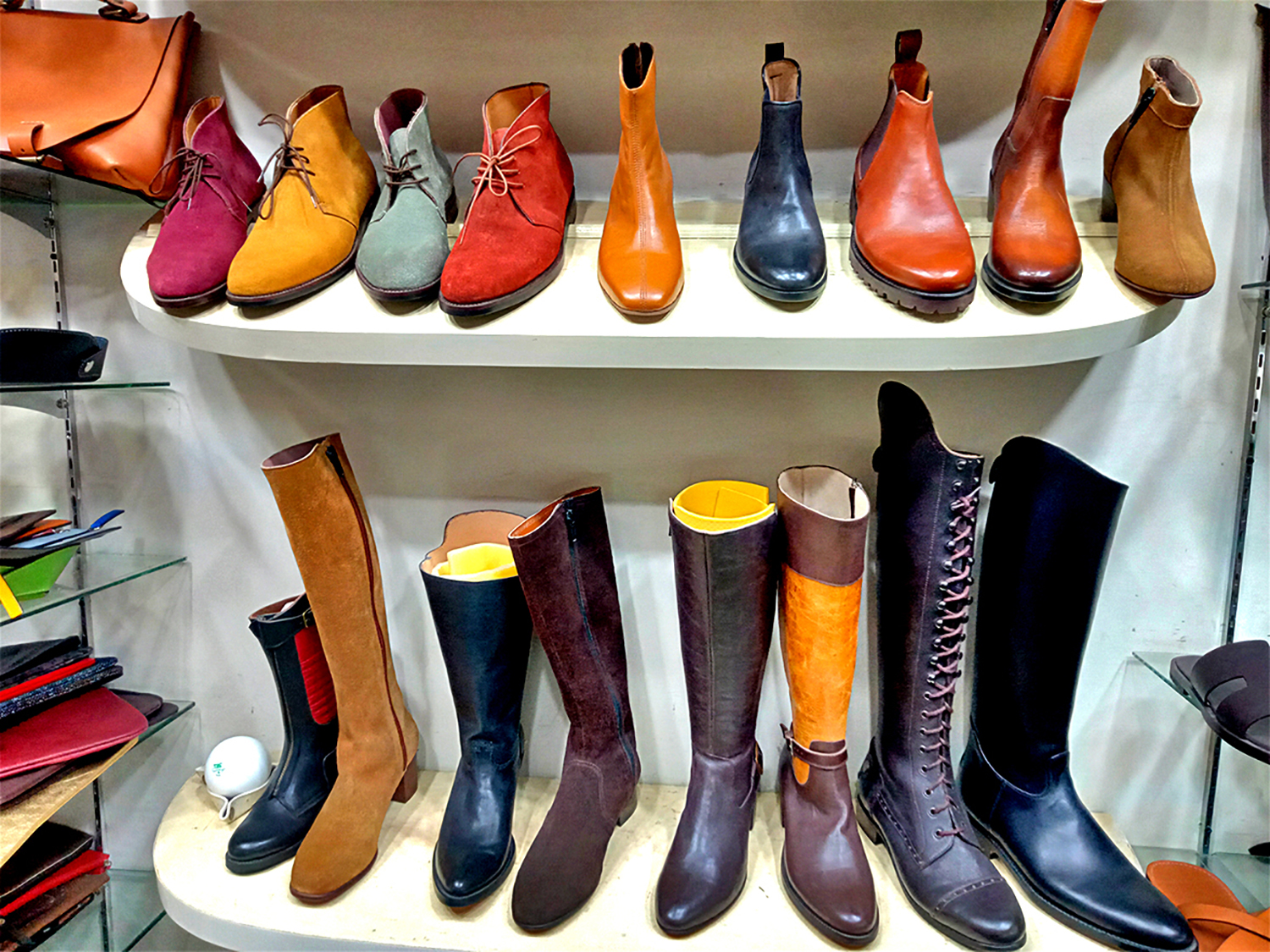


Handmade leather shoes on display at a shop in Islamabad, Pakistan, on April 27, 2022. (AN photo)

A majority of Rehman’s customers are foreign diplomats working at embassies in Islamabad, or buyers in the Middle East, Europe and the United States.

“We usually take orders online from our overseas customers and then courier the articles within a specific time,” he said, adding that the government needed to bring down taxes on imported raw materials and set up technical institutes for the craft.

“This is a dying art now,” artisan Mahmood said, “and we may not be able to keep it alive for long.”

But one loyal customer, Kashan Bhatti, said he would continue to shop at Rehman’s shop and buy bespoke shoes that were both “durable and comfortable” and could last up to ten years.

“These leather shoes absorb sweat,” he said as he inspected a pair of boots. “They keep your feet cool in summer and warm in winter.”


Pakistan’s deputy PM says country seeks to convert $1 billion UAE deposit into investment

Updated 17 sec ago
Follow

Pakistan’s deputy PM says country seeks to convert $1 billion UAE deposit into investment

  • Ishaq Dar says the UAE will acquire shares in Pakistani companies using the amount, with transaction to be completed by March 31
  • The UAE’s remaining $2 billion in deposits, part of funds used to shore up Pakistan’s foreign reserves, are due for rollover in January

ISLAMABAD: Pakistan is seeking to convert part of its financial support from the United Arab Emirates into long-term investment to reduce external debt, Deputy Prime Minister Ishaq Dar said on Saturday, following talks with UAE President Sheikh Mohamed bin Zayed Al Nahyan during his visit to Islamabad.

Dar said Pakistan was engaged with the UAE on converting $1 billion in deposits into equity investment, potentially involving stakes in companies linked to the Fauji Fertilizer Group, a move that would end Pakistan’s repayment obligation on that portion of the funds.

The UAE has been one of Pakistan’s key financial backers in recent years, providing $3 billion in deposits to the central bank as part of a broader effort to stabilize the country’s external finances and unlock support from the International Monetary Fund.

Speaking at a year-end briefing, Dar said Pakistan had already begun discussions with the UAE on rolling over the first $1 billion tranche, but Islamabad now wanted to replace short-term borrowing with investment.

“They will be acquiring some shares, and this liability will end,” Dar said, adding that discussions were under way for the transaction to be completed by March 31.

Dar said the Fauji Foundation Group was taking the lead in the process, with plans for partial disinvestment by Fauji-linked and other companies to facilitate the deal.

He added that Pakistan also raised the issue of a separate $2 billion rollover due in January during talks with the UAE leadership, saying Islamabad had conveyed that converting debt into investment would be preferable to repeated rollovers.

The issue was discussed during Al Nahyan’s visit, which Dar described as cordial, adding that the UAE had expressed willingness to expand its investment footprint in Pakistan.

Pakistan has relied on repeated rollovers of deposits from friendly countries to manage its balance-of-payments pressures, a practice economists say provides short-term relief but adds to debt vulnerabilities unless replaced with foreign direct investment.

The country acquired $5 billion from Saudi Arabia and $4 billion from China, which, along with the UAE, helped shore up its foreign reserves and meet IMF conditions at a time when its external account was under severe pressure.

Dar said Pakistan was now focused on shifting from temporary financing toward longer-term capital inflows to stabilize its economy and reduce reliance on external borrowing.