

In Pakistan’s north, celebrating Eid Al-Fitr with a centuries-old stew

A group of friends gather to celebrate Eid Al-Fitr and eat rdoong balay in Khaplu valley of Gilgit-Baltistan, Pakistan, on May 3, 2022. (AN Photo)
Short Url
Updated 05 May 2022
Follow

In Pakistan’s north, celebrating Eid Al-Fitr with a centuries-old stew

  • No Eid feast in Gilgit-Baltistan complete without rdoong balay, made of ground wheat, potatoes, meat and spices
  • Though exact origins of the dish are unknown, historians say it has been cooked in the region for centuries

KHAPLU, Gilgit-Baltistan: For residents of Pakistan’s northern Gilgit-Baltistan region, Eid Al-Fitr celebrations are incomplete without ‘rdoong balay,’ a traditional dish that is a staple on the festival that marks the end of the Muslim fasting month of Ramadan.
As Eid rolls in, the stew made of stone ground wheat, potatoes, blue and black peas and spices, is cooked in almost every household in the northern valley.
“It’s a delicious cuisine of Baltistan region which is made by nearly every family on Eid Al-Fitr,” Muhammad Iqbal Balti, a senior journalist and cartoonist from the northern region, told Arab News on Tuesday. “Without rdoong balay, there is no enjoyment.”
“I am 68 years old,” he added. “Before the 1980s, rdoong balay was cooked by families almost every week. Now it is only made on special occasions, particularly Eid Al-Fitr.”
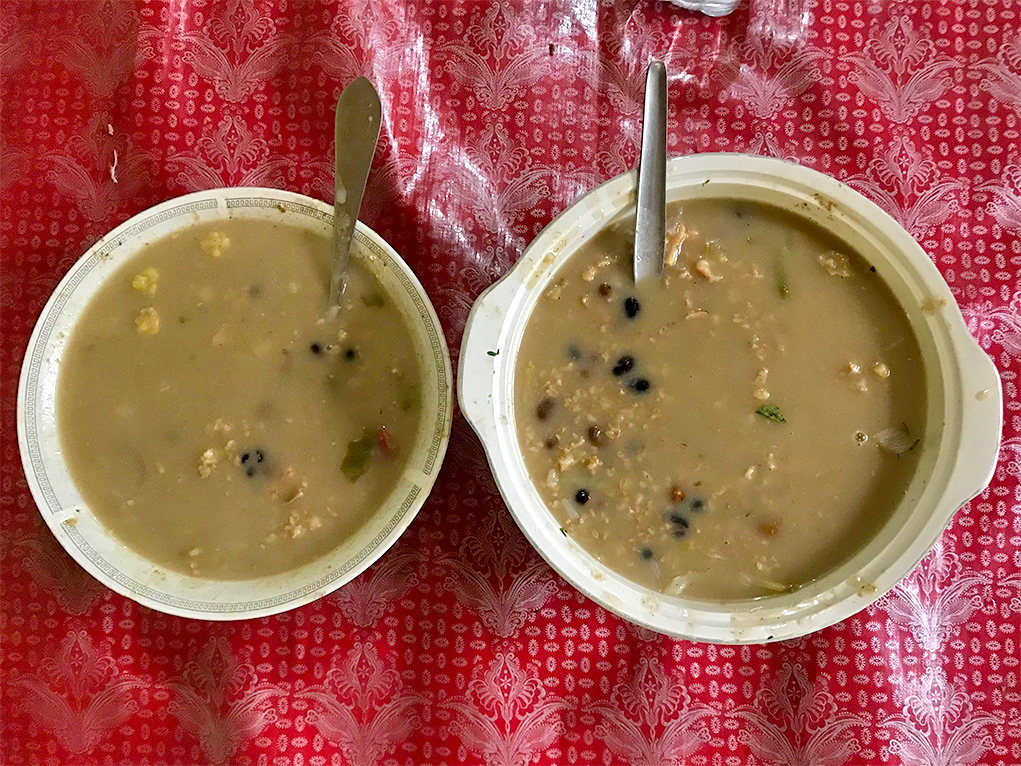


This picture, taken on May 3, 2020, shows bowls of rdoong balay, a traditional dish that is a staple of Eid Al-Fitr celebrations in Gilgit-Baltistan, Pakistan. (AN Photo)

59-year-old Fatima, who identified herself by her first name only, said she had been making the dish since she was a child. 
“When I was young and unmarried, my mother would ask me to grind wheat a day before Eid,” she said. “The cuisine becomes tastier when we use locally produced wheat and barley.”
Asked about her recipe, Fatima said she first thrashed wheat or barley with a locally made stone pestle and then poured it into a pot of boiling water. Small pieces of meat, potatoes and peas as well as spices were added next and the mixture was left to simmer for about half an hour.
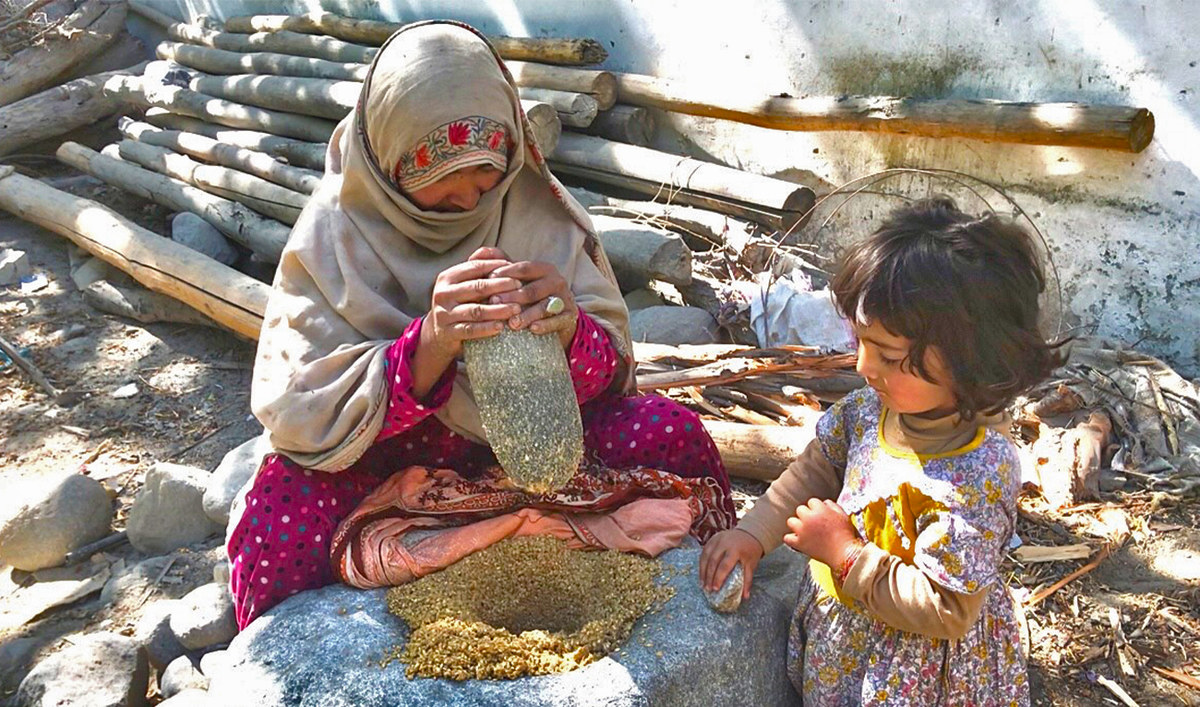


A woman grinds wheat in preparation to cook the traditional rdoong balay dish for Eid Al-Fitr in Khaplu valley of Gilgit-Baltistan, Pakistan, on May 2, 2022. (AN Photo)

Hassan Hasrat, a local historian, told Arab News rdoong balay was made in almost every corner of the Baltistan valley, and also cooked by people who hailed from the region but lived elsewhere in Pakistan or around the world.
He said there was no written record about the origins of the dish and it was therefore difficult to determine its history or development over time.
“However, I can confidently say that this is a centuries-old dish,” Hasrat said. “This cuisine is for cold regions since it helps battle chilly weather. Almost all local dishes in Gilgit-Baltistan are suitable for cold areas.”


Pakistan says ensuring interfaith harmony key priority as nation marks Christmas

Updated 7 sec ago
Follow

Pakistan says ensuring interfaith harmony key priority as nation marks Christmas

  • Pakistan is home to over 3 million Christians, making it the third-largest religion in the country
  • PM Sharif economic well-being, equal opportunities for all in message to nation on Christmas

ISLAMABAD: Prime Minister Shehbaz Sharif on Thursday identified ensuring interfaith harmony and freedom of rights for all citizens, especially minorities, as his government’s key priorities as the nation marks Christmas today. 

Millions of Christians worldwide celebrate Dec. 25 as the birth of Jesus Christ, marking the day with religious and cultural festivities. The Christian community in Pakistan marks the religious festival every year by distributing gifts, decorating Christmas trees, singing carols and inviting each other to lavish feasts. 

Christianity is the third-largest religion in Pakistan, with results from the 2023 census recording over three million Christians, or 1.3 percent of the total population in the country. 

However, Christians have faced institutionalized discrimination in Pakistan, including being targeted for blasphemy accusations, suffering abductions and forced conversions to Islam. Christians have also complained frequently of being reserved for jobs considered by the masses of low status, such as sewage workers or brick kiln workers. 

“It remains a key priority of the Government of Pakistan to ensure interfaith harmony, protection of rights and freedoms, economic well-being, and equal opportunities for professional growth for all citizens without discrimination of religion, race, or ethnicity,” Sharif said in a statement issued by the Prime Minister’s Office (PMO). 

The Pakistani premier said Christmas was not only a religious festival but also a “universal message of love, peace, tolerance, and goodwill” for all humanity. 

Sharif noted the Christian community’s contributions to Pakistan’s socio-economic development were immense.

“Their significant services in the fields of education, health care, and other walks of life have greatly contributed to the promotion of social harmony,” the Pakistani prime minister said. 

Despite the government’s assurances of protection to minorities, the Christian community has endured episodes of violence over the past couple of years. 

In May 2024, at least 10 members of a minority Christian community were rescued by police after a Muslim crowd attacked their settlement over a blasphemy accusation in eastern Pakistan.

In August 2023, an enraged mob attacked the Christian community in the eastern city of Jaranwala after accusing two Christian residents of desecrating the Qur’an, setting Churches and homes of Christians on fire. 

In 2017, two suicide bombers stormed a packed church in southwestern Pakistan just days before Christmas, killing at least nine people and wounding up to 56. 

An Easter Day attack in a public park in 2016 killed more than 70 people in the eastern city of Lahore. In 2015, suicide attacks on two churches in Lahore killed at least 16 people, while a pair of suicide bombers blew themselves up outside a 130-year-old Anglican church in the northwestern city of Peshawar after Sunday Mass in 2013. 

The Peshawar blast killed at least 78 people in the deadliest attack on Christians in the predominantly Muslim country.