

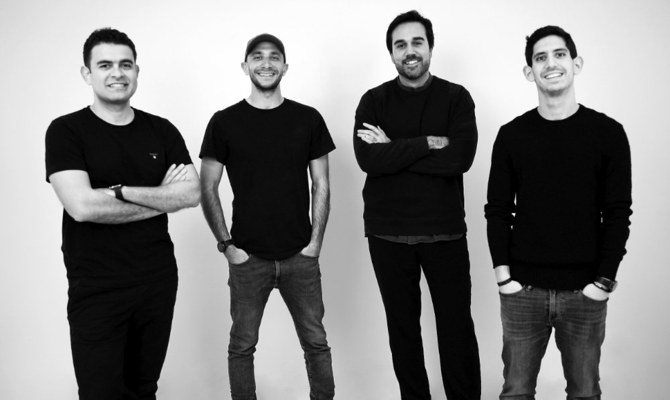

RIYADH: If you thought debt or equity was the only possible way to fund a startup, you would be surprised to learn the ropes of this new-age funding model. It is not the first of its kind in the world, but it is undoubtedly one of it is kind in the region.
Let us first look at the need gap. Scores of e-commerce companies depend on Google and Facebook ads to drive their business. They may have heavily invested funds into their products but may be cash-strapped to promote them online. And that is when FlapKap walks with the roadmap.
Fresh off a $1.2 million seed fund round, Egypt-based fintech startup FlapKap brings to the table an opportunity for small and medium enterprises, and startups to prop up their media spends on the Internet.
FlapKap uses the power of data and artificial intelligence to guide SMEs on which social media sites to spend their advertising dollars and how much to spend on them. It then funds the ad budget of the SME and, in return, takes a small percentage of the sale after the SME recovers its investment. It is flexible. It is undoubtedly a win-win. “We help these companies grow and give them alternative financing options. We basically offer them flexible payment terms for their media spend that match their financial growth needs,” Ahmad Coucha, co-founder and CEO of FlapKap, told Arab News.

Ahmad coucha, co-founder and CEO of FlapKap
“They buy the media through us and get super flexible payment terms to pay only after liquidating the inventory by selling it to the customers,” he elaborated.
A veteran in the media business and equipped with a master’s degree in economics from Harvard University, Coucha co-founded in 2011 what today is one of the largest digital advertising agencies in the Middle East, Kijamii. After the considerable success of Kijamii, he turned into an evangelist of advertising who now nurtures SMEs and startups.
“I wanted to work on something that is scalable, something that can add to people’s lives, and something that would keep me excited. At the intersection of these three things, FlapKap was born,” said Coucha, who intends to expand in Saudi Arabia, the UAE and Africa.
A trained economist, Coucha is pretty confident about his numbers. For him, the growth potential of the Kingdom is 10 times more than Egypt and five times more than the UAE.
“The Kingdom is huge. In a way, it is the biggest prize in the region. We are big fans of what has been happening lately in the Kingdom. It is super encouraging for people like us,” he said.
The company is currently stabilizing its operations by approaching a targeted clientele and building its customer base with successful clients. The idea is to de-risk the model and develop successful case studies with piloting partners.
“We are first movers. We have the responsibility to educate the market. Hence, our strategy is to build these successful case studies with a select number of clients and then aim for the next stage for commercialization,” he said.


