

Iran to execute Swedish-Iranian national Djalali by May 21

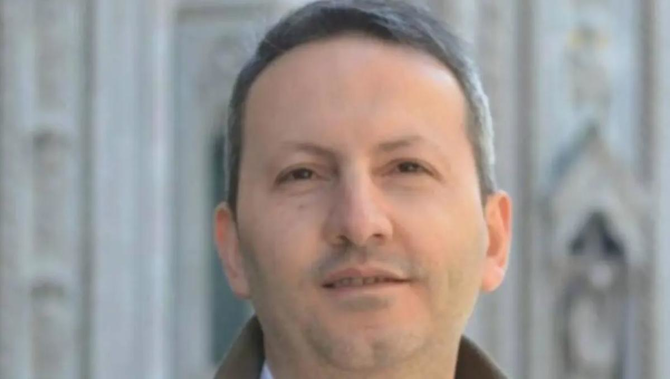
Ahmadreza Djalali (Courtesy: Twitter)
Short Url
Updated 13 May 2022
Follow

Iran to execute Swedish-Iranian national Djalali by May 21

  • Ahmadreza Djalali, disaster medicine doctor and researcher, was arrested in 2016
  • Report comes as Hamid Noury faces a life sentence in Sweden

DUBAI/LONDON: A Swedish-Iranian national sentenced to death in Iran on charges of spying for Israeli intelligence is to be executed this month, Iran’s semi-official ISNA news agency said on Wednesday, citing sources.
Ahmadreza Djalali, a disaster medicine doctor and researcher, was arrested in 2016 on an academic visit to Iran and is to be executed by May 21, ISNA said.
The report comes as Hamid Noury, a former Iranian prosecution official arrested by Swedish authorities in 2019, faces a life sentence in Sweden on charges of international war crimes and human rights abuses.
Noury is accused of playing a leading role in the killing of political prisoners executed on government orders at the Gohardasht prison in Karaj, Iran, in 1988.
The Swedish foreign ministry did not immediately comment on the ISNA report.

The US said it is following the case very closely because it is “an egregious case of arbitrary detention,” State Department spokesman Ned Price said.
The State Department, along with the UN special rapporteur on human rights in Iran, have highlighted Djalali’s case and human reports on human rights conditions in Iran, he told reporters during a press briefing.
“Iran does have a long history of unjust imprisonment of foreign nationals for use as political leverage,” Price said. “It continues to engage in a range of human rights abuses, which include large-scale arbitrary or unlawful detention of individuals, some of whom have faced torture or worse, in some cases execution, after a failure to receive due process and enduring unjust trials.”
Price said the UD routinely discusses with with its allies and partners to determine how best to address “this shameful practice of wrongful detention,” and how to safely release their nationals.
Under Swedish law, courts can try Swedish citizens and other nationals for crimes against international law committed abroad.
Iran’s foreign ministry summoned the Swedish ambassador on Monday to convey the Islamic Republic’s objection “to the baseless and fabricated accusations that the Swedish prosecutor made against Iran during Noury’s court case,” ISNA reported in an earlier article.

(With Reuters)


Rubio says new governance bodies for Gaza will be in place soon

Updated 4 sec ago
Follow

Rubio says new governance bodies for Gaza will be in place soon

  • Rubio said progress had been made recently in identifying Palestinians to join the technocratic group and that Washington aimed to get the governance bodies in place “very soon,” without offering a specific timeline.

WASHINGTON: US Secretary of State Marco Rubio said that a ​new governance structure for Gaza — made up of an international board and a group of Palestinian technocrats — would be in place soon, followed by the deployment of foreign troops, as the US hopes to cement a fragile ceasefire in Israel’s war in the Palestinian enclave. 
Rubio, speaking at a year-end news conference, said the status quo was not sustainable in Gaza, where Israel has continued to strike Hamas targets while the group has reasserted its control since the October peace agreement ‌brokered by the US.
“That’s why we have a sense of ‌urgency about ​bringing ‌phase one to its full completion, which is the establishment of the Board of Peace, and the establishment of the Palestinian technocratic authority or organization that’s going to be on the ground, and then the stabilization force comes closely thereafter,” Rubio said.
Rubio said progress had been made recently in identifying Palestinians to join the technocratic group and that Washington aimed to get the governance bodies in place “very soon,” without offering a specific timeline. Rubio was speaking after the US Central Command hosted a conference in Doha this week with partner nations to plan ‌the International Stabilization Force for Gaza. 
Two US officials said last week that international troops could be deployed in the strip as early as next month, following the UN Security Council’s November vote to authorize the force.
It remains unclear how Hamas will be disarmed, and countries considering contributing troops to the ISF are wary that Hamas will engage their soldiers in combat.
Rubio did not specify who would be responsible for disarming Hamas and conceded that countries contributing troops want to know the ISF’s specific mandate and how it will be funded. 
“I think ⁠we owe them a few more answers before we can ask anybody to commit firmly, but I feel very confident that we have a number of nation states acceptable to all sides in this who are willing to step forward and be a part of that stabilization force,” Rubio said, noting that Pakistan was among the countries that had expressed interest.
Establishing security and governance was key to securing donor funding for reconstruction in Gaza, Rubio added.
“Who’s going to pledge billions of dollars to build things that are going to get blown up again because a war starts?” Rubio said, discussing the possibility of a donor conference to raise reconstruction funds. 
“They want to know ‌who’s in charge, and they want to know that there’s security so and that there’ll be long term stability.”