

Oil Update — Crude climbs; CNOOC soars in market debut; Brazil mulls output rise

Oil prices traded higher but in a narrow range on Thursday. (Shutterstock)
Short Url
Updated 21 April 2022
Follow

Oil Update — Crude climbs; CNOOC soars in market debut; Brazil mulls output rise

RIYADH: Oil prices traded higher but in a narrow range on Thursday, after being rocked earlier in the week by supply losses from Libya and a worrying outlook for demand as the International Monetary Fund cut its global growth forecasts.

Brent crude futures rose 55 cents, or 0.5 percent, to $107.35 a barrel at 0117 GMT, recouping losses from the previous session.

US West Texas Intermediate crude futures gained 41 cents, or 0.4 percent, to 102.60 a barrel, adding to a 19-cent gain in the previous session.

Chinese oil giant soars in Shanghai debut
(Shutterstock)

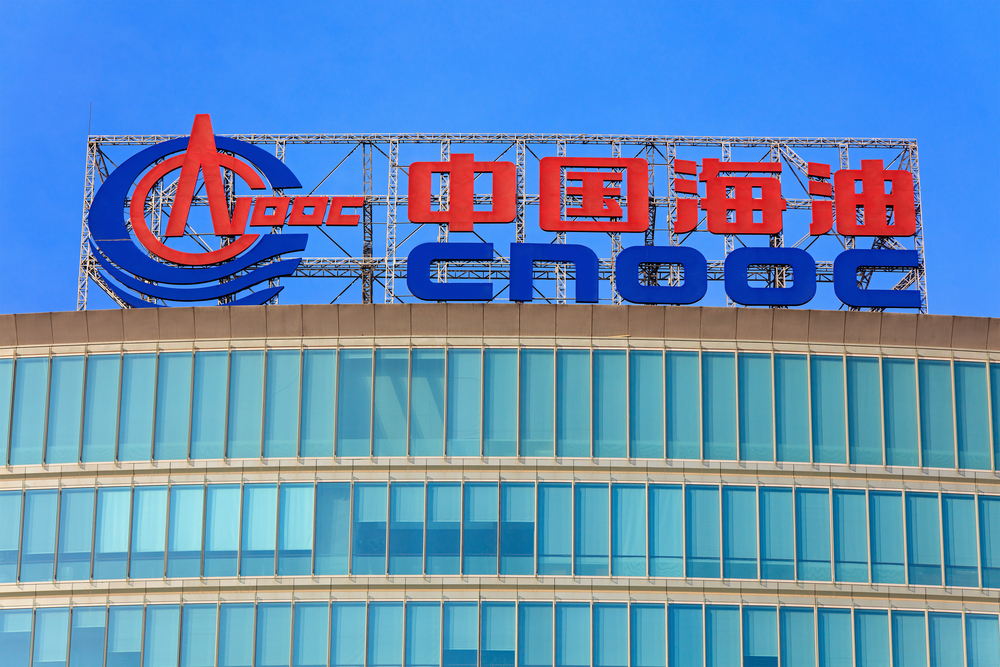
China’s CNOOC Ltd. saw its stock surge as much as 44 percent in its Shanghai debut on Thursday in defiance of overall market weakness, as investors sought safety in the oil giant amid lofty energy prices and quickening inflation.

The stock started to trade 20 percent higher than its offering price. But the Shanghai Stock Exchange almost immediately imposed a 30-minute trading suspension when the price hit the upper limit of the daily allowable band for new main-board listings, citing abnormal fluctuation.

The stock ended morning trade up 28.8 percent in a market that saw China’s blue-chip index shed 1.4 percent. CNOOC’s Hong Kong-listed stock was down roughly 3 percent after surging as much as 4.3 percent.

China’s largest offshore oil producer raised $4.41 billion in the country’s 11th-biggest public stock offering. It said it would use the proceeds to fund one gas and seven oilfield projects in China and overseas, and replenish capital.

Brazil discussing oil output boost
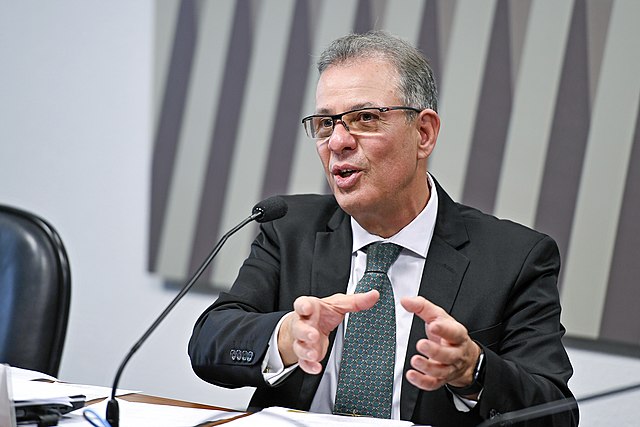
Brazilian Energy Minister Bento Albuquerque (Flickr of the Federal Senate of Brazil)

Washington and Brazil have discussed the South American nation’s role in keeping a lid on global crude prices since Russia’s invasion of Ukraine, Brazilian Energy Minister Bento Albuquerque told Reuters in an interview on Wednesday.

Brazil, with a current output of around 3 million barrels of oil per day, has been increasing production for years and is aiming for a 10 percent increase to 3.3 million bpd in 2022.

Asked if the US had reached out to talk about potential production increases, Albuquerque said the two countries were cooperating.

“I already had two meetings with energy secretary (Jennifer) Granholm, and we have been talking about this, the importance to stabilize the offer and demand of oil and gas around the world,” he said.

Albuquerque’s comments underline the breadth of the Biden administration’s diplomatic campaign to find alternatives to Russian crude.

Albuquerque, however, said a dramatic short-term boost would be logistically difficult.

(With inputs from Reuters) 


Qatar CPI falls in January, annual inflation rises 2.28% 

Updated 5 sec ago
Follow

Qatar CPI falls in January, annual inflation rises 2.28% 

JEDDAH: Qatar’s consumer price index climbed 2.28 percent in January from a year earlier, official data showed, while registering a 2.22 percent drop from the previous month.

The decline from December was led by an 11.97 percent drop in recreation and culture prices, alongside decreases in miscellaneous goods and services, restaurants and hotels, clothing, food and housing-related costs, Qatar News Agency reported, citing data from the National Planning Council. 

This was followed by miscellaneous goods and services at 3.46 percent, restaurants and hotels at 1.90 percent, clothing and footwear at 1.15 percent, food and beverages at 0.59 percent, and housing, water, electricity, gas, and other fuels at 0.17 percent. 

Qatar’s inflation remains relatively contained compared with wider global price swings, helped by stable housing costs and government subsidies. Across the region, trends are mixed, with Saudi inflation easing to 1.8 percent in January while Egypt’s annual rate slowed to 10.1 percent even as monthly prices jumped. 

“The annual increase, comparing January 2026 with the same month in 2025, was driven by rises in eight groups,” QNA reported, noting that the largest year-on-year increases were seen in miscellaneous goods and services, which rose 12.40 percent. 

Price increases were observed in the transport group at 0.54 percent, followed by communication at 0.32 percent and health at 0.27 percent. Furniture and household equipment rose 0.20 percent and education edged up 0.06 percent, while tobacco recorded no change. 

This was followed by recreation and culture at 4.90 percent and clothing and footwear at 3.25 percent. Food and beverages rose 2.87 percent, furniture and household equipment 2.37 percent, education 2.08 percent, housing and utilities 1.21 percent, and communication 0.40 percent. 

In contrast, QNA further reported, three groups saw annual declines: restaurants and hotels, down 2 percent; health, down 1.38 percent; and transport, down 0.48 percent, while the tobacco group remained unchanged. 

“When calculating the CPI for January 2026 excluding the housing, water, electricity, gas, and other fuels group, the index reached 114.57 points, down by 2.65 percent compared with December 2025, and up by 2.51 percent compared with January 2025,” the QNA report added. 

The index — which tracks inflation across 12 main expenditure groups covering 737 goods and services — is based on 2018 as the reference year, drawing on the Household Income and Expenditure Survey conducted in 2017–2018.