



RIYADH: Morocco gross domestic product’s growth is seen lower than previous predictions, China's economy slowed in March, and Spain is to revise its 2022 GDP target. In Russia, the central bank governor flags faster rate cuts, with the Mayor announcing 200,000 jobs at risk as foreign firms leave. China's economy is likely to continue in its recovery trend this year; the country's retail spending fell by 3.5 percent and its industrial output, on the other hand, rose by 5.0 percent.
Morocco’s GDP growth
Morocco’s GDP growth is seen averaging between 1.5 percent and 1.7 percent in 2022, down from the 3.2 percent that was predicted in the budget law, the state news agency MAP reported, citing Prime Minister Aziz Akhannouch.
China Q1 GDP tops forecast
China’s economy slowed in March as consumption, real estate and exports were hit hard, taking the shine off faster-than-expected first-quarter growth numbers and worsening an outlook already weakened by COVID-19 curbs and the Ukraine war.
The biggest near-term challenge for Beijing is the tough new coronavirus rules at a time of heightened geopolitical risks, which have intensified supply and commodity cost pressures. Chinese authorities are therefore walking a tight rope as they try to stimulate growth without endangering price stability.
The GDP expanded by 4.8 percent in the first quarter from a year earlier, data from the National Bureau of Statistics showed on Monday, beating analysts’ expectations for a 4.4 percent gain and picking up from 4.0 percent in the fourth quarter.
A surprisingly strong start in the first two months of the year improved the headline figures, with GDP up 1.3 percent in January-March in quarter-on-quarter terms, compared with expectations for a 0.6 percent rise and a revised 1.5 percent gain in the previous quarter.
Analysts say April data will likely be worse, with lockdowns in commercial center Shanghai and elsewhere dragging on, prompting some to warn of rising recession risks.
Moscow mayor says 200,000 jobs at risk as foreign firms leave
Around 200,000 people risk losing their jobs in the Russian capital because foreign companies have suspended operations or decided to leave the Russian market, Moscow Mayor, Sergei Sobyanin, said on Monday.
Moscow authorities are ready to support people who lost their jobs by providing training and temporary and socially-important work, Sobyanin wrote on his blog.
Russia flags faster rate cut
Russia’s Central Bank should be able to lower its key rate faster and create conditions for more affordable loans, Governor Elvira Nabiullina said on Monday.
The central bank more than doubled its key interest rate to 20 percent when Russia was hit by international sanctions, after sending its forces into Ukraine in February, but then cut it this month to 17 percent, flagging a challenging economic environment and a slowdown in inflation.
Spain to revise down 2022 GDP target
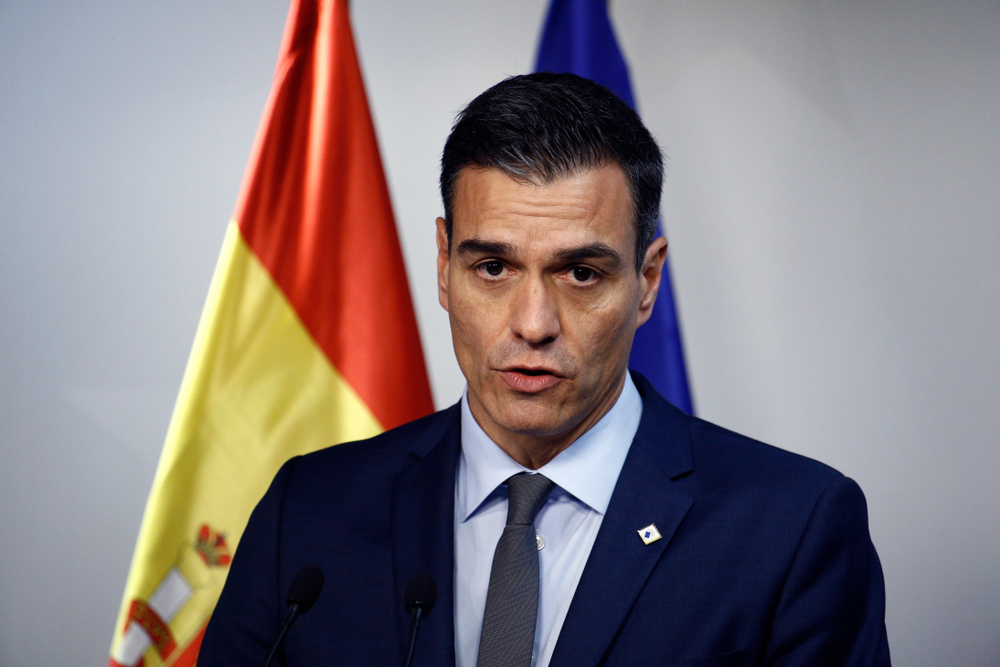
Spanish Prime Minister Pedro Sanchez (Shutterstock)
Spain will revise down its economic growth target for 2022, Prime Minister Pedro Sanchez said on Monday in a TV interview.
The government is set to update its bullish 7 percent growth projection for 2022 later this month, to take into account the impact of inflation stoked by Russia’s invasion of Ukraine.
“There will be a downward revision of growth figures in Spain, Europe and the world, that's a fact, but that does not mean that Spain will not continue growing and creating jobs,” Sanchez told Antena3 TV station.
The Bank of Spain expects gross domestic product to expand 4.5 percent in 2022.
China’s economy likely to remain in recovery for 2022
China’s economy is likely to stay on its recovery trend this year, and Beijing will step up macro policy implementation to stabilize the outlook, Fu Linghui, a spokesman at China’s statistics bureau, said at a news conference on Monday.
China will be able to contain COVID-19 outbreaks, and can keep consumer price increases under control, Fu said.
China March industrial output rises
China’s industrial output rose 5 percent in March from a year earlier. That was down from a 7.5 percent increase seen in the first two months of the year, data from the National Bureau of Statistics showed on Monday.
The reading was stronger than a 4.5 percent increase predicted by analysts in a Reuters poll.
Retail sales in March contracted 3.5 percent year-on-year, amid increasing COVID-19 outbreaks and lockdowns, after increasing 6.7 percent in January and February. The figure was well below expectations for a 1.6 percent decrease.
Fixed asset investment increased 9.3 percent year-on-year in the first quarter, compared with the 8.5 percent increase tipped by the Reuters poll, but down from 12.2 percent growth in the first two months.


