

Yemen’s new leader Abdullah Al-Alimi warns Houthis

1 / 2
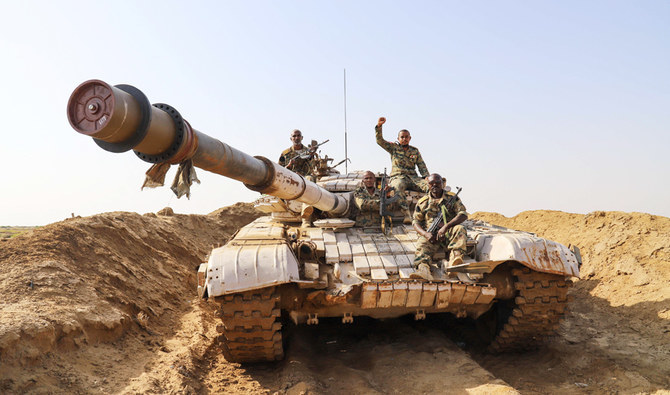
Yemen's senior leader Abdullah Al-Alimi believes the government, with support from its allies, could score a decisive military victory against the Houthis if the latest push for peace fails. (AFP file photo)
2 / 2
Yemen's senior leader Abdullah Al-Alimi believes the government, with support from its allies, could score a decisive military victory against the Houthis if the latest push for peace fails. (AFP file photo)
Short Url
Updated 18 April 2022
Follow

Yemen’s new leader Abdullah Al-Alimi warns Houthis

  • Abdullah Al-Alimi: Our first option is peace, but we are ready for war

RIYADH: Yemen’s new leaders are “ready for war” should the latest push for peace with Houthis fail, but a senior official said they genuinely want the years-long conflict to end soon.

“Our first option is peace, but we are ready for war,” Abdullah Al-Alimi said in his first interview since being named to an eight-member leadership council tasked with running the country after President Abed Rabbo Mansour Hadi stepped down earlier this month.

“We believe the council is in a position, with the coalition support, to score a decisive military victory,” Al-Alimi said in Riyadh.

Hadi’s April 7 announcement handing power to the council came at the end of talks in Riyadh that brought together all anti-Houthi factions.

The developments followed the start of a renewable two-month truce.

“We hope the dire situation in Yemen will make people have a desire to leave personal and partisan interests behind in pursuit of peace,” said Al-Alimi, formerly Hadi’s chief of staff.

He said council leaders are due to meet in the coming days with UN special envoy to Yemen Hans Grundberg.

The new council has not yet decided how long it will give the Houthis to join talks, Al-Alimi said.

If the push for peace goes no-where, the newly aligned anti-Houthi forces are positioned to pursue “a concerted multifront campaign” against the militia, said Peter Salisbury, senior Yemen analyst for the International Crisis Group.

“They (the leadership council) have the potential to more aggressively pursue peace and more aggressively pursue war, and the most likely outcome is they do a little bit of one and a little bit of the other,” he said. 


Turkish and Greek leaders set for talks on migration, maritime borders

Updated 58 min 18 sec ago
Follow

Turkish and Greek leaders set for talks on migration, maritime borders

  • Fifteen migrants died in a shipwreck off the Greek island of Chios last week after their boat collided with a Greek coast guard vessel and sank in the Aegean Sea off the Turkish coast

ANKARA: Turkish President Tayyip Erdogan ‌will host Greek Prime Minister Kyriakos Mitsotakis on Wednesday for talks likely to focus on migration and longstanding maritime disputes, as the ​NATO allies and historic rivals try to build on warming ties.
Fifteen migrants died in a shipwreck off the Greek island of Chios last week after their boat collided with a Greek coast guard vessel and sank in the Aegean Sea off the Turkish coast.
Mitsotakis will be accompanied by ministers responsible for foreign affairs, finance, ‌development and migration, ‌Greek officials said.
Developments in the Middle ​East, ‌Iran ⁠and ​Ukraine, migration, trade ⁠and organized crime are also likely to be on the agenda.
Greek Foreign Ministry spokeswoman Lana Zochiou said on Tuesday the aim was “to assess the progress of bilateral cooperation” and “to keep communication channels open to defuse any potential crises.”
Turkiye is a transit country for migrants seeking to ⁠reach the European Union via Greece. Ankara ‌says the EU has not ‌fully delivered on commitments under a ​2016 migration deal and ‌Athens wants Turkiye to do more to curb irregular ‌crossings.
Despite a thaw in rhetoric since a 2023 declaration on friendly relations, the neighbors are at odds over maritime boundaries in the Aegean, an area widely believed to hold energy resources ‌and with implications for airspace and military activity.
Ankara said last month it had issued ⁠a maritime ⁠notice urging Greece to coordinate research activities in areas of the Aegean that Turkiye considers part of its continental shelf.
Greece’s foreign minister had said Athens planned to extend its territorial waters further, including potentially in the Aegean.
In 1995, Turkiye’s parliament declared a casus belli — a cause for war — should Greece unilaterally extend its territorial waters beyond six nautical miles in the Aegean, a stance Athens says violates international maritime law. Greece says it wants ​only to discuss ​demarcation of maritime zones.