

Robots to provide advice and answers to pilgrims in Makkah

1 / 3
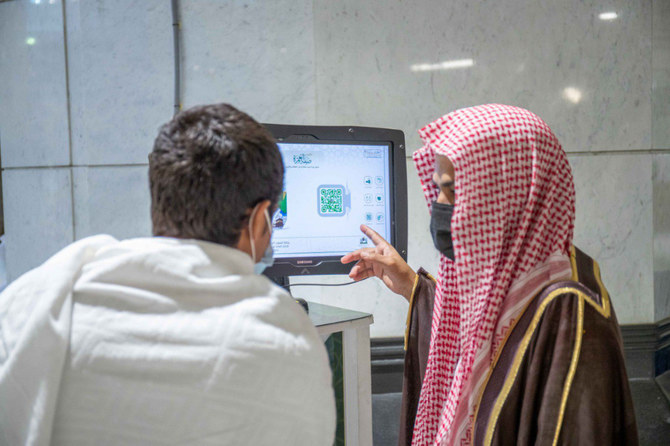
The majority of people interacting with the robot are Saudi, Syrian, Pakistani, or Indian. (Supplied)
2 / 3
The majority of people interacting with the robot are Saudi, Syrian, Pakistani, or Indian. (Supplied)
3 / 3
The majority of people interacting with the robot are Saudi, Syrian, Pakistani, or Indian. (Supplied)
Short Url
Updated 15 April 2022
Follow

Robots to provide advice and answers to pilgrims in Makkah

  • Robot is commonly asked between 100 and 150 questions daily regarding Umrah rituals during Ramadan

MAKKAH: The Guidance Robot is a new initiative from the General Presidency for the Affairs of the Grand Mosque and the Prophet’s Mosque. It is designed to provide advice to pilgrims, including guidance on how to perform rituals, as well as to provide fatwas on legal issues for performing Umrah. The robot is able to communicate in Arabic, English, and Urdu and is situated in the courtyard of the Grand Mosque, near the King Abdulaziz Gate.
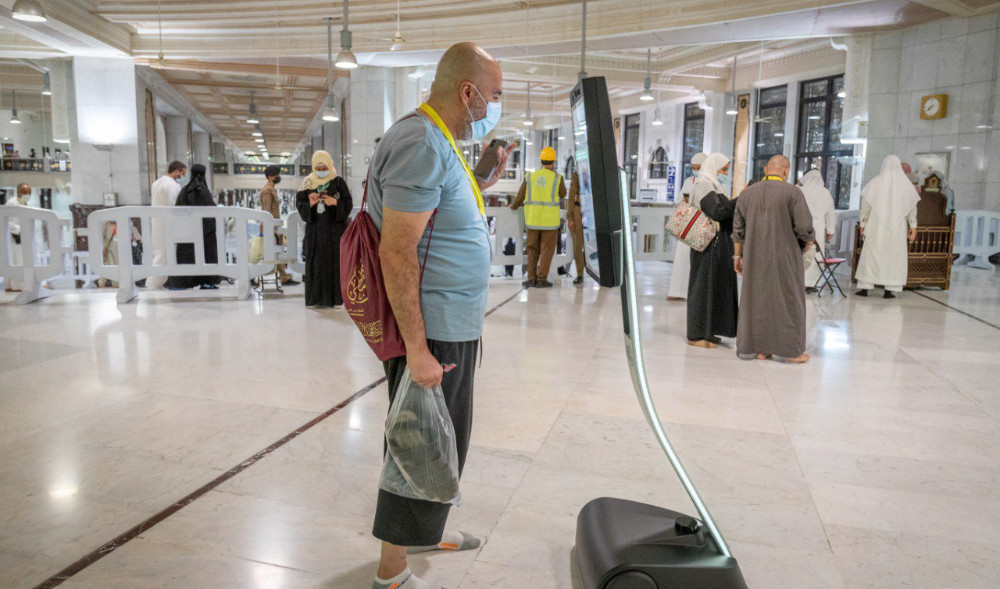
Sheikh Badr bin Abdullah Al-Furaih, deputy president for guidance affairs, told Arab News that the robot is commonly asked between 100 to 150 questions daily regarding Umrah rituals during Ramadan. The majority of people interacting with the robot are Saudi, Syrian, Pakistani, or Indian, he added.

The robot is able to access information from numerous books, as well as advice provided by scholars from around the Arab world.

FASTFACT

The Guidance Robot has a 21-inch touch screen and is equipped with four wheels and a ‘smart stopping system’ that ensures ‘smooth and flexible movement,’ according to the presidency, as well as cameras at the front and rear that provide the robot with a panoramic image of its location, high-definition headphones and a microphone. It is connected to a high-speed 5GHz Wi-Fi network.
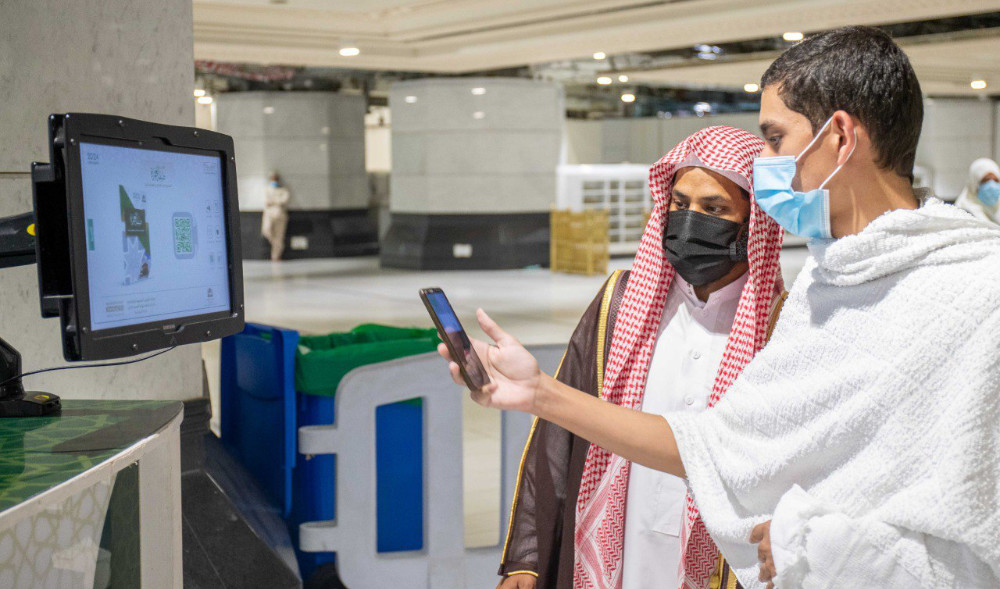
The Guidance Robot has a 21-inch touch screen and is equipped with four wheels and a ‘smart stopping system’ that ensures “smooth and flexible movement,” according to the presidency, as well as cameras at the front and rear that provide the robot with a panoramic image of its location, high-definition headphones and a microphone. It is connected to a high-speed 5GHz Wi-Fi network.

As part of its digital project, the General Presidency has also introduced a sterilization robot and a robot that dispenses Zamzam water to pilgrims. The robots can run for up to eight hours on a full battery charge.

The digital project has been developed in parallel to the General Presidency’s “How To Be A Role Model In The Digital World” campaign. Both initiatives are part of the presidency’s broader development plans for the Two Holy Mosques.


Ramadan lanterns: A symbol of celebration

Updated 3 sec ago
Follow

Ramadan lanterns: A symbol of celebration


Fady Francis

CAIRO: Muslims around the world are observing Ramadan, a month of dawn-to-dusk fasting, intense prayer and charity.

The holy month has long been associated with a rich tapestry of customs and traditions that define its unique celebrations.

Among the most prominent symbols of these festivities is the Ramadan lantern, a cherished emblem that illuminates streets and homes, reflecting the spiritual and cultural essence of the season.

In the historic districts of Cairo — such as Al-Hussein, Al-Azhar and Sayyida Zeinab — millions of Egyptians gather to celebrate Ramadan.

These neighborhoods are transformed into vibrant scenes of light and color, adorned with elaborate illuminations and countless Ramadan lanterns that hang across streets and balconies.

Vendors line the bustling alleys, offering a wide array of goods associated with the sacred month.

Foremost among these cherished items is the Ramadan lantern, which remains the most iconic and sought-after symbol of the season, embodying both tradition and festivity.

The lantern, in its earliest form, served as a vital source of illumination in ancient times.

Initially, torches crafted from wood and fueled with oils were used to light homes and pathways.

During the Middle Ages, Egyptians advanced their methods of lighting, developing oil lamps and decorative lanterns. In the Mamluk era, streets were illuminated on a wider scale, and artisans excelled in architectural innovation, producing intricately designed lanterns adorned with refined artistic motifs.

Gamal Shaqra, professor of modern history, told Arab News: “The story of the Ramadan lantern is widely traced back to the Fatimid era, with several narratives surrounding its origin. One account links it to Jawhar Al-Siqilli, the general who founded Cairo and built Al-Azhar Mosque, and to the arrival of Caliph Al-Muizz li-Din Allah in 969 A.D.

“According to this, Egyptians welcomed the Fatimid caliph by carrying lanterns to light his path, using them as both illumination and a gesture of celebration.”

He added: “Following this historic scene, lanterns began to be used to light streets and public spaces. Over time, the lantern evolved into a defining symbol of Ramadan festivities, as children took to the streets carrying their brightly lit lanterns and chanting traditional songs celebrating the holy month.

“The tradition continued to flourish during the Ayyubid and Mamluk periods, with lantern designs becoming increasingly diverse. In the era of Mohammad Ali, the craft saw further development, as lanterns were manufactured from metal sheets and fitted with colored glass, marking a significant evolution in both design and production.”

Methods of manufacturing the Ramadan lantern have diversified over time, alongside the evolution of its artistic designs in the modern era.

With the advancement of tools and technology, merchants have increasingly introduced wooden lanterns crafted using laser-cut techniques, offering intricate patterns and contemporary styles.

Despite these innovations, handcrafted lanterns continue to retain their distinctive value and authenticity. Made by skilled artisans, these traditional pieces remain deeply cherished, preserving the spirit of heritage and craftsmanship associated with the holy month.

Artist Mohamed Abla told Arab News that the design of the Ramadan lantern was inspired by the form of the mishkat — the ornate niche found in mosques that embodies Islamic art and traditionally serves as a source of illumination.

He added that the lantern had long been a subject for visual artists, who had depicted it in their paintings as a symbol of folk heritage and the enduring traditions associated with celebrating the holy month.

During a tour of popular marketplaces, a clear variation in lantern prices was noted, reflecting the craftsmanship and effort invested in their production.

In the tourist markets along Al-Moeaz Street, brass and bronze lanterns are prominently displayed in antique shops, showcasing elaborate designs that appeal to both visitors and collectors seeking traditional Ramadan decor.