NEW YORK: Elon Musk was sued on Tuesday by former Twitter Inc. shareholders who claim they missed out on the recent run-up in its stock price because he waited too long to disclose a 9.2 percent stake in the social media company.
In a proposed class action filed in Manhattan federal court, the shareholders said Musk, the chief executive of electric car company Tesla Inc, made “materially false and misleading statements and omissions” by failing to reveal he had invested in Twitter by March 24 as required under federal law.
Twitter shares rose 27 percent on April 4, to $49.97 from $39.31, after Musk disclosed his stake, which investors viewed as a vote of confidence from the world’s richest person in San Francisco-based Twitter.
Former shareholders led by Marc Rasella said the delayed disclosure let Musk buy more Twitter shares at lower prices, while defrauding them into selling at “artificially deflated” prices.
The lawsuit seeks unspecified compensatory and punitive damages.
A lawyer for Musk had no immediate comment. Tesla is not a defendant.
US securities law requires investors to disclose within 10 days when they have acquired 5 percent of a company, which in Musk’s case would have been March 24.
Twitter announced on April 5 that Musk would join its board of directors, but this week said he had decided not to.
By not joining the board, Musk, a prolific Twitter user, can keep buying shares without being bound by his agreement with the company to limit his stake to 14.9 percent.
Some analysts have suggested Musk could push Twitter to make changes, or even pursue an unsolicited bid for the company.
Rasella said he sold 35 Twitter shares for $1,373, or an average price of $39.23, between March 25 and 29. Musk is worth $265.1 billion, according to Forbes magazine.
The case is Rasella v Musk, US District Court, Southern District of New York, No. 22-03026.


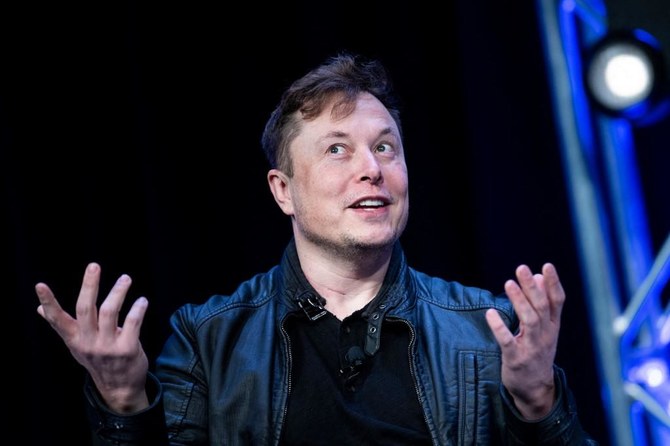
Elon Musk is sued by shareholders over delay in disclosing Twitter stake
https://arab.news/z2vvh
Elon Musk is sued by shareholders over delay in disclosing Twitter stake

- Elon Musk sued by former Twitter shareholders for waiting too long to disclose his stake in the company


University of Hong Kong hosts the first Saudi Economic Forum to boost China–Saudi ties
- The high-level event served as a new platform for bilateral dialogue and cross-sector collaboration
RIYADH: The University of Hong Kong (HKU) has hosted the first-ever Saudi Economic Forum in Riyadh, bringing together nearly 100 senior officials, academics, and business leaders to deepen cooperation between China and Saudi Arabia in education, innovation, and economic growth.
Held under the theme “Enhancing the Global Competitiveness of Chinese and Saudi Institutions,” the forum marked a significant milestone in advancing strategic alignment between China’s Belt and Road Initiative and Saudi Vision 2030.
The high-level event served as a new platform for bilateral dialogue and cross-sector collaboration, with participants exploring joint opportunities in investment, technology, renewable energy, and artificial intelligence.
Professor Hongbin Cai, dean of the faculty of business and economics at HKU, said the university aspires to become a “knowledge bridge” between the two nations, leveraging its global standing and extensive international networks. He noted that educational collaboration would be a cornerstone of the Saudi–Chinese partnership.
Saudi Arabia’s Assistant Deputy Minister of Investment, Fahad Al-Hashem, emphasized the depth of the China–Saudi partnership, noting that bilateral trade now exceeds $150 billion, with a growth rate of around 30 percent annually.
He reaffirmed the Kingdom’s openness to partnerships with China’s leading universities and technology companies, particularly in future-focused sectors aligned with Vision 2030, including education, digital transformation, AI, and clean energy.
The forum featured panel discussions on cross-border education, global city development, and technology transfer, with experts stressing the importance of joint ventures in the digital economy and smart infrastructure.
Participants said Saudi Arabia could benefit from China’s successful experiences in energy transition, infrastructure modernization, and innovation ecosystems as it builds globally competitive cities and institutions.
The Saudi Economic Forum concluded with calls for sustained academic and corporate partnerships to enhance institutional excellence and global competitiveness. Organizers said the initiative will continue to facilitate knowledge exchange and support national transformation goals in both countries, namely in the fields of technology and innovation.


