

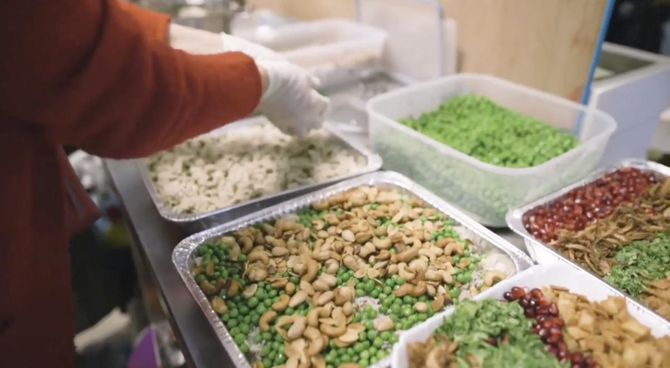

LONDON: An ethical iftar that aims to reduce wastage and make Muslims think about the food they eat will be held in person for the first time on Sunday since the start of the COVID-19 pandemic.
People attending the iftar are encouraged to bring their own dinnerware to the three-course vegetarian meal in order to reduce their carbon footprints.
“We are not against people eating meat, but one thing we noticed and statistics suggest is that during the month of Ramadan, the percentage of meat consumption almost trebles among Muslims, particularly in Muslim countries,” the co-founder of the Green Deen Tribe, Rabiah Mali, told Arab News.
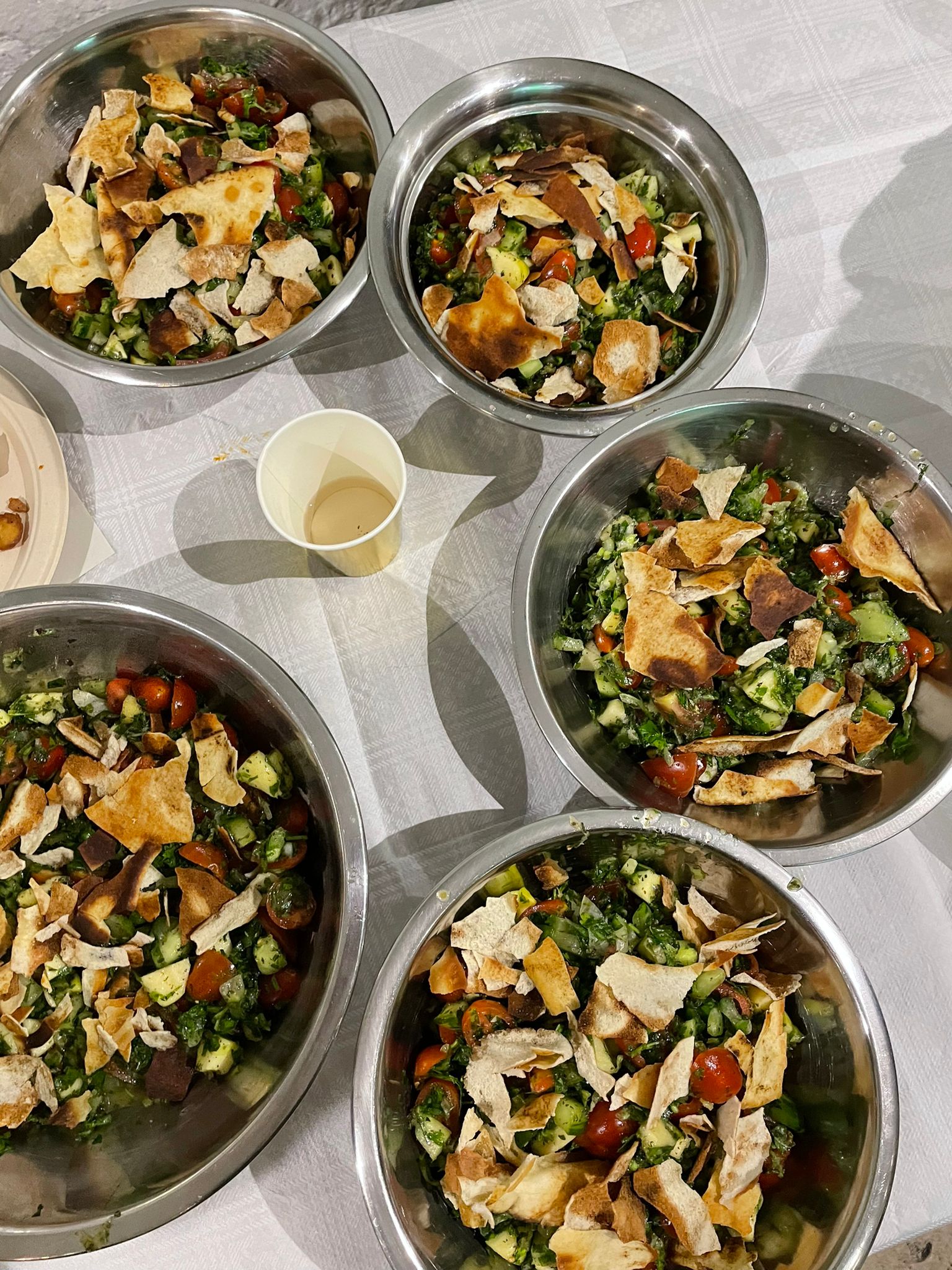
A view of the food served at the Green Deen iftar at St. Ethelburga’s Centre for Reconcilliation and Peace on April 10, 2022. (Supplied)
“Food wastage also increases dramatically during the holy month — the amount of food that goes into the bin doubles during Ramadan. There is a huge conflict between what the essence of Ramadan is and what is happening in Muslim communities, particularly in Muslim countries,” Mali said.
The Green Deen Tribe is the community organization that is hosting the iftar.
Mali, who is also a medical herbalist, describes the organization as a “a collective dedicated to the inner and outer work of stewardship (khilafa) through the exploration of spirituality, nature and our connection to the environment through Prophetic teachings and Islamic sacred text.”
Khilafa refers to the Islamic principle of human beings being entrusted with taking responsibility for the earth and looking after it.
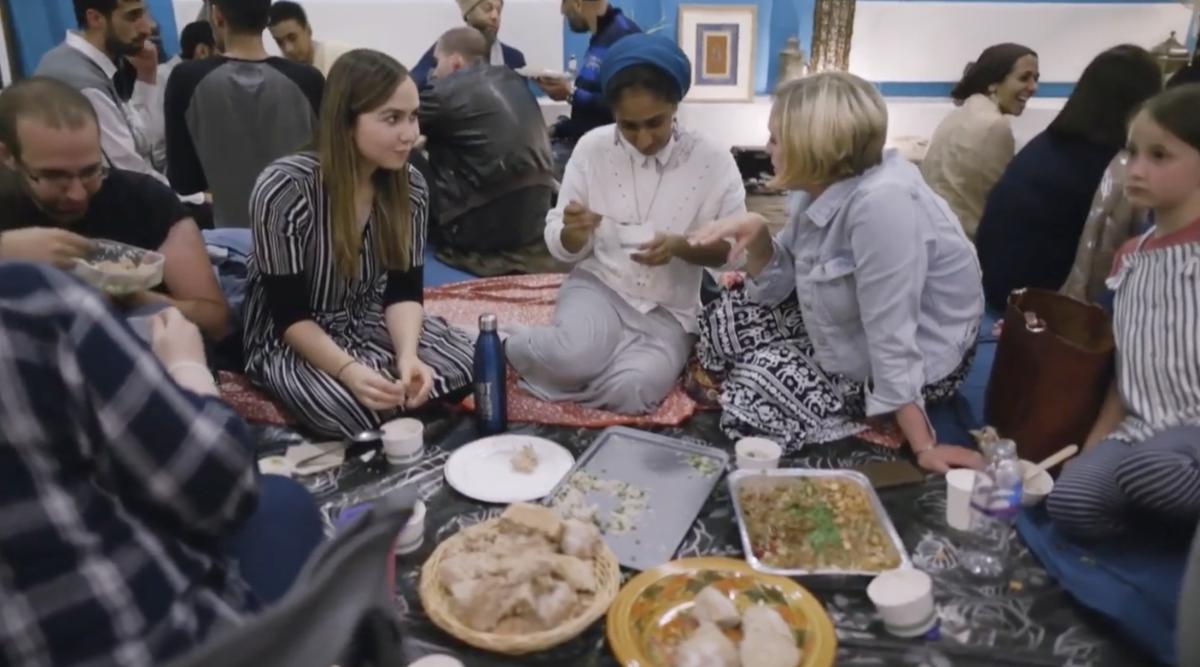
People enjoy the food at the Green Deen iftar during Ramadan 2019. (File/The Rabbani Project)
The iftar has three main aims: Reducing meat consumption, eliminating the use of disposable plastic dinnerware and stopping food waste.
Mali said the Green Deen Tribe wants Muslims to be more conscious of the food they consume, and encourages them to eat in a way that is as less damaging and disruptive to communities as possible.
This year’s iftar is the fourth annual meal that the Green Deen Tribe has hosted in person and there will be no disposable plastic in sight.
“We initially started off by using compostable plates, cups and utensils to serve food as an alternative to using plastic. As we continued, we realized that even this was ending up in the bin and that it was still a waste,” Mali said.
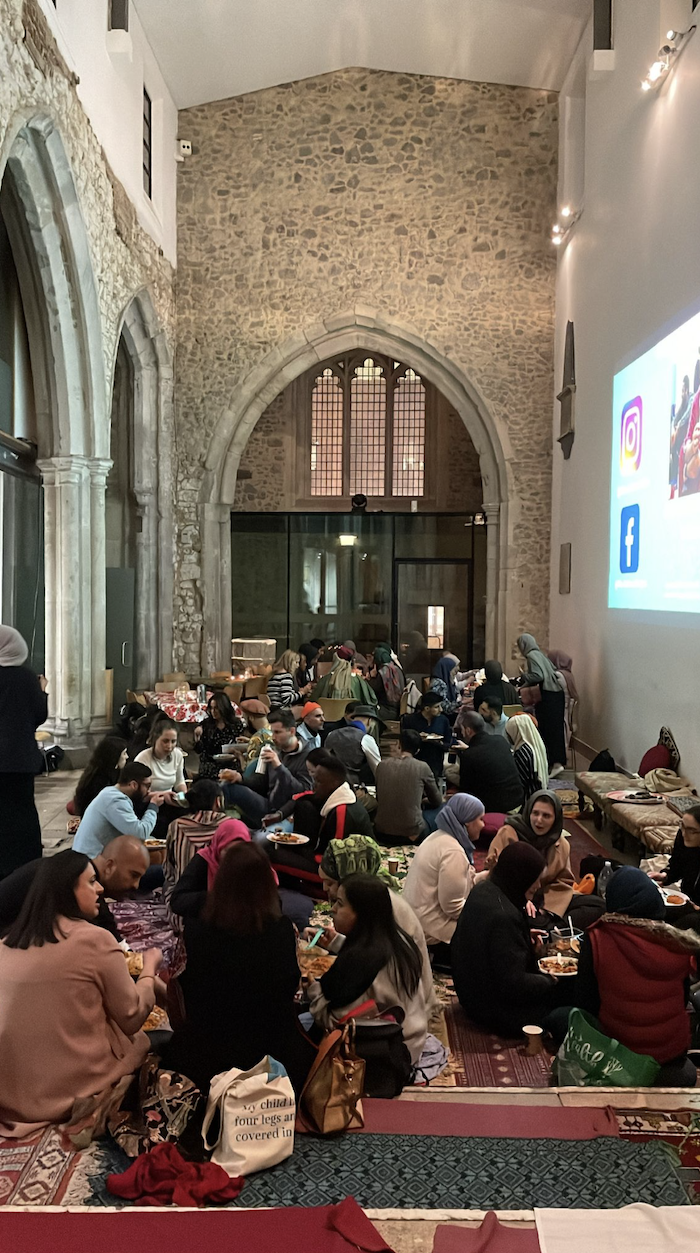
People enjoy the ethical iftar at St. Ethelburga’s Centre for Reconcilliation and Peace. (Supplied)
“This year, we’ve decided that people need to bring their own plate, cup, spoon and tupperware. So this iftar and the one before the pandemic, we’ve encouraged people to bring their own. When we originally decided to do this, we were unsure whether people would respond to that, but they came with their spoons, plates and cups. It was beautiful to see that people were willing to be part of this unusual experience,” she added.
Mali said that if people forget to bring their own dinnerware, they can either buy or rent dining packs for the evening.
The event is expected to be attended by about 80 people and will be held at St. Ethelburga’s Centre for Reconcilliation and Peace in London at 7 p.m. on April 10.


