

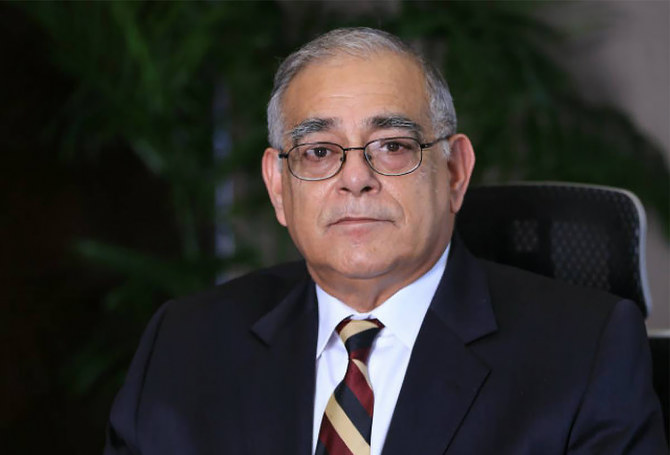

ISLAMABAD: Lieutenant General (retired) Tariq Khan, whom the Pakistani government named the head of a commission on a "foreign conspiracy" to oust Prime Minister Imran Khan, has declined to become part of the probe body, saying it could not outlast the government.
At a rally last month, Khan spoke of a purported letter that contained “threats” to his government from the US. The Pakistani premier has said Washington was angered by his pursuit of an independent foreign policy for Pakistan and wanted to see pliant rulers replace him.
Pakistani officials have since said the letter was a cable written by a former Pakistani ambassador to the US, who conveyed threats by a “senior foreign official.”
Khan, who is facing a crucial no-confidence vote in parliament, says the move was part of the conspiracy for a “regime change” in Pakistan. Both Washington and the Pakistani opposition have denied the allegation.
On Friday, Pakistani Information Minister Chaudhry Fawad Hussain announced the cabinet had decided to form a commission to probe the conspiracy, saying the investigative body would be led by Lt Gen Khan.
“I have regretted. The commission cannot last beyond this government. The vote of no confidence will bring in the new government,” Lt Gen Khan told Arab News, shortly after the announcement by the information minister.
“They will dissolve the commission or not cooperate with it making it dysfunctional.”
Speaking to reporters after the cabinet meeting on Friday, Hussain said the commission would investigate the “global conspiracy,” see if the communique existed and whether it contained the threat of a “regime change” in Pakistan.
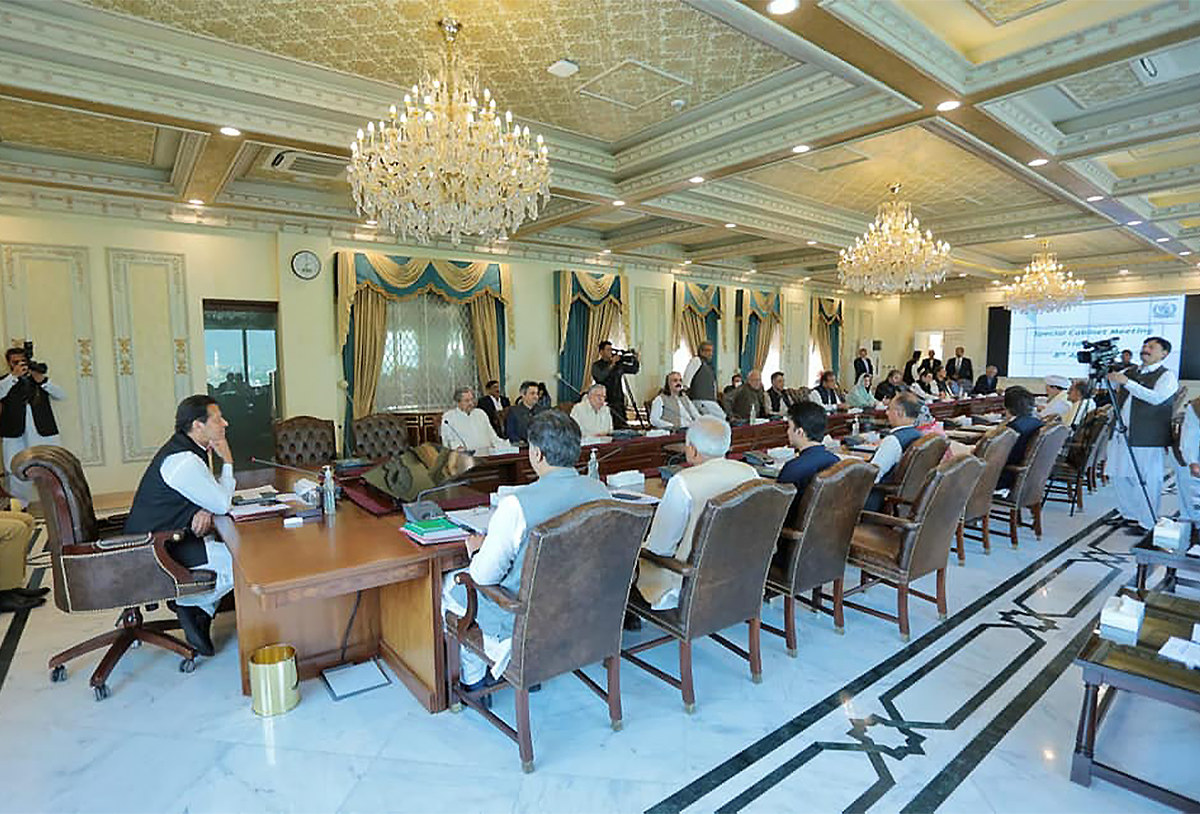
Pakistan's Prime Minister Imran Khan (left) chairs cabinet meeting in Islamabad, Pakistan, on April 8, 2022. (@PakPMO/Twitter)
He said the probe body would investigate “local handlers” who were part of the plot and expose them before the nation, he said.
The minister, however, clarified not every member of the opposition was involved in the alleged plot to topple the government, but there were “some people” who knew about it.
Hussain said eight dissident lawmakers of the ruling Pakistan Tehreek-e-Insaf (PTI) party were directly approached by a “foreign embassy” to initiate the no-confidence movement.
“Our intelligence agencies have records of their meetings,” he said.
Khan is facing the toughest challenge to his premiership on Saturday, when the National Assembly of Pakistan votes on the no-confidence motion against him. The South Asian nation has seen major political and constitutional upheaval in recent days, stemming from Khan’s attempt to dodge the crucial vote and subsequent dissolution of parliament.
National Assembly Deputy Speaker Qasim Khan Suri on Sunday dismissed the opposition’s no-confidence motion on grounds it was “unconstitutional” and had a “foreign conspiracy” behind it.
But the Supreme Court on Thursday declared the speaker’s ruling void and reinstated the assembly, allowing the vote of no-confidence to take place tomorrow, on Saturday.
Hussain said the federal cabinet had decided to place the contents of the “threatening” letter before parliament on Saturday.
“Even after seeing the evidence if people (lawmakers) want to participate in the no-confidence [vote], then the people of Pakistan will make their decision,” Hussain said.
He urged the Supreme Court to review its judgment as “the material needs to be seen” to declare the ruling legal or illegal on the basis of which the speaker made his decision.
Khan has lost majority in parliament after defections by over a dozen lawmakers of his party as well as the government’s coalition partners. The opposition needs 172 votes in the National Assembly of 342 members to overthrow Khan.
In case of Khan losing Saturday’s vote, the opposition would field a candidate for the post of prime minister. Opposition parties have already announced their plans to nominate Shehbaz Sharif, the younger brother of three-time former prime minister Nawaz Sharif, to take over the reins of the country.


