GENEVA: The flow of people escaping Russia’s war in Ukraine has slowed but those now fleeing have often spent weeks in dire conditions, the United Nations said Friday.
UNHCR, the UN refugee agency, said 4,382,316 Ukrainians had fled the country since the war began on February 24.
The total is up 62,822 on Wednesday’s figures, including 22,957 who have headed to Russia since March 29, following updated numbers from Moscow.
“The war in Ukraine has triggered one of the fastest-growing displacement and humanitarian crises ever,” UNHCR spokesman Matt Saltmarsh told reporters in Geneva.
“While the pace of arrivals is slowing, overall flows continue given the ongoing hostilities.
“UNHCR staff have observed that newly arrived refugees are coming from various parts of the country, including the east, with some reporting having spent weeks hunkering down at home or in shelters in dire conditions.”
The UN’s International Organization for Migration estimates that 7.1 million people had fled their homes but were still in Ukraine.
The IOM says that in addition to Ukrainian refugees, more than 210,000 non-Ukrainians living, studying or working in the country have also left.
This means that in total, more than a quarter of the population have been forced to flee their homes.
Before the Russian invasion, Ukraine had a population of 37 million in the regions under government control, excluding Russia-annexed Crimea and the pro-Russian separatist regions in the east.
Women and children account for 90 percent of those who have left Ukraine, with men aged 18 to 60 eligible for military call-up and unable to leave.
Here is a breakdown of how many Ukrainian refugees have fled to neighboring countries, according to UNHCR:
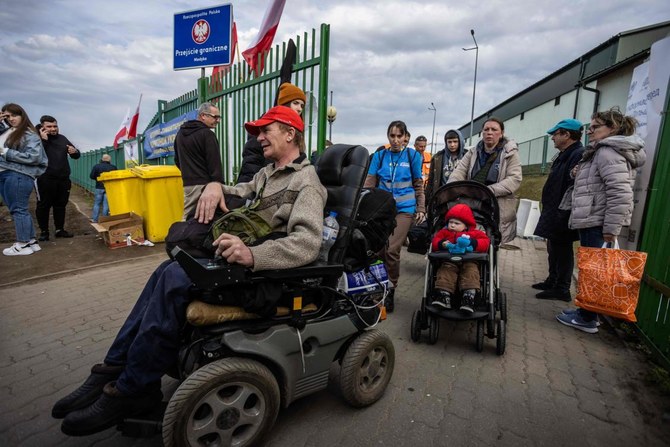
Nearly six out of 10 Ukrainian refugees — 2,537,769 so far — have crossed into Poland, according to the UN.
Many people who go to Ukraine’s immediate western neighbors travel on to other states in Europe’s Schengen open-borders zone.
But more than 700,000 Ukrainian refugees have registered for a Polish state identity card, giving them access to public services. Some 94 percent are women and children.
Polish border guards say that since the war began, 502,000 people have left Poland for Ukraine.
Before the crisis, Poland was already home to around 1.5 million Ukrainians, chiefly migrant workers.
A total of 671,334 Ukrainians entered the EU member state, including a large number who crossed over from Moldova, wedged between Romania and Ukraine.
The vast majority are thought to have gone on to other countries.
A total of 408,652 Ukrainians have entered Hungary.
The Moldovan border is the closest to the major port city of Odessa. A total of 404,257 Ukrainians have crossed into the non-EU state, one of the poorest in Europe.
Most of those who have entered the former Soviet republic of 2.6 million people have moved on.
Another 373,589 refugees had sought shelter in Russia.
In addition, 113,000 people crossed into Russia from the separatist-held pro-Russian regions of Donetsk and Lugansk in eastern Ukraine between February 21 and 23.
A total of 307,772 people crossed Ukraine’s shortest border into Slovakia.
Another 19,095 refugees had made it north to Russia’s close ally Belarus.


![]()

New Ukrainian refugees fleeing ‘dire conditions’: UN
Short Url
https://arab.news/2uyxj
New Ukrainian refugees fleeing ‘dire conditions’: UN
- UNHCR said 4,382,316 Ukrainians had fled the country since the war began on February 24
- Women and children account for 90 percent of those who have left Ukraine, with men aged 18 to 60 eligible for military call-up and unable to leave


Latest updates


© 2026 SAUDI RESEARCH & PUBLISHING COMPANY, All Rights Reserved And subject to Terms of Use Agreement.