German intelligence service has radio intercepts on Bucha killings: report

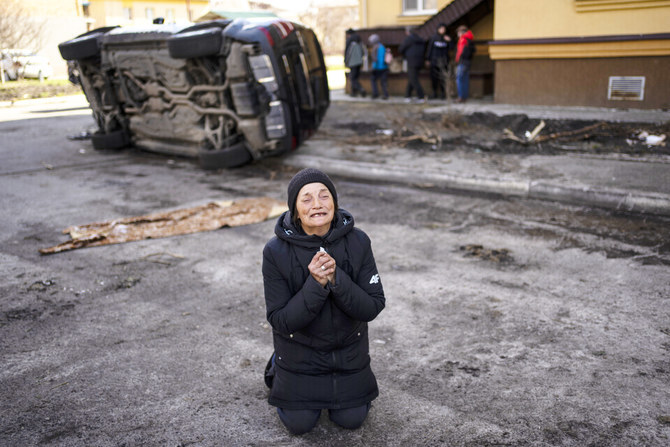
Ukrainian woman mourns the death of her husband who was killed in Bucha. (AP)
Short Url
Updated 07 April 2022
Follow

German intelligence service has radio intercepts on Bucha killings: report

  • Some of the audio material collected appears to relate to victims found dead along a main street in Bucha
  • Among the intercepts was a soldier's description of how he and his platoon mates shot a person on a bicycle

BERLIN: German intelligence services have intercepted radio traffic of Russian soldiers discussing the killings of civilians in the Ukrainian town of Bucha, Spiegel reported Thursday, in what would be new evidence linking Moscow troops to the deaths.
Some of the audio material collected appears to relate to victims found dead along a main street in Bucha, the magazine said, citing a closed-door parliamentary briefing given by Germany’s foreign intelligence service BND.
Among the intercepts was a soldier’s description of how he and his platoon mates shot a person on a bicycle.
AFP journalists on the ground in Bucha saw three bodies tangled up in bicycles among the 20 corpses found along the tree-lined street, after Russian troops withdrew.
The Kremlin has however denied the accusations of mass killings, claiming instead that the images emerging from Bucha were “fakes” or that the deaths occurred after Russian soldiers pulled out.
Spiegel said the audio files intercepted by the BND also provided evidence of the Wagner mercenary group’s role in the atrocities.
The killings were also apparently not random acts.
Rather, the soldiers were discussing the killings “as though they were simply discussing their everyday lives,” said the magazine.
The German government had said on Wednesday that satellite images from last month provided strong counterevidence against Russia’s denials of the atrocities.
Images at Berlin’s disposal covered the period from March 10-18 and “led to the conclusion that the victims whose images we all saw were lying there since at least March 10,” said government spokesman Steffen Hebestreit.
“Reliable evidence shows that Russian fighting and security forces were deployed in this area from March 7 until the 30th,” he said.
When asked if the satellite images viewed by German officials were from allies or media sources, Hebestreit replied: “These are our findings but as you know we do not comment on the origin or evaluation of intelligence matters.”
The Group of Seven industrialized nations on Thursday called for Russia to be suspended from the UN’s human rights body over “heinous acts and atrocities” in Ukraine.


UN experts concerned by treatment of Palestine Action-linked hunger strikers

Updated 26 December 2025
Follow

UN experts concerned by treatment of Palestine Action-linked hunger strikers

  • Eight prisoners awaiting trial for alleged offences connected to the group have taken part in the protest

LONDON: UN human rights experts have raised concerns about the treatment of prisoners linked to Palestine Action who have been on hunger strike while on remand, warning it may breach the UK’s international human rights obligations.

Eight prisoners awaiting trial for alleged offences connected to the group have taken part in the protest, reported The Guardian on Friday.

Among them are Qesser Zuhrah and Amu Gib, who were on hunger strike at HMP Bronzefield from Nov. 2 to Dec. 23, and Heba Muraisi, held at HMP New Hall. Others include Teuta Hoxha, Kamran Ahmed and Lewie Chiaramello, who has refused food on alternate days due to diabetes.

Zuhrah and Gib temporarily resumed eating this week because of deteriorating health but said they plan to resume the hunger strike next year, according to Prisoners for Palestine.

In a statement issued on Friday, UN special rapporteurs, including Gina Romero and Francesca Albanese, said the handling of the prisoners was alarming.

“Hunger strike is often a measure of last resort by people who believe that their rights to protest and effective remedy have been exhausted. The state’s duty of care toward hunger strikers is heightened, not diminished,” they said.

Three of the prisoners were in hospital at the same time on Sunday, with Ahmed admitted on three occasions since the hunger strike began.

The experts said: “Authorities must ensure timely access to emergency and hospital care when clinically indicated, refrain from actions that may amount to pressure or retaliation, and respect medical ethics.”

Prisoners for Palestine has alleged that prison staff initially denied ambulance access for Zuhrah during a medical emergency last week, with hospital treatment only provided after protesters gathered outside the prison.

“These reports raise serious questions about compliance with international human rights law and standards, including obligations to protect life and prevent cruel, inhuman or degrading treatment,” the experts said, adding: “Preventable deaths in custody are never acceptable. The state bears full responsibility for the lives and wellbeing of those it detains. Urgent action is required now.”

Families and supporters have called for a meeting with Justice Secretary David Lammy, while lawyers claim the Ministry of Justice has failed to follow its own policy on handling hunger strikes.

Government officials are understood to be concerned about the prisoners’ condition but cautious about setting a wider precedent.