


RIYADH: More than 1,500 students won the three most important medals at the Kangaroo Mawhiba Math Competition 2022 in Saudi Arabia. There were 282 gold medalists, 493 silver medalists and 745 bronze medalists.
Speaking to Arab News, the students expressed pride in their accomplishments and described the competition, in which they had to solve math problems in a short amount of time, as enjoyable.
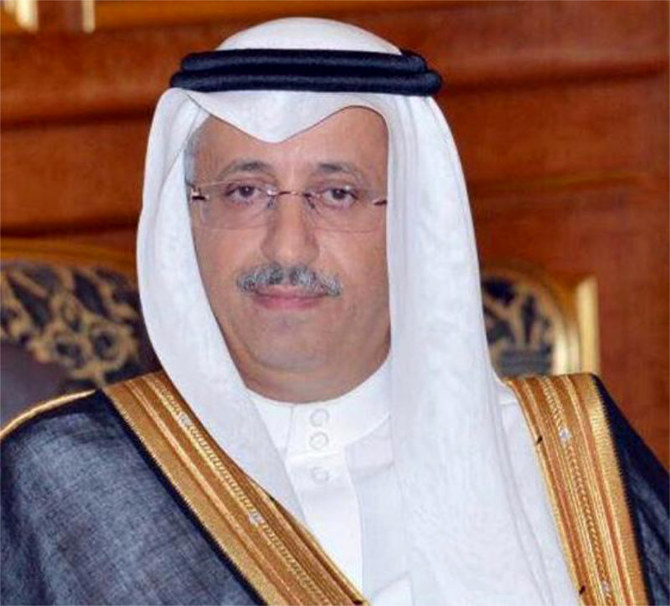
Saud Al-Mathami, secretary-general of the King Abdulaziz and His Companions Foundation for Giftedness and Creativity, also known as Mawhiba, said the foundation is proud of its collaboration with the Ministry of Education to discover and nurture Saudi Arabia’s talented human capital.
The successes, he noted, are a testament to the Kingdom’s commitment to progress and quality of education, which are reflected in the country’s ambition to develop the best educational system in the world by 2030.
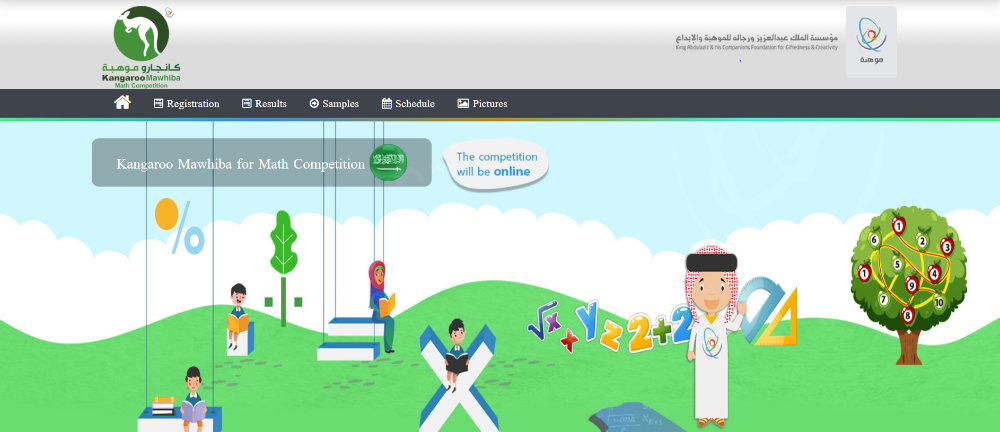
Home page of Mawhiba website. (Supplied)
This year’s mathematics competition saw 30,458 Saudi students enroll, including 17,685 male students and 12,773 female students.
The competition aims to encourage male and female students to develop mathematical skills and apply these in their daily lives.
Bandar Mamdouh, a member of the Saudi Association for Mathematical Science, said many people do not like mathematics and believe it is difficult to understand. Many students, he added, wonder why they have to take mathematics as a subject in schools.
“Math is the mother of science and the language of the times. It is also the language of accuracy and conciseness,” he said, adding that math has contributed to much of humanity’s modern technology and entertainment and is directly applicable in daily life.
Mamdouh applauded Mawhiba’s efforts to foster students’ interest in mathematics by hosting competitions.
Logo of Kangaroo Mawhiba for Maths Competition. (Supplied)
“We have seen an increase in the number of participants and the number of winners every year through modern teaching methods, including the use of modern technology in teaching. This has proved effective in developing students’ science skills in general, mathematics in particular,” he said.
Moath Al-Qahtani, an intermediate third-grade student at Manarat Al-Riyadh School in Riyadh and a contender for Saudi Arabia’s 2022 gold medal in the competition, first learned about it from his colleagues. He then read up on it on the Mawhiba website.
“I joined in the Kangaroo competition in order to strengthen my math skills and solve problems as rapidly as possible, and the competition has helped me apply math in my daily life,” Alqahtani said.
The biggest challenge, he noted, was solving math problems in a limited amount of time, but he acknowledged that this was useful in building his skills.
Mahdi Al-Baik, who won the gold medal, is a secondary second grade at Dar Al-Hekma School in Qatif, located in the eastern part of Saudi Arabia. A math lover, this is his fifth time participating in the competition. He described the contest as fun and enjoyable, agreeing that solving math problems as quickly as possible was certainly a skill that students who wished to participate needed to develop.


