



KARACHI: Trading has slowed down at Pakistan’s oldest date market that caters for the demand during the Islamic fasting month of Ramadan, traders said on Tuesday, as high prices and decreasing purchasing power keep the buyers away.
The century-old Khajjoor Market in Karachi’s Liyari Town is a major source of date supply not only to the city, but to the rest of the South Asian country as well.
More than 90 percent of commercial activities at the Khajjoor Market depend upon Ramadan, but the market has remained dull this year except for a few days before the start of the holy month, according to traders.
Traders say the prices of various varieties of dates have increased by around 70 percent this year, as compared to the previous year.
“The price of Mazafati (Irani-origin) dates has increased to Rs12,000-13,000 per 40 kilograms. The variety was available for Rs7,000-7,500 per 40 kg the previous year,” Sabir Baloch, a wholesaler and president of the date market association, informed.
“This variety remains highly sought after during the month of Ramadan.”
The date fruit is considered a quintessential part of iftar (the sunset meal during Ramadan) and is the first thing that is eaten to break the fast for the day. It serves as a good source of energy and provide essential vitamins.
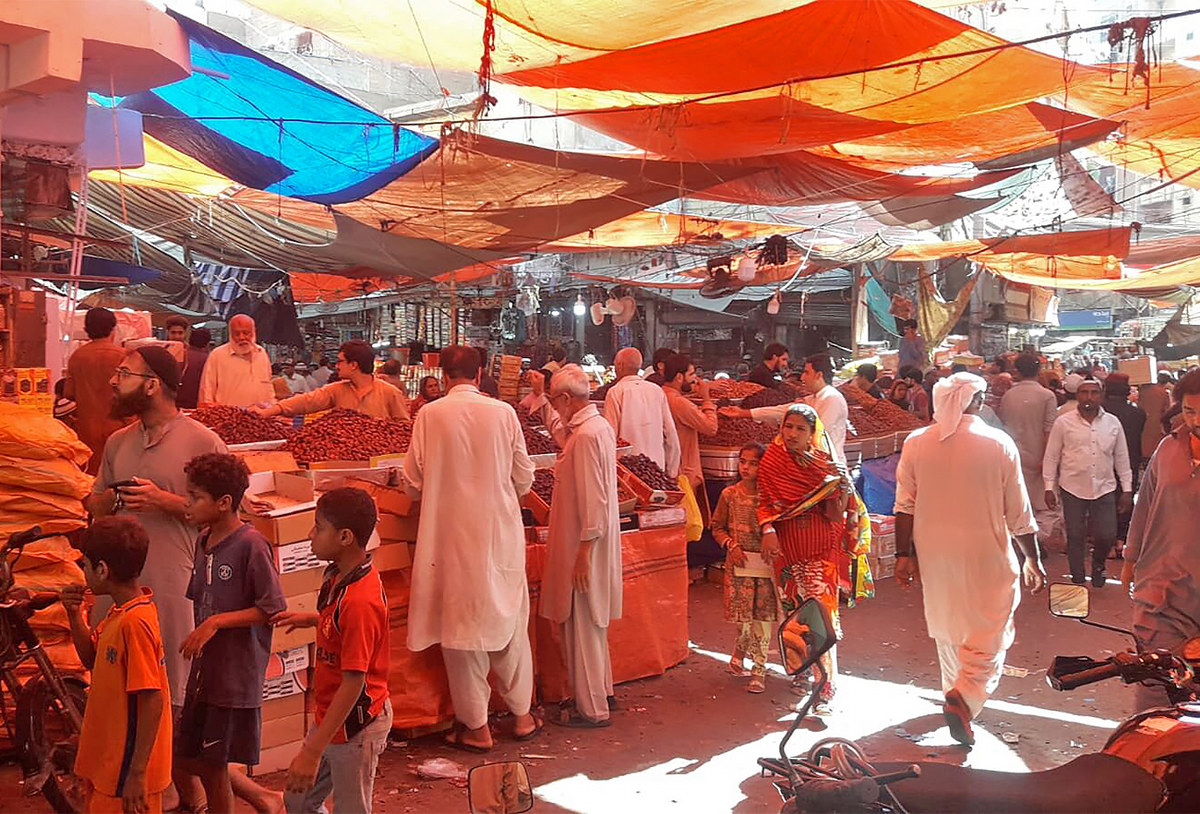
Ahead of the holy month of Ramadan, people buy dates at the century-old Khajoor Market in Karachi, Pakistan on March 17, 2022. (AN Photo)
A number of factors have contributed to the high prices of dates this year, including freight cost, imposition of general sales tax, custom duty and labor cost, according to Hanif Baloch, secretary-general of the association.
“A truck load of dates that was available for Rs55,000 last year now costs Rs70,000. Similarly, the labor costs and cold storage charges have increased,” he explained.
“Due to the decreasing purchasing power and high inflation, individual buying has declined and charity groups have increased purchasing.”
Apart from the Irani- and Pakistani-origin dates, the prices of dates imported from Saudi Arabia have shot up too, according to traders.
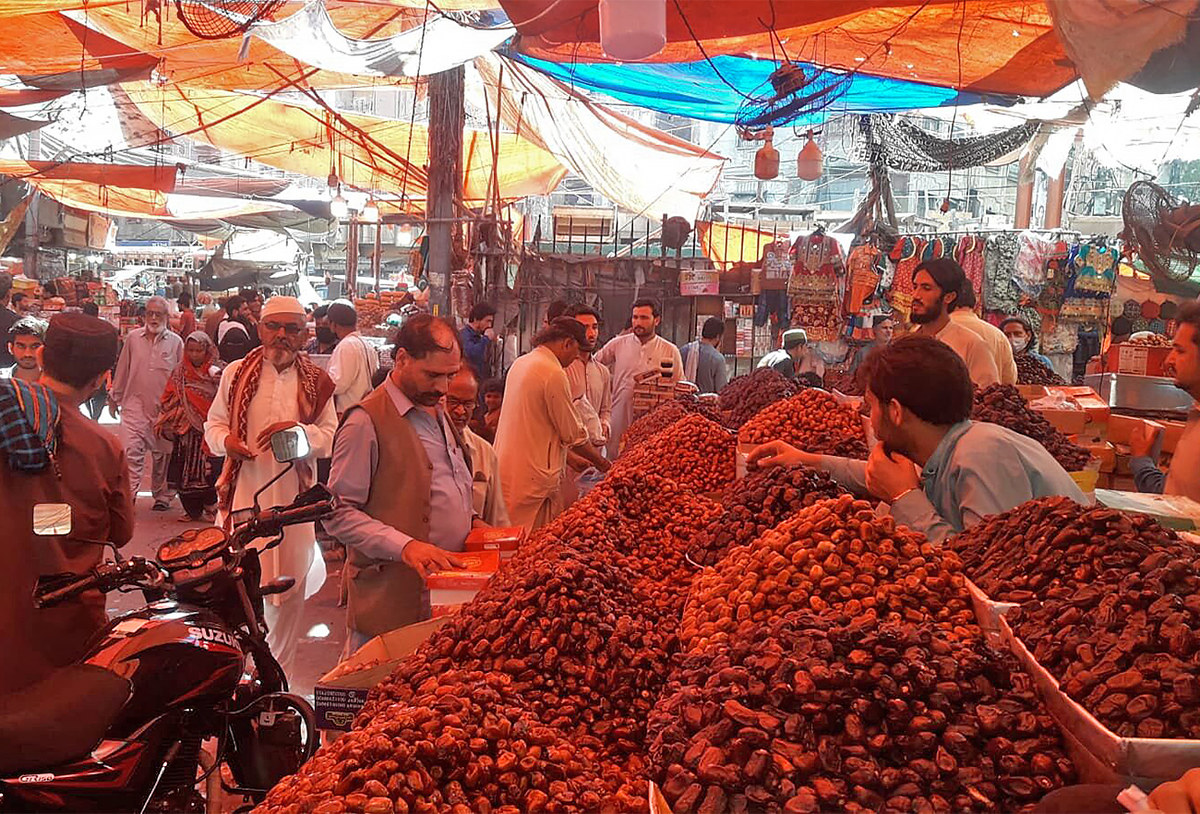
Ahead of the holy month of Ramadan, people buy dates at the century-old Khajoor Market in Karachi, Pakistan on March 17, 2022. (AN Photo)
“The prices of Saudi dates, including Ajwa, Mabroom, Anbara Safwai, Sukkari, Barhi, Saghai, Kalmi, Khudri, Kholas and Medjoul have increased by around Rs500 per kilogram this year,” Zaheer Khan, a trader at KHajjoor Market, told Arab News.
Hanif said this year people fearing more price hikes had purchased dates before the start of Ramadan and now the market had slowed down to a large extent.
“Trading would usually remain elevated till the mid of Ramadan, but this year activities do not reflect what it used to be in the previous years.”
The traders said the devaluation of national currency has also played a major role in the high prices of dates. The Pakistani rupee has devalued by over 16 percent so far this fiscal year, with the US dollar trading at Rs185 on Tuesday.
Pakistan meets around 50 percent of its peak demand of dates through imports from Saudi Arabia, Iran, Iraq and other Gulf countries.


