



RIYADH: World Wrestling Entertainment superstar the Undertaker will be inducted into the WWE Hall of Fame on April 1 at American Airlines Center in Dallas, Texas, as part of WrestleMania Week, in a ceremony that will be streamed live worldwide.
Mark Calaway, better known to fans by his ring name the Undertaker, is one of the most recognized superstars in the history of WWE and a pop culture icon, having made his WWE debut at the 1990 Survivor Series as the mystery partner for WWE Hall of Famer Ted DiBiase’s Million Dollar Team.
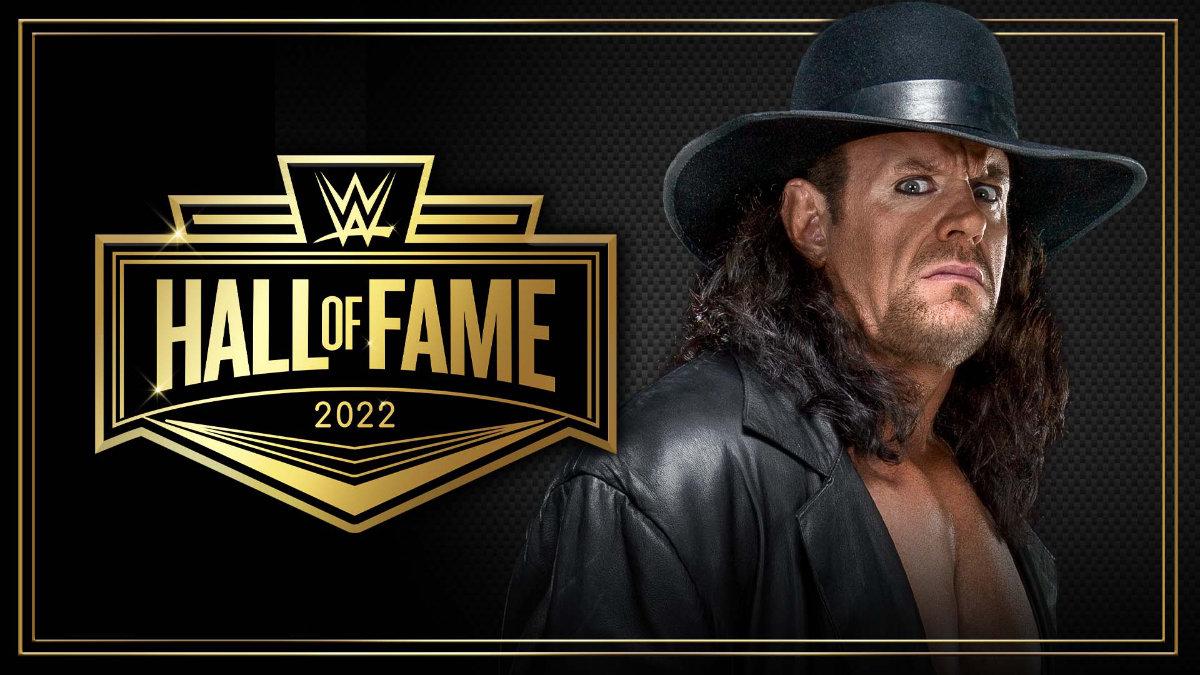
“I remember I was 11 when I watched him debut at Survivor Series in 1990,” Sultan Alobaid, a Saudi media professional, told Arab News, echoing the sentiments of many Saudi millennials who grew up watching “the Deadman” on their TV screens.
The man who earned the moniker “the Phenom” went on to hold nearly every major championship in WWE, and has competed in some of its most memorable matches during his illustrious 30-year career.
A year into his journey with the promotion, he defeated the legendary Hulk Hogan to win his first (what was then) WWF Championship at the 1991 Survivor Series, and became the youngest ever champion at that time.
The Undertaker has established a historic 21-year undefeated streak at WrestleMania that is yet to be broken. Guinness World Records Gamer’s Edition recognized him as having the most consecutive victories at WrestleMania in 2016.
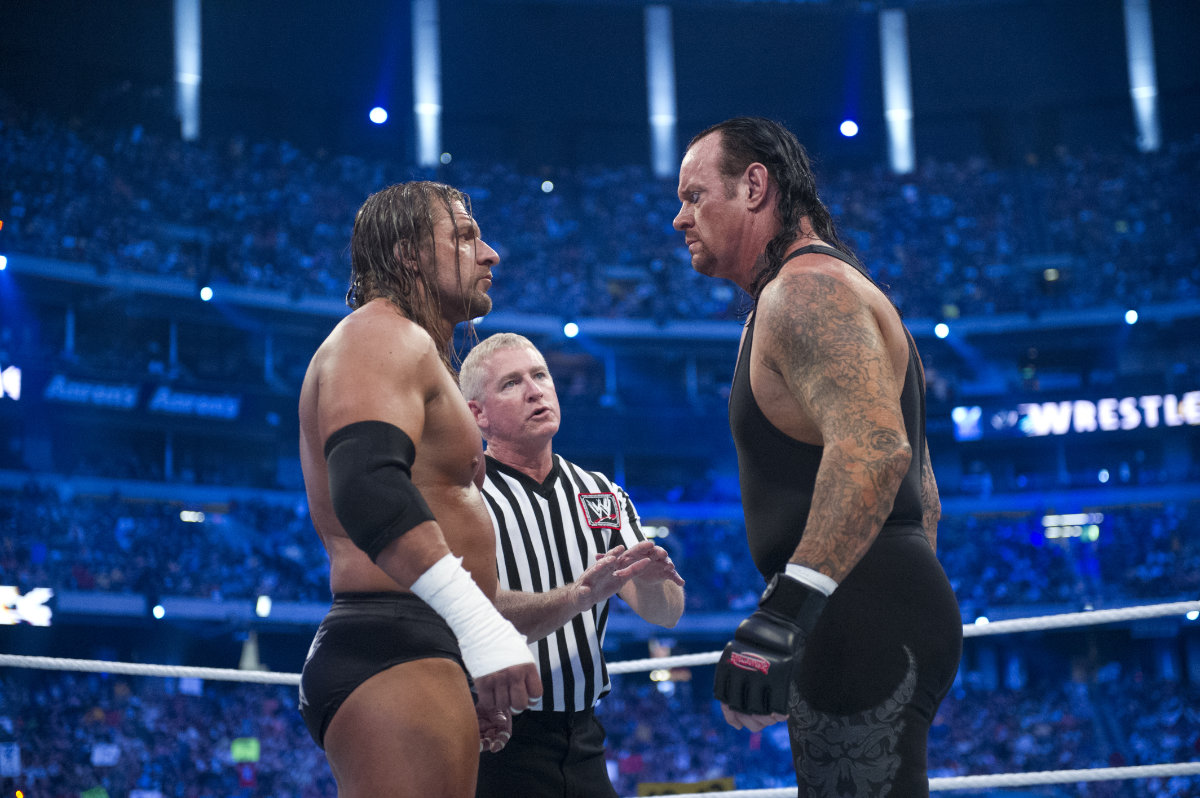
Triple H, left, fights with The Undertaker. (Supplied)
“I remember every year I watched WrestleMania just to see who the Undertaker was going to beat,” Ahmed Al-Jassim, a Saudi cellphone shop owner, told Arab News. “It started with Jimmy Snuka and we saw it extend to other legends like King Kong Bundy, Triple H, Kane, and Shawn Michaels.”
The Undertaker’s fights with Shawn Michaels and Triple H are considered among the best in the history of WWE’s biggest marquee event.
Recalling the time when Brian Lee stepped in as an Undertaker impersonator for several weeks in 1994, one Saudi WWE fan said: “I still remember the two Undertakers incident. Of course, at the time, there was no internet or satellite television, so I was following the build-up of excitement through newspaper and magazine articles over weeks. All that my friends and I would wonder was if this was true, and whether WWE would actually pull off two identical wrestlers or would use special effects.”
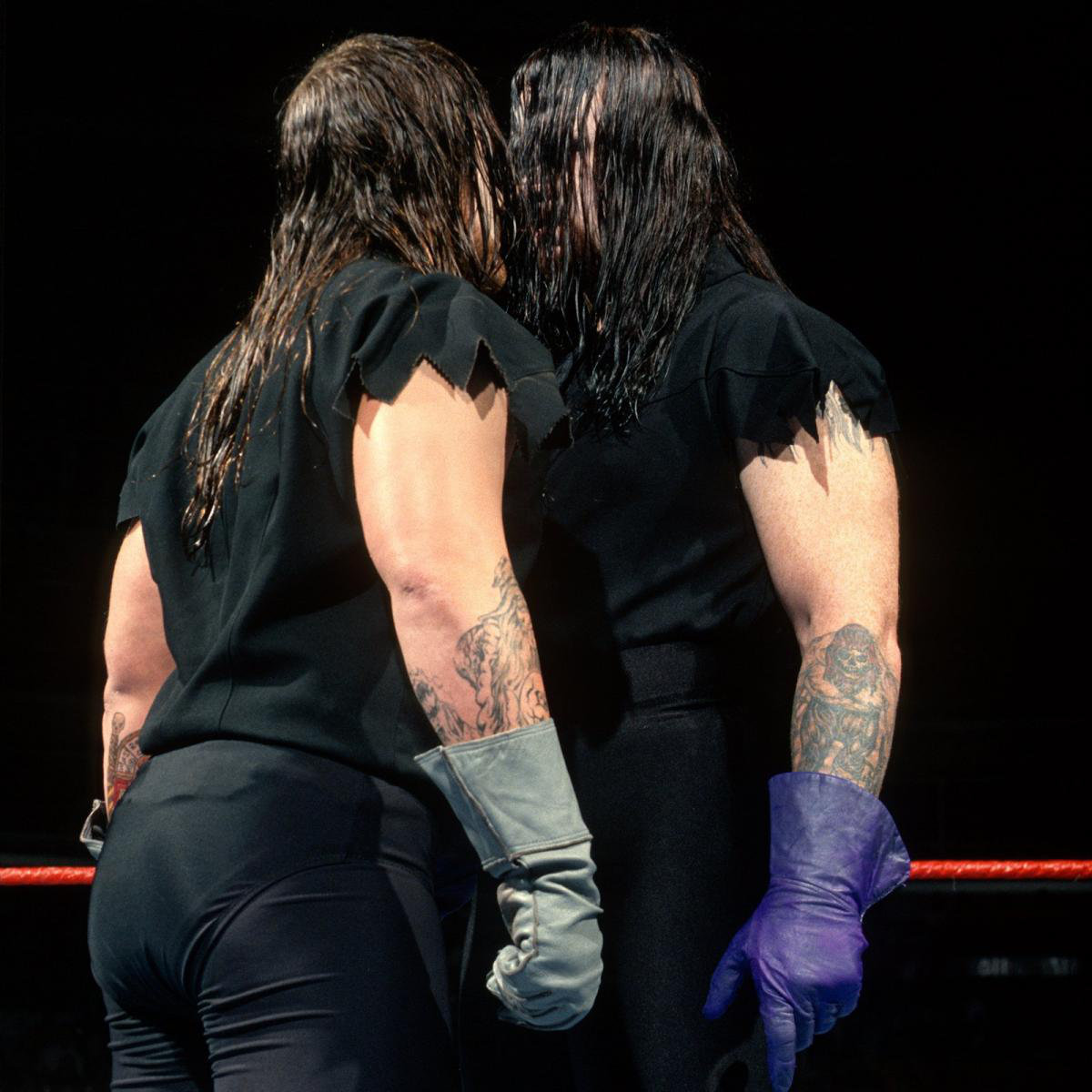
The real Undertaker famously defeated his impersonator during a head-to-head at the SummerSlam of August 1994. (Supplied )
The Saudi fan, now in his forties, added: “I remember rushing to the video store and back home when I heard that SummerSlam video had been released and there it was: Undertaker Vs Undertaker, identical in their looks and even their moves. It was sports entertainment history in the making and a truly memorable moment.”
The real Undertaker famously defeated his impersonator during a head-to-head at the SummerSlam of August 1994.
FASTFACT
Did you know that, for a short period of time in 1994, there were two Undertakers? This happened when the real Undertaker was away on his break. The WWE officials introduced Brian Lee to impersonate the Undertaker. Brian looked just like the real Undertaker with wet, long hair and sinister looks.
“The Undertaker was a big part of all of our childhoods,” Tamaraah Al-Gabaani, a Saudi Arabia-based fashion influencer, told Arab News. Recalling the ‘fake’ Undertaker episode, she said: “It obviously didn’t sit well with me as a loyal fan.”
Throughout his career, the Undertaker was involved in many first-of-a-kind matches, a notable one being against Mankind in the first Boiler Room Brawl at SummerSlam 1996. Memorably, as the name suggests, the two wrestling legends spent 20 minutes brawling in the Cleveland Gund Arena’s boiler room.
The Undertaker took his rivalry with Mankind to a new level with another unprecedented specialty match with the main event of In Your House: Buried Alive.
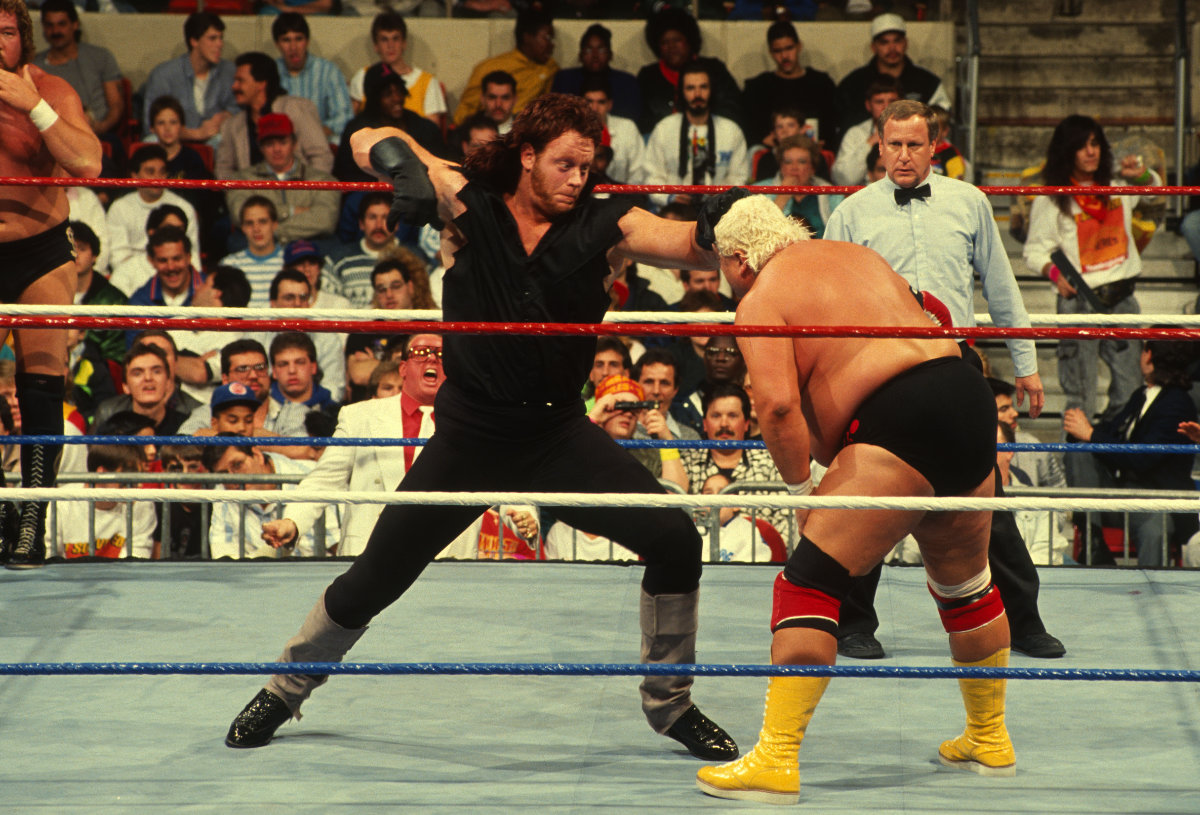
The Undertaker of younger days. (Supplied)
At the Badd Blood event in 1997, the Undertaker challenged Shawn Michaels to a first-ever Hell in a Cell match, which would become a mainstay for WWE.
“Well, you know, you have to prepare mentally,” the Undertaker told Arab News in a 2020 interview, looking back at these career highlights.
“When you’re thinking about your match, you have to look at everything that you’ve done, that led up to that particular match, because obviously if you’re going to have a Buried Alive match, there’s had to have been some serious things happen along the way to get to the point where you want to bury somebody alive.
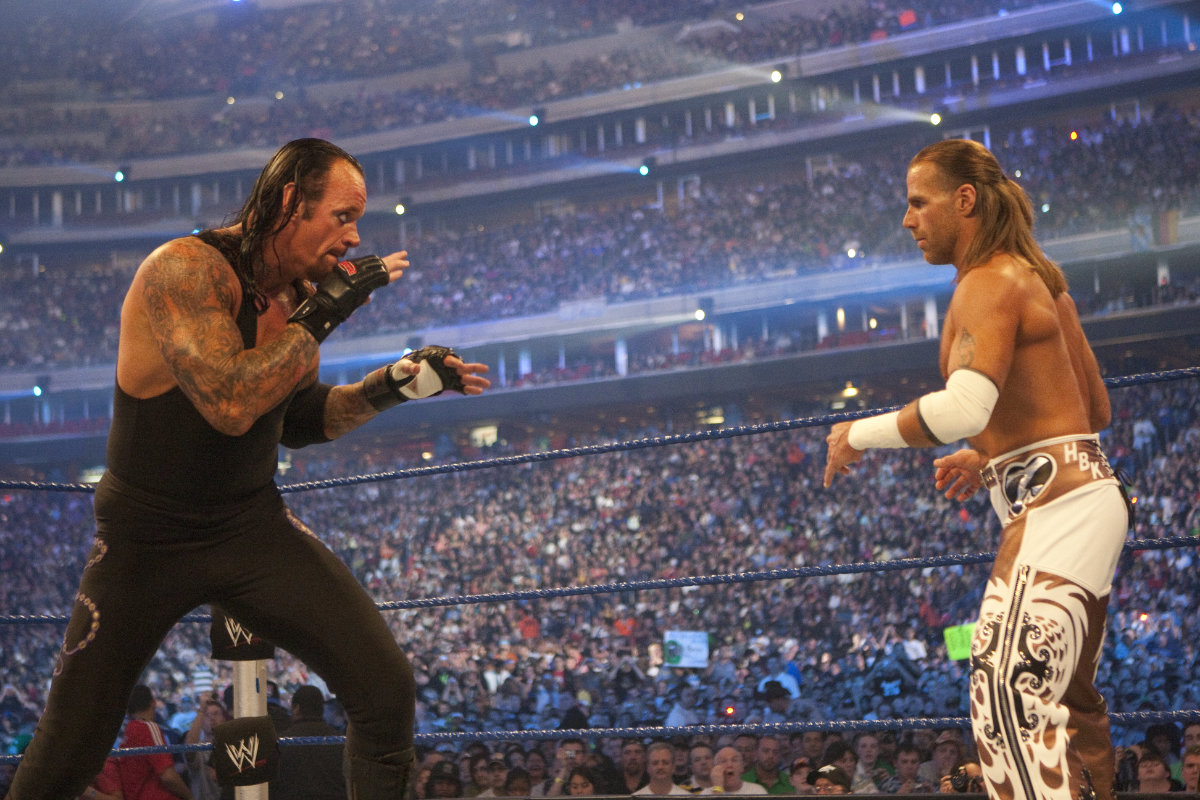
The Undertaker, left, and Shawn Michaels. (Supplied)
The Undertaker and Mankind’s macabre feud was revived in 1998, taken to a graphic new height, and decisively resolved when they faced each other in a Hell in a Cell match at King of the Ring.
“You know, if there’s a lot of those matches like Buried Alive and Hell in a Cell, and the Inferno match, that one was interesting. There wasn’t any rehearsing anything on that one, believe me, that was just out there doing it and hoping that I wasn’t one that got caught on fire. As morbid as that sounds, I guess it fits with what I do.”
The match became one of the most famous in professional wrestling history when the Undertaker threw Mankind off the roof of the 4.9-meter cell onto a broadcast table below.
“I blame the Undertaker for the times I got in trouble for copying his wrestling moves on my friends and brothers,” Joel Huffman, an American expat in Saudi Arabia and a co-founder of Arabius, told Arab News.
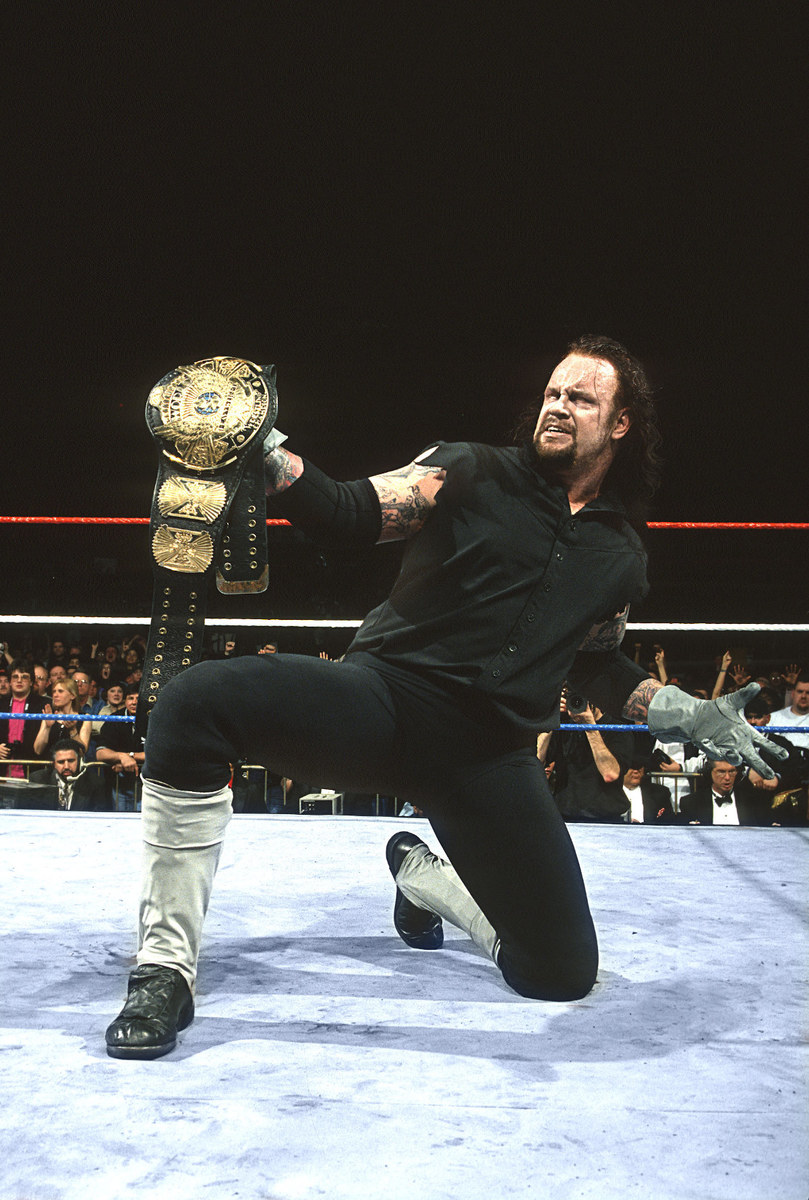
Posing with his champion's belt. (Supplied)
Indeed, the Undertaker has been responsible for some of the most theatrical moments in WWE history. At the 1992 Summer Slam, held for the first and only time out of the US at London’s Wembley Stadium, he entered the arena riding on the back of a hearse.
At the 2005 Survivor Series, druids delivered a casket that was struck by lightning and went up in flames. The Undertaker then burst from the flaming casket in a rage and brutalized an entire ring full of superstars as a message to his next victim Randy Orton.
In 2011, promotional videos aired showing the Undertaker entering and standing in a Western-style old house on a rainy desert. Each promo ended with the date 2–21–11 being “burned into” the screen.
On that year’s Feb. 21 edition of Raw, the Undertaker returned. But before he could speak, Triple H also returned and challenged him to a confrontation at WrestleMania XXVII, which was later made under no-holds-barred rules. The Undertaker won, but he had to be carried away from the ring on a stretcher.
“I thank him for his example of hard work and dedication throughout his legendary 30-year career and well-deserved place in the Hall of Fame among the greatest sports entertainment icons in history,” said Huffman.
The Undertaker featured in the lineup of wrestling giants who participated in Saudi Arabia’s first televised WWE event in April 2018, where 60,000 fans packed out the King Abdullah Stadium in Jeddah.
The event was the first in a 10-year partnership between WWE and the Saudi General Sports Authority in support of Saudi Vision 2030, Saudi Arabia’s social and economic reform agenda.
WWE announced on Nov. 4, 2019, that it had expanded its partnership with the Kingdom until 2027, under which it would hold two large-scale events in the country per year.
Saudi Arabia first announced WWE would be holding shows in the Kingdom in Dec. 2013, with the first house shows taking place at Riyadh’s Green Halls Stadium in April 2014.
“I’m glad WWE has come to Saudi Arabia now,” Atallah Al-Ghamdi, a Saudi who works in transportation logistics, told Arab News.
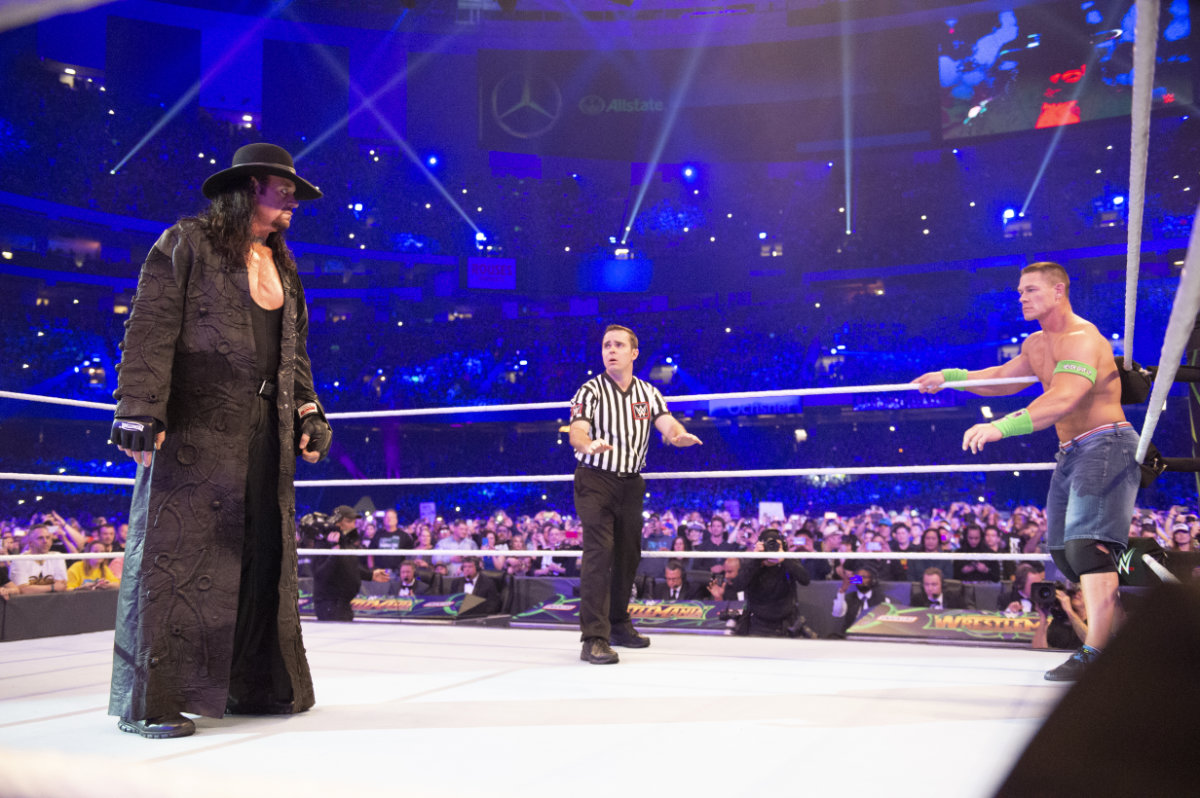
The Undertaker at Wrestlemania with John Cena. (AN Photo/Huda Bashatah)
“My favorite time was when the Undertaker and Goldberg wrestled. It was truly great to see these two legends in person. I grew up watching both,” he added, referring to the 2019 Super ShowDown in Jeddah.
On Nov. 22, 2020, exactly 30 years after making his ring debut, the Undertaker announced his retirement to a crowdless arena in Orlando, Florida — emptied due to that year’s COVID-19 lockdown restrictions.
The Undertaker’s WWE Hall of Fame induction, therefore, marks an ideal opportunity to give “the Phenom” the dramatic send-off he deserves.
“Never in my wildest dreams did I think I’d be 41 when he retired,” said Saudi fan Alobaid, reflecting on his hero’s monumental life in the ring.
“What a career! Forever the Undertaker.”


