


GEC secures $13.8bn in investment to support entrepreneurship

The Global Entrepreneurship Congress took place from March 27 to 30
Short Url
Updated 31 March 2022
Follow

GEC secures $13.8bn in investment to support entrepreneurship

RIYADH: Investment deals worth $13.8 billion were signed at the Global Entrepreneurship Congress held in Riyadh this week, which also saw global firms announce expansion plans into Saudi Arabia.

Entrepreneurs, investors, ecosystem leaders, and policymakers attended the event, which took place from March 27 to 30.

Silicon Valley figures, like Apple’s Steve Wozniak and Netflix’s Marc Randolph, also spoke.

A total of SR25.17 billion ($6.71 billion) worth of agreements and memoranda of understanding were signed at the event, including messaging platform Unifonic raising $125 million in what is the largest funding round ever closed by a Saudi startup. 

Some SR22.89 billion worth of announcements were made. Venture capital and private equity funds reached SR3.71 billion, while SR109 million worth of investment rounds were made.

Among the 34 agreements signed on GEC’s first day were Lenskart, GoDaddy, Kitopi and Cars24 expanding into the Saudi market.

The deals covered a wide range of programs and projects, such as establishing new financial products for entrepreneurs, investing directly in businesses, and providing loan guarantees.

There were several big announcements, including the launch of new products and initiatives from the Social Development Bank that will support and empower entrepreneurs with a value of almost SR11.25 billion.

After the UAE, Saudi Arabia is the second-most funded nation in the Middle East and North Africa.

Aramco achieves 70% local content target through iktva program 

Updated 13 sec ago
Follow

Aramco achieves 70% local content target through iktva program 

RIYADH: Saudi Aramco said its supply chain localization program has reached a target of 70 percent local content, underscoring the company’s push to deepen domestic industrial capacity. 

The state energy giant said its iktva program has added more than $280 billion to Saudi Arabia’s economy since its launch, converting procurement spending into local manufacturing, investment and job creation. 

Aramco plans to raise local content in its procurement of goods and services to 75 percent by 2030, extending a strategy aimed at strengthening supply chain resilience and supporting long-term economic diversification. 

Saudi Arabia has been accelerating local manufacturing and supply chain development as part of Vision 2030 reforms designed to diversify the economy beyond oil and create private-sector employment. 

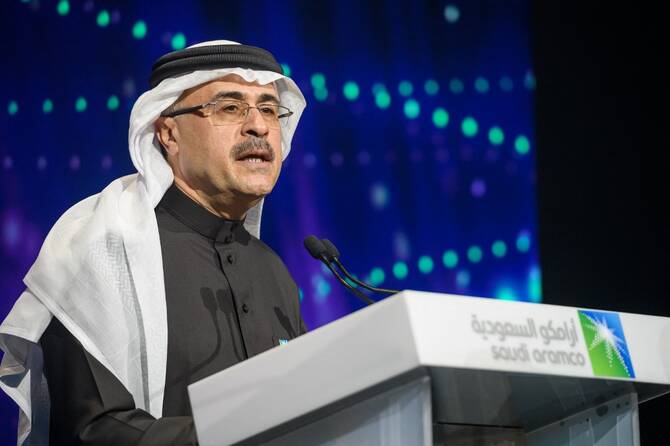
Amin H Nasser, president and CEO of Aramco, said: “I am immensely proud of the transformational effect iktva has had on Aramco and its positive impact on Saudi Arabia’s economy.”  

He added: This announcement marks a major milestone in the program’s journey and reflects an important leap in the Kingdom’s industrial development, which is largely aligned with our ambitious national vision.”  

Nasser said that iktva is a core pillar of Aramco’s strategy to build a competitive national industrial ecosystem that supports the energy sector while enabling broader economic growth and creating thousands of job opportunities for Saudi nationals.  

“By localizing the supply chain, iktva ensures operational reliability while mitigating disruption. Its 10-year cumulative impact reflects the depth and sustainability of the value it continues to generate,” he added.  

Over the past decade, the program has identified more than 200 localization opportunities across 12 sectors representing an annual market worth about $28 billion. 

These have triggered more than 350 investments from companies in 35 countries, backed by $9 billion in capital, enabling 47 strategic products to be manufactured domestically for the first time, Aramco said. 

The initiative has also supported the creation of more than 200,000 direct and indirect jobs across the Kingdom, helping expand Saudi Arabia’s industrial base. 

Saudi Arabia’s local content programs aim to keep more spending within the national economy by encouraging companies to manufacture goods, source services and develop expertise domestically rather than relying on foreign suppliers.