BEIRUT: Lebanon is grappling with an education “emergency,” a UN official said, as years of economic collapse weigh heavily on students and teachers.
“We are now in an emergency situation. Education in Lebanon is in crisis because the country is living in crisis,” Maysoun Chehab of the UN education and culture body said.
She spoke on the sidelines of an event Monday celebrating the completion of a $35-million UNESCO project to rehabilitate 280 education centers damaged by a 2020 blast.
The explosion caused by haphazardly stored fertilizer at Beirut port killed more than 200 people, destroyed swathes of the capital and disrupted the education of at least 85,000 youths.
UNESCO chief Audrey Azoulay visited Beirut weeks later, driving efforts to restore heritage sites and damaged schools.
Students and teachers now have brand new classrooms but they are still suffering from the twin effects of an unprecedented economic crisis in Lebanon and the coronavirus pandemic.
Daily power cuts lasting more than 20 hours and soaring petrol prices mean many students can neither afford to reach their classes nor study from home.
“Schools do not have enough funds to operate as they should, teachers do not have sufficient salaries to live in prosperity, students do not have transportation means due to high fuel prices,” said Chehab, UNESCO’s education chief for Lebanon.
“This is all affecting the quality of education.”
The minimum wage once worth $450 is now valued at $28.
The crisis has forced students to quit school or university to make ends meet.
Enrolment in educational institutions slumped from 60 percent last year to 43 percent in the current academic year, a UN Children’s Fund report found.
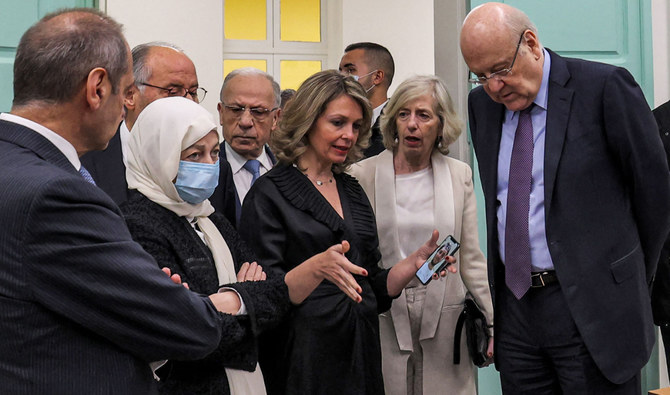
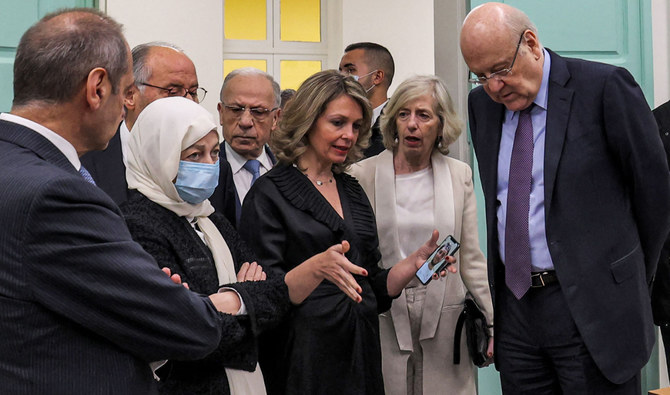
Meanwhile, Najib Mikati said he would stay put as prime minister to avoid giving anyone an excuse to delay parliamentary elections scheduled for May 15.
The polls are the first since Lebanon’s 2019 financial implosion and protests that drew thousands of people into the streets angry at the ruling elite, seen as responsible for decades of waste and corruption.
“I won’t be dragged into resigning so that it is not an excuse for obstructing parliamentary elections,” Mikati said in televised remarks outside a session of parliament.
“This is a reason for not resigning,” Mikati said, noting he had called for a vote of confidence in his government — a demand that was declined by House Speaker Nabih Berri.
Mikati said his request followed critical statements by some officials about his government. He was not specific.
Visibly irritated, Mikati said that the electoral interests of some parties were harming attempts by the government to extract Lebanon from its most serious crisis since the 1975-90 civil war.
Mikati’s government, named “Together to the Rescue,” has not managed to agree on financial and reform measures demanded by Western donors and the International Monetary Fund, from whom Lebanon is seeking to secure an aid package.
Earlier this month, Mikati, a billionaire tycoon and three-time prime minister, said he wouldn’t run for a seat in the 128-member legislature, saying he wanted to make room for new faces.