



DUBAI: This month E-Vision, a subsidiary of the UAE business e&, and ADQ, an investment and holding company based in Abu Dhabi, signed a joint deal to acquire a majority equity stake of 57 percent in regional streaming platform StarzPlay Arabia.
Maaz Sheikh, StarzPlay’s CEO and co-founder, told Arab News that the deal was an “organic evolution” that made “industrial sense for both parties.”
The streaming service already had a seven-year relationship with e&, formerly known as Etisalat Group, which was the first telecom company it partnered with on launch. The telco subsequently became a minority shareholder in 2017 and now, as part of a consortium with ADQ, is majority shareholder. The benefits of this to StarzPlay Arabia are clear, according to Sheikh.
“The business and the industry is getting more competitive, so we needed a strategic partner that can bring us the economies of scale and the strategic reach and distribution of a telecom operator like e&, which has operations in all the key markets that we are in,” he said.
Meanwhile, e& was looking for a digital business to invest in.
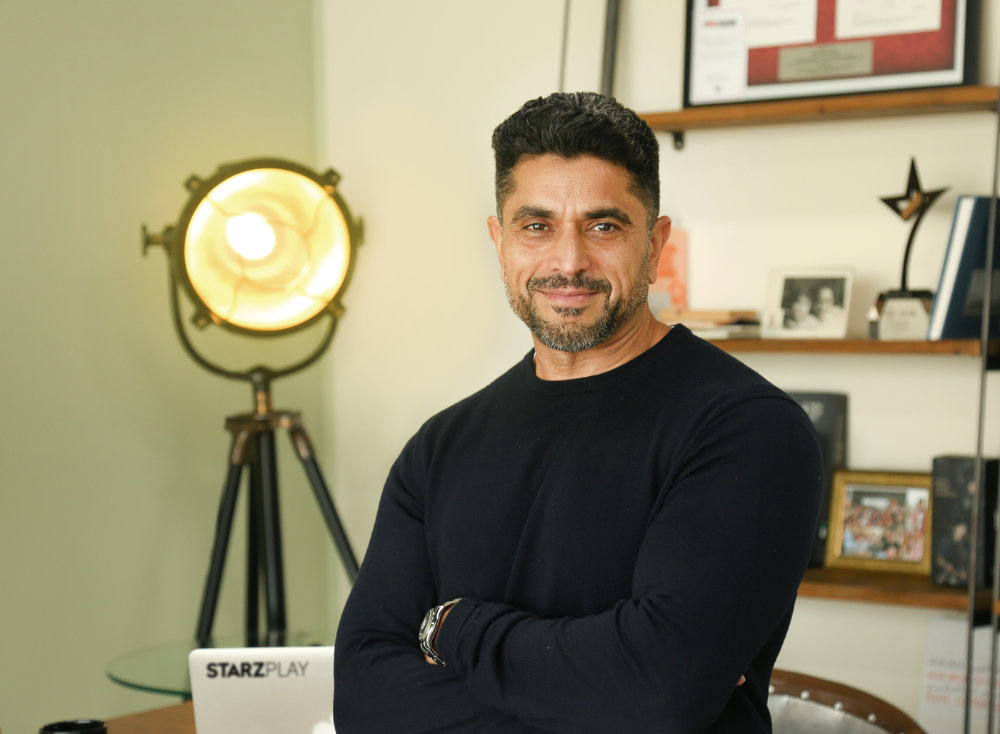
Maaz Sheikh, CEO and co-founder of StarzPlay
“Given that the race is already very competitive, it’s too late to launch a new over-the-top or streaming brand in the region,” said Sheikh. An OTT media service is one that is offered directly to viewers online, bypassing traditional broadcast platforms.
He added that unless you are an established brand such as “Disney and think you can launch your own service in the region,” it is too late to build a brand from a scratch and so you have to do it through mergers and acquisitions.
The recently announced upcoming launch of Disney+ in the Middle east, along with the recent rebranding of OSN, the dominance of MBC and Shahid, and regional investments by Netflix mean that the local streaming sector is increasingly competitive. Sheikh is not overly concerned by the arrival of a new player, however.
“I don’t see Disney+ launching in the market as an existential threat to any OTT player in the market,” he said. “This is a fairly complex market where you have to go into 21 countries and the credit card penetration varies country by country. So, the local players have a certain advantage.”
Time will tell whether this advantage is sustainable or not, Sheikh added, but he remains resolute in his belief that the localization of content and distribution will continue to provide a strong advantage for regional players.
In 2021, StarzPlay Arabia, Netflix and Shahid VIP were the local market leaders, together responsible for more than 60 percent of the share of subscribers, according to market research firm Dataxis.
Going forward, analysts expect Shahid VIP to lead the pack, followed by Netflix and then StarzPlay Arabia. The first two are forecast to hold a market share of more than 20 percent by 2026, as StarzPlay’s growth projections slow. Sheikh remains optimistic, however.
“Today we are partnered with 21 mobile operators in the region, and Netflix has yet to integrate with its first one,” he said. He admitted that Shahid has “done well with mobile integrations and mobile payment plans,” as has StarzPlay.
So far Hollywood content has been StarzPlay’s greatest strength and it has also made recent forays into Arabic and Turkish content, and anime. With e& and ADQ now on board, the company will be looking to expand further into sports content and Arabic originals.
“These are perhaps the two things that we could have done on our own but not at the scale that we can do now, said Sheikh.
In February, StarzPlay reported a five-fold increase in the number of monthly subscribers, driven by the addition of new sports content, and a 30 percent increase in average revenue per user.
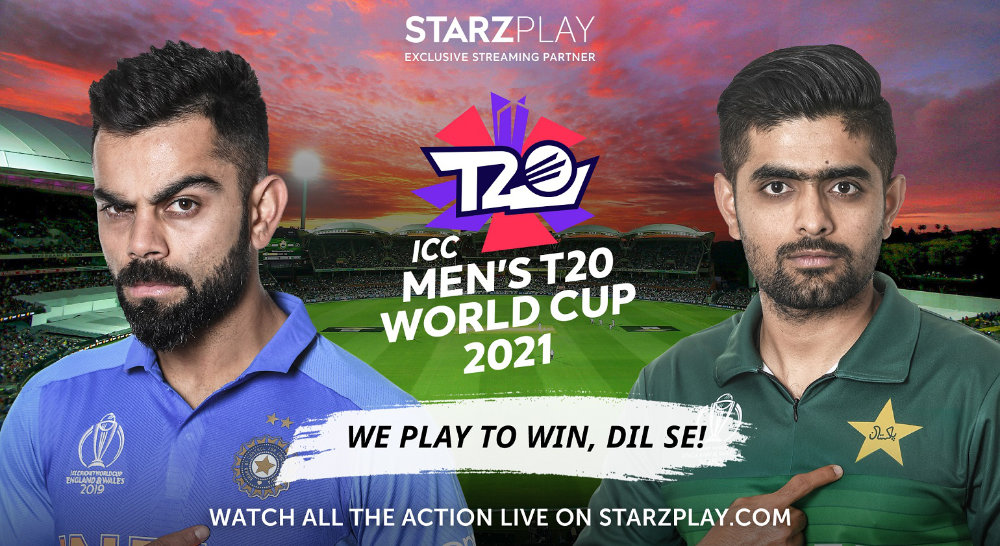
In fact, the cricket match between India and Pakistan during the ICC Men’s T20 World Cup 2021 helped the platform record the highest number of viewers in its history.
The service’s second-best day, in terms of new users and consumption, was when the UAE played Lebanon in the AFC Asian World Cup qualifiers last year, Sheikh said. StarzPlay Arabia was the most-downloaded app that day in the UAE across all categories.
Access to both of these sporting events was made possible by StarzPlay’s partnerships with e& and Abu Dhabi Media.
“These are two examples of what this strategic collaboration can do for the consumers and, going forward, you will see more of that,” said Sheikh.

In terms of original content, StarzPlay released its original series “Baghdad Central” in 2020. This year it worked with Discovery+ to launch a regional version of bridal fashion reality TV show “Say Yes to the Dress,” which was filmed and produced in the UAE.
The platform is preparing to release its next Arabic original, “Urban Legends,” after Ramadan. It will also release six shows during Ramadan, in partnership with Abu Dhabi Media.
“The new strategic investment allows us to bring those economies of scale when it comes to original Arabic (programming) and sports. And those two, in addition to our distribution, will be our strengths,” said Sheikh.



