LONDON: The BBC urged the Taliban on Sunday to reverse what it said was an order to remove international broadcasters from Afghan airwaves, which has blocked the British broadcaster’s news bulletins.
“The BBC’s TV news bulletins in Pashto, Persian and Uzbek have been taken off air in Afghanistan, after the Taliban ordered our TV partners to remove international broadcasters from their airwaves,” Tarik Kafala, head of languages at the BBC World Service, said in a statement.
“We call on the Taliban to reverse their decision and allow our TV partners to return the BBC’s news bulletins to their airwaves immediately.”
Kafala called the move by Taliban “a worrying development at a time of uncertainty and turbulence for the people of Afghanistan.”
He noted more than six million Afghans consume the BBC’s journalism on TV every week.
“It is crucial they are not denied access to it in the future,” he added.
The development came as the Taliban, which seized power last summer and forced the hasty exit of remaining Western troops, diplomats and others, has this week come under rising pressure over female education.
Women’s rights activists pledged on Sunday to launch a wave of nationwide protests if the hard-line Islamists now governing the country fail to reopen girls’ secondary schools within a week.
Thousands of secondary school girls had flocked to classes earlier this week after institutions reopened for the first time since last August.
But officials ordered the schools shut again just hours into the day, triggering international outrage.


BBC urges Taliban U-turn after news broadcasts blocked
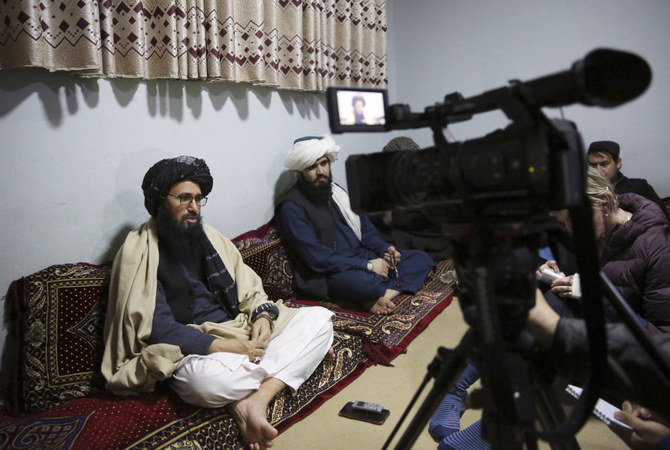
https://arab.news/2xth5
BBC urges Taliban U-turn after news broadcasts blocked
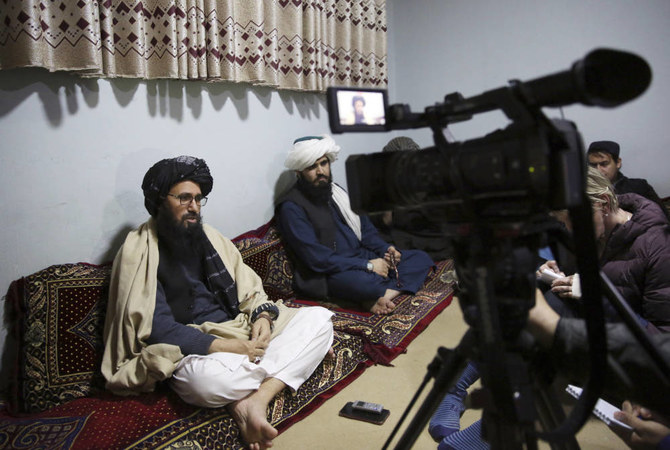
- Kafala called the move by Taliban “a worrying development at a time of uncertainty and turbulence for the people of Afghanistan”


Study finds nearly half of UK news stories on Muslims show signs of bias
- Centre for Media Monitoring finds 20,000 out of 40,913 articles from 30 major news outlets contain bias and 70% link Muslims to negative behaviors or themes
- Findings reveal ‘deeply concerning evidence of structural bias’ in portrayal of Muslims by UK press and point to ‘systemic problem’ within the media, says center’s director
LONDON: Nearly half of news articles published in the UK in 2025 that referenced Muslims or Islam contained some degree of bias, according to a report issued on Monday by the Centre for Media Monitoring. It also found that about 70 percent of stories linked Muslims to negative behaviors or themes.
The nonprofit organization, which tracks the ways in which Muslims and Islam are portrayed in the media, examined 40,913 articles from 30 major news outlets and found that about 20,000 showed some form of bias.
The study looked at “structural patterns” in coverage that “shape public narratives” about Muslims amid rising hostility toward the community.
“As the largest study of its kind ever conducted in the UK, this report presents deeply concerning evidence of structural bias in how Muslims are portrayed in the UK press,” said Rizwana Hamid, the director of the organization.
It found that 70 percent of the articles it reviewed highlighted negative aspects related to Muslims, though not all of the stories were biased in themselves. The wider patterns were also troubling: 44 percent of the coverage omitted key context, 17 percent relied on generalizations, and 13 percent included outright misrepresentation.
Taken together, the monitoring center said, the findings amounted to evidence of an “information integrity crisis” that distorts public understanding, and “a deeply concerning trend” in reporting on Muslims.
The research points to a “systemic problem within our media ecosystem,” Hamid said.
“When entire communities are repeatedly framed through lenses of suspicion or threat, it inevitably shapes public attitudes, political debate and the everyday lives of British Muslims,” she added.
News brands targeting right-wing audiences were more likely to produce biased coverage, the report found.
The Spectator magazine and GB News were identified as having the highest proportion of “very biased” articles, and as the “worst across all five bias categories”: negative framing, generalizations, misrepresentation, lack of context, and problematic headlines.
Other outlets highlighted for displaying high levels of biased content about Muslims included The Telegraph, The Jewish Chronicle, Daily Express, The Sun, Daily Mail and The Times.
In contrast, the BBC, other broadcasters and left-leaning outlets recorded the lowest rates of bias in the study.
The research comes as British Muslims report rising levels of discrimination. Official figures published in October revealed that religious hate crimes against Muslims rose by 19 percent in the year to March 2025 compared with the previous 12 months.